Blog · 497 articles
Practical guides on Shopify, e-commerce, and the craft of running an online store — written by the team behind Polo Themes.
Figma · August 23, 2026
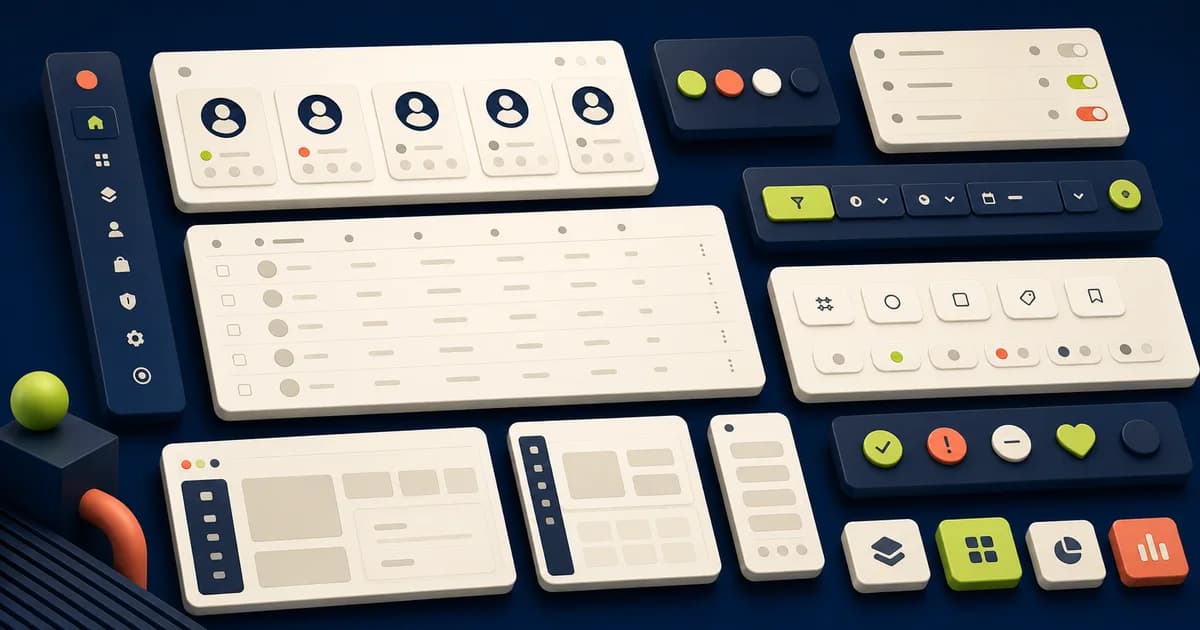
Choose an admin-panel kit by testing permissions, dense records, bulk changes, destructive actions, audit history, and recovery.
Evaluate landing-page kits through message match, one coherent argument, verified proof, responsive sections, forms, and experiments.
Compare SaaS kits across trial, setup, empty data, daily work, permissions, billing, failure, support, and account lifecycle.
Compare mobile UI kits by platform fidelity, state coverage, accessibility, security-sensitive flows, and engineering handoff.
Compare checkout kits through payment-provider fit, address and tax states, accessibility, failure recovery, and truthful handoff.
Compare design-system kits through tokens, component APIs, accessibility, documentation, contribution, releases, and code alignment.
Choose wireframe kits that accelerate structural questions without turning untested assumptions into gray high-fidelity screens.
Compare component libraries through API clarity, composition, difficult states, documentation, code mapping, updates, and deprecation.
Choose onboarding kits by how well they help each role reach first value, recover, resume, and continue inside the real product.
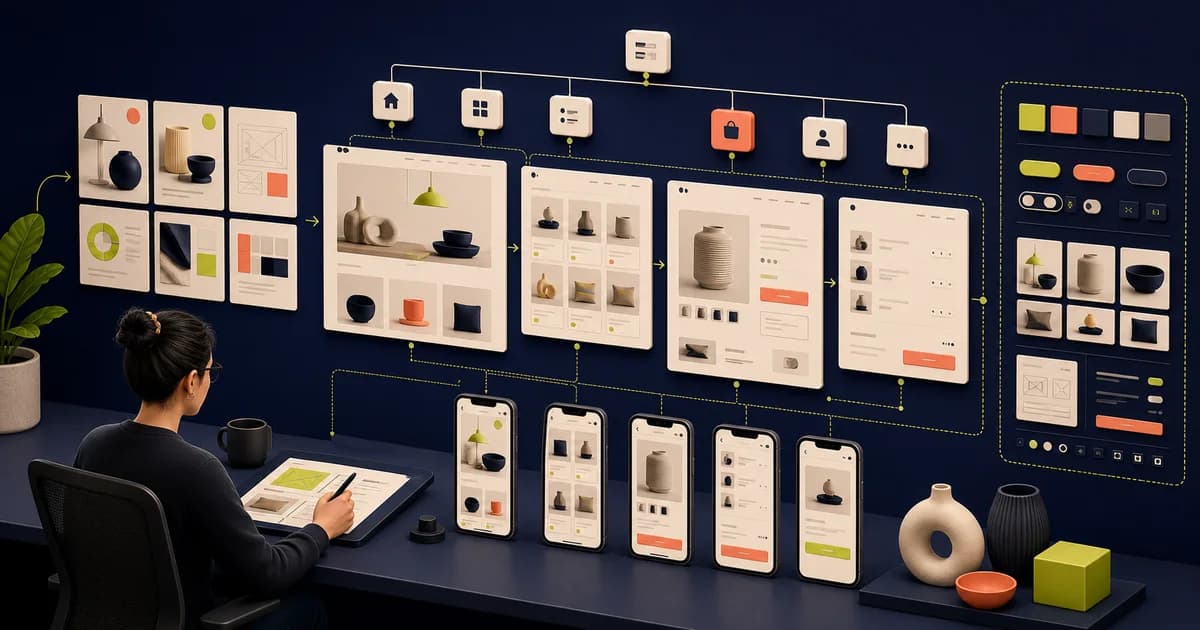
Design an e-commerce website in Figma by mapping the buying journey first, then building reusable foundations, responsive page patterns, and a tested handoff.
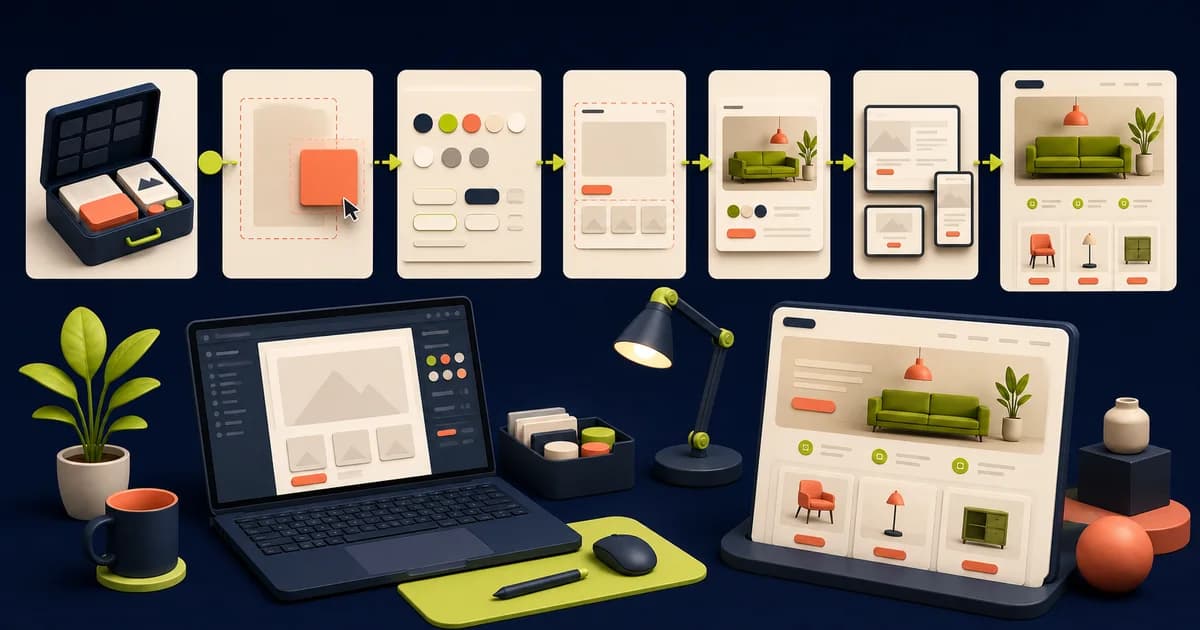
Use a Figma UI kit safely by auditing its foundations, mapping components to real content, and customizing connected instances deliberately.
Use Guide to auto layout to make commerce components respond to real content, product states, localization, and changing viewport widths.
Page 12 of 42