Shopify · August 23, 2026 · 9 min read
Best Shopify Themes for Watch Stores
Rank Wosa, Enterprise, and Broadcast for watch references, dimensions, movement details, strap compatibility, warranty, and service routes.
By Polo Themes
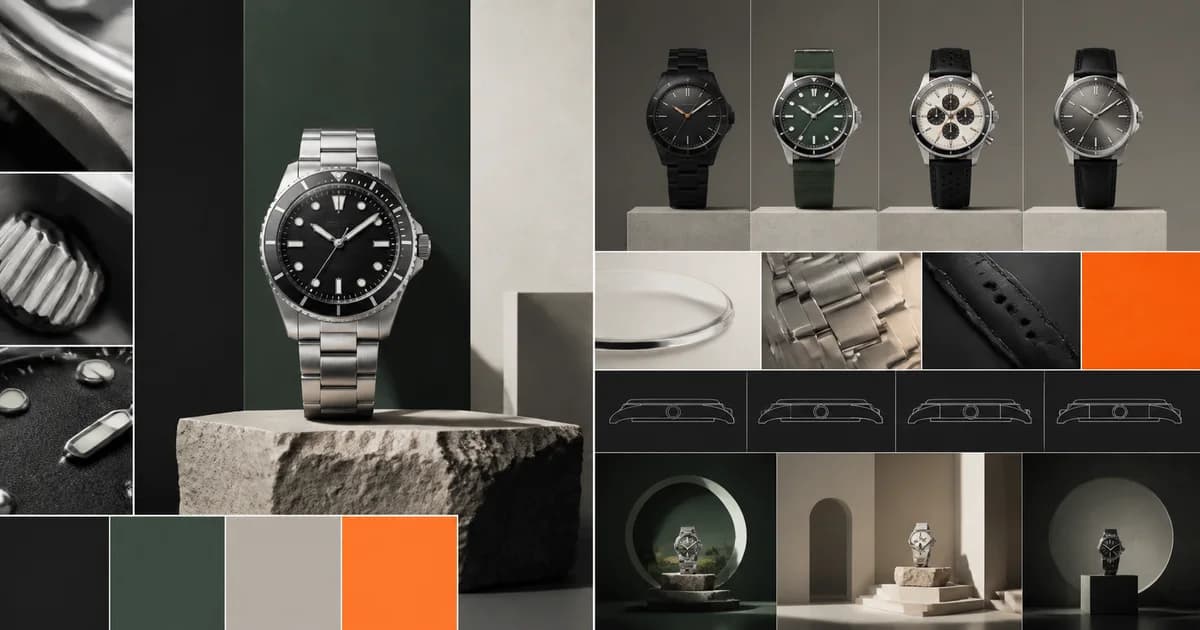
Watch comparison mixes editorial appeal with exact case, strap, movement, model, resistance, warranty, and service information. This editorial ranking starts with the closest Polo structure and two named Theme Store controls. It is an evaluation order for watch buyers balancing style, proportion, and specifications, not a promise of sales, speed, compliance, or specialist functionality.
Which themes should a watch store compare first?
The Shopify Theme Store lists usage information, product tabs, product options, filtering, and enhanced search for Enterprise, making it the specification-density control. Compare it with Wosa’s fashion-led hypothesis and Prestige’s luxury editorial range. Use the electronics theme guide to discipline model-reference, dimension, movement, service, warranty, and compatibility checks across all three previews.
1. Wosa — closest Polo adjacent fit
Wosa is the closest Polo adjacent fit when the assortment is led by fashion imagery and brand storytelling, based on its seeded clothing-store presentation. It is not watch-specific and does not validate movement data, water-resistance wording, strap compatibility, authenticity, warranty coverage, or service routes. In this watch comparison, rank 1 identifies the nearest Polo structure to preview; the merchant’s controlled catalog test can reverse the order.
2. Prestige
Prestige is the premium editorial candidate, with official listings for high-resolution media, zoom, galleries, lookbooks, options, tabs, filtering, and enhanced search. Premium presentation must not bury model references, dimensions, movement details, use limitations, or the difference between manufacturer and seller support. In this watch comparison, rank 2 identifies the first independent control to preview; the merchant’s controlled catalog test can reverse the order.
3. Enterprise
Enterprise is the specification-heavy control because its official page lists enhanced search, mega-menu navigation, product filtering, options, tabs, usage information, and recommended products. Those tools do not create a reliable specification schema or confirm that a strap, accessory, activity, or service promise applies to a model reference. In this watch comparison, rank 3 identifies the second independent control to preview; the merchant’s controlled catalog test can reverse the order.
What criteria distinguish a trustworthy watch storefront?
Prioritize exact model reference, consistent dimensions, movement and power details, bounded water-resistance wording, verified strap compatibility, variant-linked media, and visible service terms. Shopify’s Adding filters with Shopify Search & Discovery even uses watch brand, dial size, and water resistance as filter examples. Reject candidates whose editorial labels or icons displace maintained facts.
- Reference-level identity. Manufacturer reference, selected dial, case, strap, region where relevant, and exact cart line must remain synchronized.
- Wearable proportion. Case diameter and thickness, lug width, strap range, and on-wrist context should be comparable without vague size adjectives.
- Movement and power clarity. Use maintained terms for movement, power source or reserve, charging or winding context, and ownership implications.
- Qualified resistance language. Product wording must preserve tested ratings, conditions, limitations, care, and merchant-approved source rather than infer activities.
- Accessory and service fit. Straps, chargers, tools, warranty, repairs, and support routes must be linked by verified model compatibility and responsibility.
How should you stage a meaningful watch theme comparison?
Put the fashion catalog guide baseline beside two similar references, multiple strap configurations, a restricted replacement strap, and a serviced or discontinued model. Shopify’s Variants treats every combination of option values as a possible variant, so capture whether reference, dimensions, movement, selected configuration, warranty, stock, and compatible accessories remain exact through cart and support.
- Field 38: one 38-millimeter case with two dial-and-strap variants, testing whether every selected reference updates together.
- Field 42: a visually similar larger case that forces dimension and on-wrist comparison rather than relying on the family name.
- Auto One: a product with maintained movement and ownership details distinct from a battery-powered alternative.
- Dive Style: a watch whose approved resistance wording includes conditions and limitations, testing whether collection copy overgeneralizes it.
- Replacement strap: two widths with compatibility attached to exact references, including an intentionally incompatible recommendation state.
How can a watch layout balance editorial appeal and technical comparison?
Let editorial media establish context, then place maintained facts beside the buying decision. Shopify’s Adding filters with Shopify Search & Discovery says custom filters can draw from product options, metafields, or metaobjects. Build a consistent schema for case dimensions, lug width, movement, power, materials, reference, and qualified use statements so two watches compare without campaign decoding.
Watch buyers compare visual proportion with specifications that affect wear and ownership. Establish consistent fields for case diameter and thickness, lug width, strap length or sizing, movement type, power source or reserve description, crystal, case and strap materials, model reference, supplied accessories, warranty, and service route. Wosa is the closest Polo presentation when brand imagery leads; Electronix may be the stronger adjacent hypothesis when model comparison dominates. Neither theme verifies water-resistance language, strap compatibility, authenticity, or servicing claims.
Choose comparison fields by collection rather than copying every specification into the top of every page. Case proportion and strap sizing may lead for an everyday watch; movement construction and reference details may matter more to an enthusiast range. Keep the full approved record available, but use ordering and grouping to surface the few facts that genuinely distinguish the models currently being compared.
Use a hybrid watch catalog in the preview
Load a compact dress watch, a larger sport model, two color variants with different straps, and a replacement strap sold separately. Include front, profile, case-back, clasp, and worn-scale views so thickness and proportion are not hidden. Compare a quartz model with a mechanical model using the same field labels where facts overlap, while allowing movement-specific details to remain distinct. The replacement strap should be linked by verified lug width and attachment requirements, not simply because its color matches the watch.
Watch-store failure modes
- Water-resistance shorthand: a number or badge appears without the manufacturer’s exact wording, limitations, or product-level source.
- Reference-number burial: shoppers and support staff cannot distinguish revisions because the model reference is absent from cards, page, or cart.
- Strap cross-sell by style: an attractive band is recommended even though width, attachment, length, or hardware is incompatible.
- Scale-free storytelling: dramatic wrist shots conceal case thickness, lug-to-lug proportion, or the wearer context needed to interpret them.
Implement a specification-to-service test
- Set a category schema. Define labels, units, source ownership, and conditional movement fields, preserving manufacturer terminology where precision matters.
- Connect media and variants. Ensure dial, case, strap, reference, price, and availability all follow the selected configuration.
- Test accessory logic. Validate every proposed strap or tool relationship against explicit dimensions and requirements, including a known incompatible example.
- Rehearse post-purchase support. From the order line, identify the exact watch, warranty information, care guidance, and correct contact route without relying on a campaign name.
Watch failure modes
- Activity inference: a water-resistance value or visual style becomes a blanket promise for swimming, diving, showering, or another activity.
- Reference burial: cards, pages, cart, and support records omit the identifier needed to distinguish revisions or configurations.
- Strap guesswork: recommendations use appearance or broad family membership rather than verified lug width and reference compatibility.
- Warranty fog: manufacturer coverage, seller obligations, service exclusions, and return terms collapse into one unsupported reassurance badge.
Which tests prove a watch catalog keeps configurations exact?
Switch case and strap options, compare close references, select an unavailable combination, and add a verified replacement strap. The FTC’s Businessperson's Guide to Federal Warranty Law explains that written warranties must be available before sale. Inspect cart, confirmation, account, warranty access, and support; preserve the purchased reference while preventing incompatible accessories from appearing suitable.
- Define the schema. Approve labels, units, value sources, qualifiers, and owners for case, movement, strap, crystal, resistance, model, warranty, and service fields.
- Compare proportions. Ask a tester to distinguish the 38 and 42 models and select a suitable strap using maintained dimensions and images.
- Change configurations. Verify dial, case, strap, model reference, media, price, stock, and cart identity follow every selection.
- Audit resistance statements. Trace every rating, use example, limitation, and care instruction to the approved product-specific source.
- Break accessory matching. Try to add an incompatible strap and verify recommendations, product copy, cart, and support view do not imply fit.
- Test ownership questions. Find movement care, warranty responsibility, service contact, returns, and included accessories from a narrow mobile screen.
How should a watch model, its configurations, and service life differ?
Treat the model reference as durable identity, configurations as purchasable combinations, and service records or replacement parts as lifecycle data. The FTC’s Businessperson's Guide to Federal Warranty Law distinguishes consumer-product warranties from service-only coverage. Keep availability and compatibility separate so discontinued references, current strap options, and later service parts do not collapse into one variant family.
A watch family can contain changes that are cosmetic, structural, or entirely separate products. A dial color paired with the same case and movement may fit a conventional variant model. A smaller case with a different reference, movement, thickness, lug width, or resistance statement needs its own specification identity even when marketing treats it as the same collection. A replacement strap is an accessory whose compatibility depends on maintained dimensions and attachment details, not merely a matching color. Preview Wosa with these distinctions to test the closest Polo fashion candidate, Prestige to test a high-value editorial journey, and Enterprise to test dense model comparison. Reject a setup that makes the shopper infer the selected reference from photography or that merges specifications across case sizes for a cleaner-looking table.
The catalog must also survive service questions after the sale. Put the supplied strap or bracelet, warranty provider and scope, documentation, care guidance, and available service route in merchant-owned content with market qualifiers where needed. Water-resistance wording is a particularly useful governance test: display the approved product statement and its maintained explanatory context without translating a numeric rating into activities the evidence does not support. Create a worked cart with one watch, an optional compatible strap, and a care accessory; then change the case configuration. The recommended strap must be rechecked, the original package contents must stay distinct from add-ons, and the order line must retain the exact reference. A theme that presents heritage beautifully but loses that identity during quick buy is a weaker watch choice.
Key Takeaways
- Model reference should outlive campaign naming. Preserve it across cards, selection, orders, warranty records, service, and support.
- Watch specifications need a consistent schema. Case dimensions, lug width, movement, power, materials, and qualified water-resistance wording should be directly comparable.
- Straps require verified compatibility. Appearance and nominal width are not enough when attachment, case revision, or supplied hardware differs.
- Service life is not a variant. Replacement parts, maintenance routes, warranty coverage, and discontinued references need explicit relationships and current terms.
Final decision for a watch catalog
Wosa leads when fashion storytelling dominates, Prestige is the premium visual alternative, and Enterprise is the control when a larger specification catalog dominates. A serious watch merchant may reorder them after testing. The correct winner preserves reference, proportion, movement, qualified resistance wording, compatibility, warranty, and service facts from discovery through support.
Frequently asked questions
Should a watch store choose Wosa or an electronics-style structure?
Choose from the actual buying task. Wosa is the closer Polo editorial fit; a specification-heavy range may score Enterprise higher after controlled testing.
Does a listed water-resistance value explain permitted activities?
Not by itself. Use the approved product source, conditions, limitations, and care guidance; never let a collection label or icon broaden the statement.
What identifies a watch variant in the cart?
Preserve the exact model reference and every consequential selected configuration, not only a broad family name or thumbnail.
How should replacement straps be recommended?
Use maintained compatibility based on exact dimensions and supported references, then test the relationship in product, cart, fulfillment, and support views.
When should case sizes be separate products?
Separate them when each size carries a materially different reference, specification set, media story, availability pattern, or service record that a shared variant page would blur. If they remain variants, every changed dimension and technical statement must follow the selected size through comparison, cart, confirmation, and support views.