Shopify · August 23, 2026 · 11 min read
Best Shopify Themes for Medical & Healthcare Stores
Compare Medical, Eurus, and Enterprise for accurate healthcare catalogs, support routes, product evidence, and regulated-store boundaries.
By Polo Themes
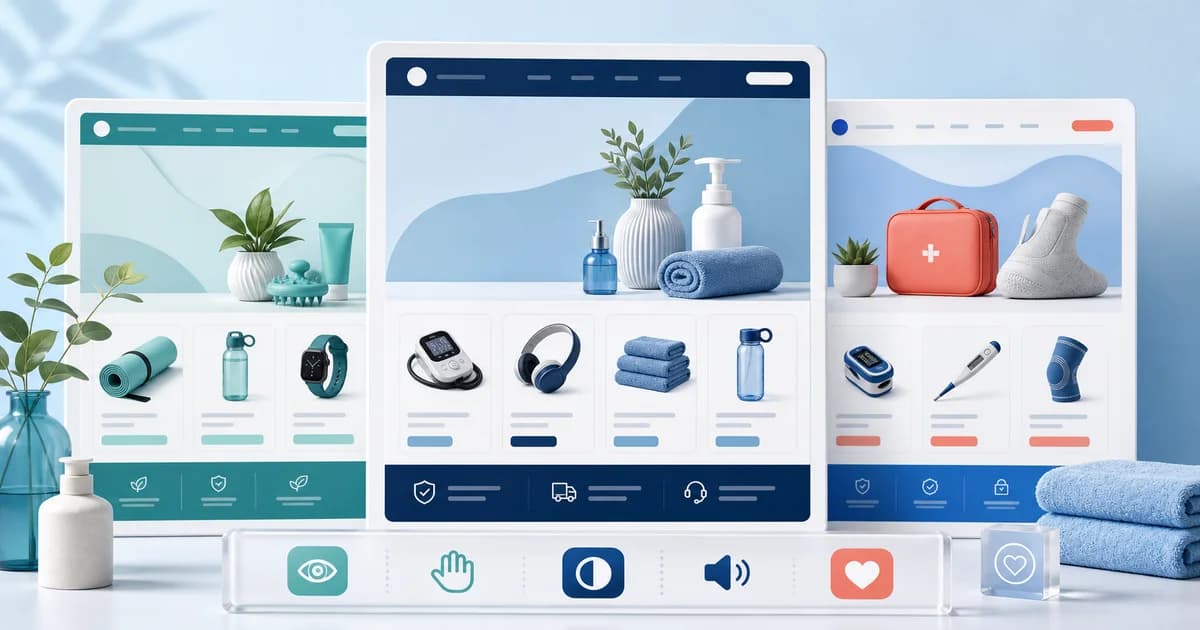
Medical is the best first theme to preview for a medical or healthcare Shopify store because Polo’s verified catalog positions it directly for health, baby, beauty, medical products, and medical-supply presentation. Eurus ranks second for health-and-beauty merchandising, while Enterprise ranks third for broad, information-heavy catalogs. The ranking is editorial and rewards precise identification, document placement, restrained claims, accessibility, and operational testability; it is not a statement of legal approval or clinical quality.
Use the pillar comparison to understand the shared scoring method, review the Medical product page for Polo’s actual claim, and continue to the pharmacy guide when medicine-related restrictions matter. The equipment comparison covers specification-heavy catalogs, while the medical-supply launch guide addresses qualification and custody beyond presentation.
What must a medical-store theme make unambiguous?
A medical storefront must clarify exact identity, intended context, contents, warnings, documents, compatibility, restrictions, returns, and support. The US FDA — Device Labeling guidance says labeling includes product labels, technical documentation, and other descriptive material. Medical, Eurus, and Enterprise organize presentation; none supplies regulatory approval, clinical judgment, or professional oversight.
The theme should help a shopper identify the exact item, intended context, size or model, included components, compatible accessories, supporting documents, warnings, storage information, delivery conditions, returns boundaries, and support route. It must also give the merchant room to separate controlled facts from promotion. A polished clinical palette does not verify a product, approve a claim, create professional oversight, or satisfy a market rule. Those responsibilities remain with the accountable business and its qualified advisers.
- 1. Medical — best direct medical-supply presentation. The Polo seed confirms a fully responsive layout, customizable branding, an advanced mega menu, custom pages and navigation, documentation, and a catalog focus spanning health, baby, beauty, medical products, and medical supplies. It does not claim dispensing, prescription review, compliance, storage control, or recall management.
- 2. Eurus — best health-and-beauty alternative. Its official listing describes a modern beauty focus and lists usage information, ingredients or nutritional information, product tabs, video, search, filtering, and a mega menu. Those surfaces may suit wellness goods, but “health and beauty” must not be stretched into medical authorization or substantiated outcomes.
- 3. Enterprise — best broad-catalog alternative. Its official Theme Store page lists enhanced search, filtering, infinite scroll, a mega menu, product tabs, usage information, and cart tools. It can be tested for a large mixed catalog, but the listing does not make it a medical-specific system.
How should you choose among Medical, Eurus, and Enterprise?
Choose Medical for direct medical-supply presentation, Eurus for wellness-and-beauty merchandising, or Enterprise for a large mixed assortment. Shopify Help Center — Choosing themes says industry categories aid browsing but do not restrict themes to that industry. Reject candidates that cannot keep identifiers, warnings, documents, restrictions, and professional boundaries maintainable.
Choose Medical when the direct visual and navigational vocabulary of medical supplies reduces adaptation and the merchant can supply the controlled product truth. Choose Eurus when the assortment is principally wellness or beauty and ingredient, usage, and visual merchandising carry the decision. Choose Enterprise when breadth, search, and category depth outweigh a specialized look. Reject all three if required warnings, documents, exact identifiers, restrictions, or professional handoffs cannot be made prominent and maintainable.
What should a worked healthcare catalog test?
Test similar fitted products, a reusable device with a revision-specific component, a count-based consumable, and an item with consequential storage or return conditions. Shopify Help Center — Products treats product details as managed catalog records. The exercise must preserve exact identity, size, contents, document revision, supported relationships, and restrictions without visual guesswork.
Build a test catalog with two visually similar support garments in different sizes, a reusable device with a replacement component, a consumable sold by count, and an item with special storage or returns information. The collection card for each garment must preserve its exact name and size context. The device page should state the model, included parts, and confirmed replacement relationship. The consumable must distinguish individual unit, pack count, and order quantity. The policy-heavy item must expose material restrictions before payment, not after a problem.
Ask a tester to locate the exact garment, choose a size from the published measurement method, find the device’s compatible part, identify the consumable count, and explain the return or storage condition. Then ask the operator to locate the same facts from the order. Medical wins only if its direct niche layout makes this safer to maintain. Eurus or Enterprise can win for a particular store if their native discovery and information surfaces require fewer brittle changes with that store’s actual assortment.
Medical and healthcare failure modes
- Decorative authority: seals, coats, crosses, badges, or template language imply approval, expertise, or outcomes without controlled evidence.
- Identifier collision: two sizes or revisions become indistinguishable because cards shorten the consequential part of the product name.
- Document drift: the page, downloadable instructions, product image, and stocked revision refer to different versions.
- Unsafe recommendations: an accessory or alternative is cross-sold without a maintained compatibility basis.
- Policy surprise: eligibility, hygiene returns, storage, regional availability, or support limits surface only after checkout.
- Theme-as-compliance: responsive presentation is treated as legal review, clinical governance, traceability, or recall capability.
How should you implement and control healthcare testing?
Start with an accountable field register, category templates, exception records, and rendered-claim review. The US FTC — Health Products Compliance Guidance requires health advertising claims to be truthful, not misleading, and substantiated. Test discovery, configuration, warnings, documents, restriction recovery, fulfillment, and support; record absent or app-dependent behavior as a blocker.
- Create a field register. For each product family, name the authoritative source and owner for identity, intended use, contents, dimensions, warnings, documents, storage, compatibility, and restrictions.
- Template by decision pattern. Give consumables, fitted products, and equipment different content structures only where their buyer questions truly differ.
- Stage representative records. Include similar names, long identifiers, an unavailable option, a replaced document, a restricted item, and a product with no valid recommendation.
- Review rendered claims. Have the accountable business or qualified reviewer approve what customers actually see, including badges, navigation labels, images, and promotional sections.
- Run confusion and recovery tests. Find an exact item, choose a valid configuration, locate warnings, recover from an unavailable choice, and contact the correct support route on a phone.
- Verify operations. Confirm that fulfillment and support receive the exact model, variant, documents, and conditions shown to the buyer; record gaps as blockers rather than theme promises.
When should Eurus or Enterprise outrank Medical?
Eurus should lead when wellness information and visual merchandising define the catalog without medical implications; Enterprise should lead when large-catalog discovery preserves controlled content. Shopify Theme Store — Eurus documents health-and-beauty positioning and discovery features. Medical retains first place only when its direct hierarchy reduces content risk for the tested product classes.
Medical begins first because its verified positioning is closest to medical supplies, but the catalog can reverse the order. Eurus should lead for a wellness-and-beauty assortment when ingredients, usage information, product tabs, and media are the dominant maintained facts and the store makes no unsupported medical implication. Enterprise should lead when a large mixed catalog needs deeper search, filtering, and navigation and the team can impose category-specific information structures. Medical stays first when its direct hierarchy makes precise product identity, support routes, and controlled documents easier to maintain. The decision must identify which product classes caused the ranking, not simply award points for the longest feature list.
A useful tie-breaker is the product that creates the greatest consequence if misunderstood. For a fitted support garment, compare how each theme ties the measurement method to the selected item. For a reusable device, compare how the current model and supported replacement remain visible. For a wellness consumable, compare ingredient and usage placement without allowing adjacent visual language to imply treatment. If Enterprise wins discovery but requires one-off templates for every warning, or Eurus wins presentation but blurs product classification, the apparent advantage has moved work into a less governable surface.
How do you recover from a revision or restriction failure?
Pause the affected product, match every stocked identifier to its correct document and condition, update customer and operator surfaces, and test old-customer and new-purchase routes. Because US FDA — Device Labeling includes technical and descriptive materials, recovery must address more than packaging. Preserve unrelated cart lines and avoid unsupported substitutions or advice.
Stage a failure in which a supplier replaces instructions for one device revision while an older unit remains in stock. The affected product should be paused or clearly separated until the operator can associate each stocked identifier with the correct document. Update the authoritative record, product page, download, image captions, packing instruction, and support reference together. Then test an existing customer route as well as a new purchase. A generic “latest manual” link is not recovery if the customer cannot determine whether it applies to the item they own.
Run a second case in which a selected destination, product condition, or business rule makes an item unavailable late in the journey. Recovery should identify the affected item and next permitted action without implying professional advice, silently substituting another product, or discarding the rest of a mixed cart. Support should receive the exact restriction state and approved escalation route. The theme passes only if the business can change or remove the restriction language once, locate every rendered instance, and demonstrate that promotional modules do not continue offering the blocked item.
Which acceptance gates should a healthcare storefront pass?
Require a source trail, stocked-revision match, rendered-claim approval, restriction recovery, and accessible navigation. US FDA — Device Labeling establishes that labeling spans labels and accompanying descriptive material, so acceptance must cover every rendered claim. Passing evidence also keeps inventory aligned and preserves mobile and keyboard access to warnings, documents, policies, and support.
- Source gate: every consequential identity, usage, warning, document, storage, and compatibility field has an accountable source and reviewer.
- Revision gate: the stocked identifier, rendered media, linked document, fulfillment record, and support view refer to the same tested revision.
- Claim gate: badges, headings, recommendations, testimonials, and navigation are reviewed as rendered and make no broader implication than the approved product record.
- Restriction gate: an ineligible or unavailable case stops at the correct point, explains the merchant-controlled next step, and never substitutes by resemblance.
- Accessibility gate: keyboard and narrow-screen testers can reach identity, choices, warnings, documents, policies, and support in a meaningful order.
Who should control healthcare content and change records?
Give every consequential field a named source, reviewer, retest trigger, publication owner, and support owner. The US FTC — Health Products Compliance Guidance places responsibility on marketers for substantiating health claims. Connect each image, document, restriction, and recommendation to the stocked revision; theme editors may arrange approved content but must not invent claims.
Medical catalogs need ownership after launch, not merely approval on launch day. Assign a responsible source, reviewer, and review trigger for each consequential field. Record which product revision an image or document describes, and keep replacement history when a supplier changes a label, warning, component, or identifier. Give the theme editor only approved language for navigation, badges, comparison tables, and promotional sections. A visually minor edit can still create a serious mismatch if it broadens an intended-use statement, removes a restriction, or presents an accessory beside an unsupported model.
The final theme record should name the tested version, product classes, representative records, devices, documents, integrations, exception states, and accountable approvers. Capture which behavior is native, configured, app-supported, custom, or absent. Define the event that forces retesting: product revision, document replacement, new market, payment change, policy change, app update, or theme release. If a requirement remains unresolved, keep the affected product or workflow inactive. That evidence is more useful than a generic “healthcare ready” label because it tells the operating team exactly what was proven.
Key Takeaways
- Preview Medical first, but let real product classes determine whether Eurus or Enterprise is safer to operate.
- Keep identifiers, warnings, documents, compatibility, restrictions, and support tied to accountable product records.
- Review the complete rendered page because imagery, badges, testimonials, and navigation can broaden a claim.
- Test revised documents and late restrictions without silent substitution or loss of unrelated cart items.
- Treat eligibility, professional oversight, traceability, and recall capability as business systems beyond the theme.
Conclusion
Medical deserves the first preview for a medical-supply catalog because its repo-verified claim is the closest direct match. Eurus is a reasonable health-and-beauty comparator, and Enterprise is a broad-catalog comparator. The final choice should go to the theme that preserves exact identity, controlled information, warnings, documents, restrictions, and support across collection, product, cart, order, and mobile views—with no implication that design supplies professional or regulatory authority.
Frequently asked questions
Does a medical Shopify theme make products eligible to sell?
No. Theme availability and product eligibility are separate questions. The merchant must verify products, claims, market rules, payment acceptance, fulfillment, and any professional responsibilities with qualified sources.
Is Eurus a medical theme?
Its official listing focuses on beauty and health-oriented merchandising. That makes it a comparison candidate for wellness-heavy catalogs, not proof of medical specialization, dispensing, or clinical functionality.
What information should stay above promotion?
Exact identity, consequential options, intended context, availability, warnings or restrictions, and the purchase action should remain clear. Promotion should never obscure facts needed to avoid a wrong-item decision.
How should supporting documents be tested?
Verify that each link opens the correct current document for the stocked revision, remains reachable on mobile, survives navigation, and is available to support after purchase.
What should happen when a healthcare item becomes restricted?
Stop the affected purchase at the earliest reliable decision point, identify the exact item and merchant-controlled condition, and preserve unrelated cart lines. Do not recommend a substitute unless an accountable product relationship supports it. Update search, collections, promotional modules, product content, fulfillment instructions, and support routing from the same approved change, then test both a new visit and an existing cart before restoring availability.
Keep the reason and reviewer in the change record. If the condition varies by destination or product state, test each supported state separately rather than turning one restriction into a universal claim.
Include the blocked state in the saved acceptance evidence so a later theme or policy change can be compared against the behavior the accountable reviewer actually approved.