Shopify · August 23, 2026 · 9 min read
Best Shopify Themes for Jewelry Stores
Rank Wosa, Prestige, and Broadcast for jewelry materials, physical scale, sizing, personalization limits, gifting, and workshop handoffs.
By Polo Themes
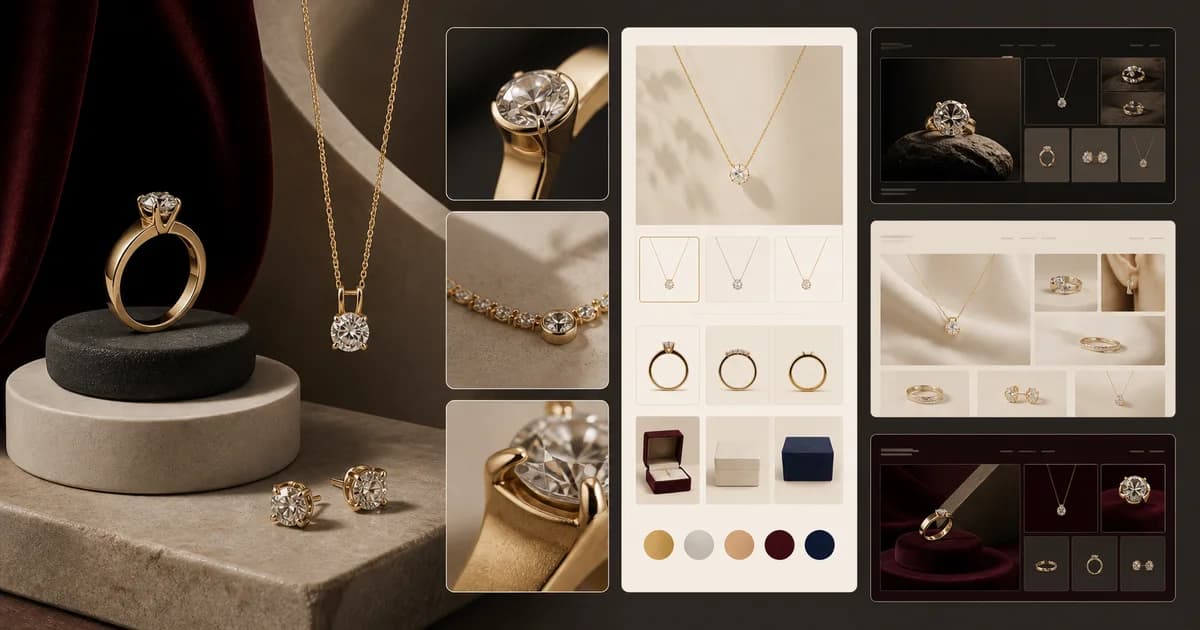
Jewelry shoppers need to judge physical scale, material construction, size, finish, stone description, personalization, availability, and the timing of made-to-order work. This editorial ranking starts with the closest Polo structure and two named Theme Store controls. It is an evaluation order for gift buyers, collectors, and self-purchase shoppers, not a promise of sales, speed, compliance, or specialist functionality.
Which themes deserve a jewelry store preview?
The Shopify Theme Store presents Prestige with lookbooks, image galleries, zoom, color swatches, product options, filtering, and enhanced search. That makes it a concrete luxury control beside Wosa and Broadcast. Keep the fashion storefront guide as the editorial baseline, but let scale, material, stone description, personalization limits, and lead-time clarity determine the jewelry shortlist.
1. Wosa — closest Polo adjacent fit
Wosa is the closest Polo adjacent fit because Polo seeds it for fashion-led clothing presentation with clean typography and responsive layouts. Polo does not seed a jewelry-specific product, and Wosa does not supply metal terminology, ring conversion, engraving rules, authentication, insured shipping, repair, or workshop scheduling. In this jewelry comparison, rank 1 identifies the nearest Polo structure to preview; the merchant’s controlled catalog test can reverse the order.
2. Prestige
Prestige is a current luxury-oriented candidate; its official listing names galleries, zoom, high-resolution images, lookbooks, hotspots, product options, tabs, filtering, and swatch filters. Luxury styling cannot establish material composition, stone origin, authenticity, physical scale, customization feasibility, or workshop lead time. In this jewelry comparison, rank 2 identifies the first independent control to preview; the merchant’s controlled catalog test can reverse the order.
3. Broadcast
Broadcast is the merchandising-rich control, with official listings for galleries, zoom, hotspots, product options, tabs, swatches, size charts, and collection navigation. Its promotional and cross-selling surfaces need restraint so verified material, dimensions, sizing, and personalization constraints remain ahead of persuasion. In this jewelry comparison, rank 3 identifies the second independent control to preview; the merchant’s controlled catalog test can reverse the order.
What should decide the best theme for a jewelry catalog?
Choose the candidate that makes scale, material terminology, sizing, variant identity, personalization limits, and production timing easiest to inspect. The FTC’s Jewelry Guides: Helping Consumers Understand What They’re Buying says marketers must truthfully represent characteristics including metallic content, size, weight, treatment, and production. Close-up media should support those facts, not replace them.
- Material precision. Plated, vermeil, filled, solid, lab-created, simulated, and natural descriptions must follow the merchant’s approved source vocabulary.
- Scale comprehension. Dimensions and worn or familiar-reference images should counter the distortion produced by macro photography.
- Sizing and conversion. Ring, chain, bracelet, and earring measurements need product-specific methods rather than an unexplained universal chart.
- Personalization feasibility. Allowed text, placement, characters, preview limitations, production timing, and return terms must match the workshop process.
- Inventory model. Ready-to-ship, made-to-order, configurable, and one-of-a-kind pieces require different stock, restock, and delivery language.
How should a jewelry test catalog challenge each theme?
Load a size-sensitive ring, plated necklace, personalized pendant, and made-to-order piece in several production states, borrowing discipline from the watch store theme guide. Shopify’s Product media supports product images, video, and 3D models; test each without letting media replace scale or composition. Preserve selected options, packaging, availability, dispatch timing, and policy treatment through support.
- Arc ring: several maintained sizes plus a measuring method and one unavailable size, testing option clarity and recovery.
- Line pendant: two chain lengths, exact pendant dimensions, worn-scale photography, and separate chain and pendant material descriptions.
- Small hoop pair: a macro detail image plus profile and worn views, with the title and cart explicitly confirming that a pair is supplied.
- Signet engraving: constrained characters and placement, a stated preview limitation, workshop lead time, and product-specific return terms.
- One-off vintage piece: a single inventory unit with a model record and no misleading restock promise after sale.
How can jewelry scale, material, and customization stay explicit?
Give each fact a maintained field and a visible place near the decision. In the FTC’s Jewelry Guides: Helping Consumers Understand What They’re Buying, truthful representation extends to metallic content, size, weight, and treatment. Use dimensions and worn-scale media for presence, precise terms for composition, and constrained options for personalization; update price and lead time together.
Jewelry photography magnifies detail, which can make a small pendant, thin chain, or narrow band appear larger than it is. A useful theme must pair visual desire with dimensions, weight where relevant, material construction, finish, stone description, closure, chain length, ring size, and care. Wosa is an adjacent recommendation because its editorial fashion presentation can carry collections and gifting stories; it does not provide jewelry-specific metal terminology, engraving logic, ring conversion, certification, or workshop lead-time management.
Decide whether the assortment is primarily ready-to-ship, made-to-order, configurable, or one-of-a-kind. That operating distinction changes availability language, lead-time placement, photography reuse, and what happens after the only unit sells. A one-off vintage ring should not inherit the same variant and restock language as a repeatable chain, while a made-to-size piece needs its production boundary before the order action.
Build a sample tray with materially different decisions
Preview a ring offered in several sizes, a pendant with two chain lengths, a pair of earrings with a scale reference, and an engravable item whose character or placement rules matter. Include one plated piece and one solid-material piece so copied labels cannot hide construction differences. A gift shopper should move from an occasion collection to a specific product, understand the physical scale, choose a valid option, see the production timing for personalization, and distinguish gift packaging from the jewelry itself.
Jewelry failure modes
- Material shorthand: plated, vermeil, filled, solid, lab-created, simulated, or natural terms are merged into an imprecise marketing label.
- Macro-image distortion: every image is close cropped, leaving the buyer unable to judge pendant, hoop, stone, or chain scale.
- Engraving without constraints: the field accepts text that the maker cannot place, fit, reproduce, or deliver on the displayed schedule.
- Size conversion guesswork: regional ring labels appear without the measurement method or product-specific availability behind them.
Implement a bench-to-storefront check
- Create a material lexicon. Approve exact construction and stone terms, required qualifiers, care notes, and source records before bulk entry.
- Standardize scale media. Add measurements plus worn or familiar-reference views, and confirm zoom reveals detail without being the only context.
- Constrain personalization. Match allowed characters, length, placement, font choices, preview limitations, and lead time to the workshop process.
- Place a test gift order. Verify selected size, chain, engraving, packaging, production note, and promised timing survive cart, confirmation, and fulfillment views.
Jewelry failure modes
- Material shorthand: materially different constructions are collapsed into “gold” or another broad label that shoppers cannot interpret accurately.
- Macro-only scale: every image magnifies detail, leaving the buyer unable to judge pendant, hoop, stone, band, or chain proportion.
- Unbounded engraving: the storefront accepts text, placement, or symbols the workshop cannot reproduce within the displayed schedule.
- One-off inventory leak: a sold unique piece remains purchasable, or its page promises replenishment that the operating model cannot provide.
Which acceptance tests reveal jewelry storefront risk?
Choose a ring size, switch material or finish, enter valid and invalid personalization, and add made-to-order beside ready stock. Shopify’s Variants allows each combination of option values to be managed as a variant. Inspect mobile, cart, confirmation, and support; require accurate dimensions, selected text, price, packaging, production timing, and policy treatment without photographic inference.
- Approve a jewelry lexicon. Define construction, stone, finish, size, care, and qualifier terms with owners before bulk product entry.
- Verify scale. Ask testers to estimate dimensions from the page, then compare their answer with the maintained measurements and reference imagery.
- Exercise size edges. Choose the smallest, largest, unavailable, and converted sizes; verify labels and final cart lines remain exact.
- Constrain engraving. Test maximum length, unsupported characters, empty values, editing, removal, price effects, and fulfillment visibility.
- Sell the unique item once. Confirm concurrency and sold state prevent a second order and that related products do not imply an identical replacement.
- Trace a gift order. Follow size, chain, engraving, packaging, production note, delivery estimate, and returns context through confirmation and fulfillment.
How should jewelry exceptions be modeled before visual polish?
Model fixed-size, selectable-size, adjustable, personalized, made-to-order, ready-to-ship, and service-related states explicitly. Shopify’s Variants distinguishes combinations of option values within a product, so do not force production or service states into invented options. Attach measurements, constraints, lead time, cancellation terms, and owners, and prevent quick buy from bypassing workshop review.
Jewelry option structure should follow what the workshop can actually produce. A signet ring offered in six sizes and two metals may be a conventional variant family, while engraving can introduce a validated text field, character rules, added lead time, and a final-sale policy that must be acknowledged before purchase. A one-of-a-kind stone should not inherit the same restock or size-change behavior, and a chain sold in selectable lengths should not imply that every pendant includes that chain. Load these cases into Wosa, Prestige, and Broadcast before comparing their editorial finish. Wosa tests the closest Polo fashion structure, Prestige tests a gallery-led luxury story, and Broadcast tests campaign merchandising; the strongest preview is the one that keeps construction, exact configuration, price consequences, and workshop timing clear after all editorial modules are enabled.
Gift buying introduces a second set of exceptions. Ring size may be unknown, a personalized item may miss a desired date, and packaging shown in photography may differ from what is included. Give the buyer a factual route: product-specific size guidance with the system named, explicit package contents, a visible production estimate owned by the merchant, and a separate note for optional gift services. Do not silently convert between regional ring-size systems or promise that a printable guide is accurate regardless of printing scale. Test an address change, an engraving correction, and a mixed cart containing one ready-to-ship piece and one made-to-order piece. The storefront should explain the consequence of each choice without inventing a combined dispatch date or implying that the theme manages workshop capacity.
Key Takeaways
- Wosa is an adjacent fashion starting point. Jewelry terminology, sizing, personalization, authentication, and workshop operations require separate modeling.
- Scale needs dimensions and context. Macro photography alone can make a delicate piece look substantial or hide how a setting sits when worn.
- Material terms must remain precise. Solid, filled, plated, finish, stone description, and care language should follow approved product records.
- Personalization changes the transaction. Constraints, previews, price, production time, cancellation, and return treatment need to follow the selected option.
Final decision for a jewelry catalog
Wosa is the nearest Polo visual structure, Prestige is the strongest luxury control, and Broadcast is the richer merchandising control. Select only after macro imagery, campaign copy, and recommendation modules are stripped away: the remaining page must still communicate material, scale, exact options, availability, personalization boundaries, and delivery timing.
Frequently asked questions
Is Wosa designed specifically for jewelry?
No. It is an adjacent fashion-led option from Polo. Label that status clearly and test every jewelry-specific information and operational requirement.
What jewelry detail should appear before add to cart?
Exact item identity, material construction, dimensions or scale, selected size and finish, availability, personalization consequences, price, and relevant timing should be clear.
Can a theme preview prove engraving support?
No. A text field or option is only presentation. The complete test must prove constraints, pricing, order data, workshop visibility, production timing, and support recovery.
How should one-of-a-kind jewelry be modeled?
Use a distinct inventory and content pattern that prevents duplicate purchase, preserves the exact sold record, and avoids generic restock language.
Should engraving be a variant?
Use a variant only when engraving represents a finite, stocked configuration. Custom text normally needs a separate validated personalization input tied to the order line, with allowed characters, placement, preview limitations, price, production timing, correction rules, and the merchant’s applicable return terms shown before purchase.