Shopify · August 23, 2026 · 10 min read
Best Shopify Themes for Footwear & Shoe Stores
Rank Wosa, Impact, and Enterprise for footwear measurements, width, size systems, fit guidance, variant inventory, and exchange decisions.
By Polo Themes
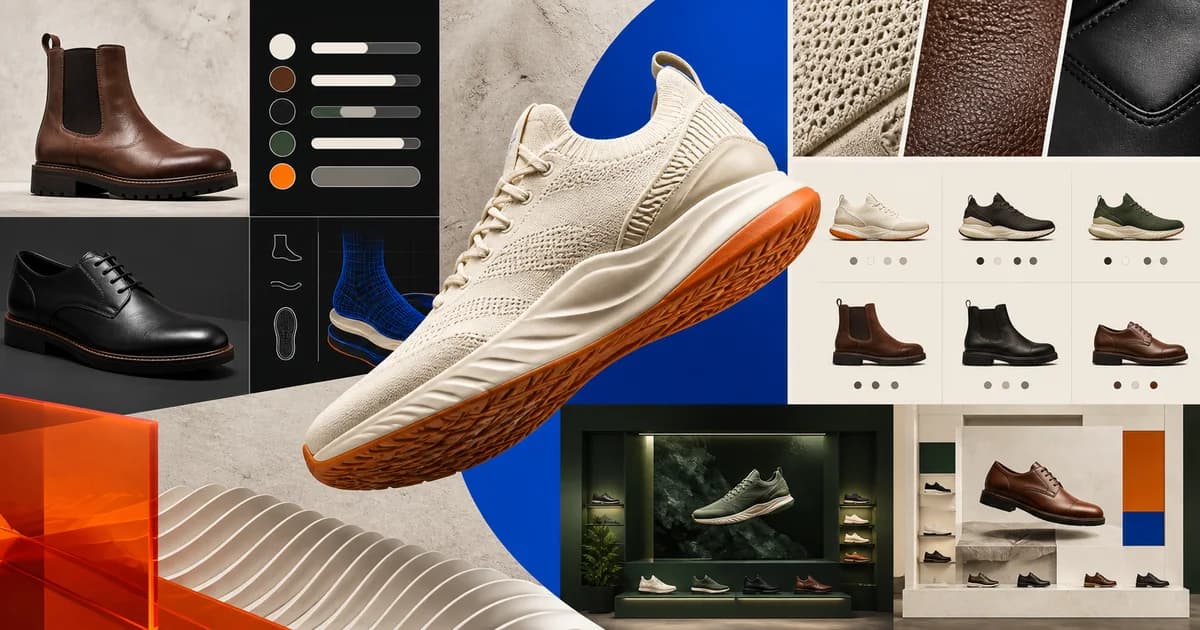
Footwear shoppers need product-specific sizing, width and fit guidance, material and sole facts, variant availability, multiple viewing angles, and workable exchange context. This editorial ranking starts with the closest Polo structure and two named Theme Store controls. It is an evaluation order for fit-sensitive shoppers comparing size, width, construction, and use, not a promise of sales, speed, compliance, or specialist functionality.
Which themes should a footwear store shortlist?
The Shopify Theme Store lists a size chart, color swatches, product options, filtering, and high-resolution images for Impact. Use those concrete controls to test fit-led merchandising beside Wosa and Broadcast. Let the apparel theme guide set common expectations, then add named size systems, model-specific measurements, width, construction, multidimensional stock, imagery, and reachable exchange paths.
1. Wosa — closest Polo adjacent fit
Wosa is the closest Polo adjacent fit because its seeded clothing-store presentation supports fashion collections, variants, typography, and visual merchandising. Polo does not seed a footwear-specific product, and Wosa does not provide shoe sizing, width logic, performance verification, exchange operations, or inventory planning. In this footwear and shoe comparison, rank 1 identifies the nearest Polo structure to preview; the merchant’s controlled catalog test can reverse the order.
2. Impact
Impact is a bold current candidate whose official page lists size charts, color swatches, high-resolution galleries, zoom, product options, usage information, filtering, and sticky purchase tools. A size chart and usage section do not establish last shape, width, fit, construction, traction, protection, or activity suitability. In this footwear and shoe comparison, rank 2 identifies the first independent control to preview; the merchant’s controlled catalog test can reverse the order.
3. Broadcast
Broadcast is the editorial-commerce control, with official listings for size charts, swatches, product options, galleries, zoom, video, filtering, enhanced search, and back-in-stock alerts. Quick-buy and promotional surfaces can be harmful when they hide product-specific fit, make an unavailable size look purchasable, or overstate use. In this footwear and shoe comparison, rank 3 identifies the second independent control to preview; the merchant’s controlled catalog test can reverse the order.
What should decide a footwear theme ranking?
Rank candidates on model-specific measurements, named size systems, width, construction, complete imagery, availability, and reachable exchange terms. Shopify’s Variants uses size and color to illustrate option combinations that become distinct variants. Include overlapping values and sold-out combinations; reject charts that flatten different lasts or color changes that silently rewrite the available size set.
- Product-specific size mapping. Regional labels, foot or garment measurements, measuring method, last or fit notes, and width availability should match the exact model.
- Size-color-width inventory. Every combination must show its own availability without letting a color swatch imply all sizes exist.
- Construction and use evidence. Upper, lining, sole, closure, care, and any performance or activity wording require maintained product-level sources.
- Decision media. Top, side, heel, toe, outsole, interior, fastening, and on-foot views should answer construction and fit questions rather than only campaign mood.
- Exchange and version support. Fit guidance, changed production, exchanges, returns, and repeat purchase need exact model or version identity.
How can a shoe catalog expose theme limitations?
Bring release-aware states from the streetwear theme guide into a fixture with identical size labels but different measurements, a width range, overlapping youth and adult values, and partial color stock. Shopify’s Adding filters with Shopify Search & Discovery derives custom filters from options or metafields. Follow system, width, imagery, identifier, availability, and exchange context through support.
- Court Low: two colors, a standard width, several sizes, one unavailable combination, and profile plus outsole imagery.
- Trail Mid: a different intended context whose approved material and construction statements cannot be generalized to Court Low.
- City Wide: explicit width choices and a distinct fit note, testing whether filters and cards preserve width rather than treating it as a hidden variant.
- Kids Step: age-marketed footwear with actual product-specific measurements instead of apparel or age assumptions.
- Revised Court Low: a supplier change to upper or last, requiring the page and support record to distinguish the new version from earlier reviews and guidance.
How can footwear fit be clearer than an apparel size dropdown?
Name the size system, show model-specific measurements and method, expose widths, and state whether guidance uses foot or product dimensions. Shopify’s Adding filters with Shopify Search & Discovery gives size filters a dedicated sorting treatment but does not supply model fit data. Keep conversions secondary; preserve the purchased system, value, width, and model through fulfillment.
Footwear decisions combine length, width, volume, shape, intended use, materials, construction, and return expectations. A store should identify the sizing system, provide the actual measurement method, note width options and product-specific fit guidance, and preserve the chosen size through every state. Wosa is an adjacent fashion presentation, not a shoe-fitting system. It can carry strong imagery and variants, but width logic, size conversion, inventory by size-color, fitting recommendations, and specialist product finders must be designed and tested independently.
Catalog architecture should distinguish fit from use. A wide option describes a shape dimension; a trail collection describes intended context only when supported; waterproof language describes a product property only at its documented scope. Mixing these into lifestyle tags creates filters that look helpful but cannot answer the shopper’s actual question. Keep each attribute named, sourced, and attached to the exact model.
Build a footwear set with conflicting fit patterns
Preview a shoe offered in whole and half sizes, a model with width options, a boot whose shaft or calf dimensions matter, and a sandal with a different adjustment system. Add top, side, heel, outsole, interior, and on-foot views. The collection should distinguish road shoe from trail shoe, or formal loafer from casual sneaker, using maintained construction and use facts rather than appearance alone. A size guide should identify the model or family it covers and should not quietly reuse apparel conversions.
Footwear failure modes
- Conversion as certainty: regional size mapping is displayed as exact even though the model’s fit or measurement basis differs.
- Width invisibility: available widths are buried inside a second selector or encoded in a SKU that shoppers cannot interpret.
- Outsole omission: fashion images hide tread, heel, flex, or contact surface that materially affects the intended decision.
- Stock-state trap: choosing a color silently disables most sizes and offers no clear route to another available configuration.
Implement and test a shoe-fitting journey
- Document each size family. Connect products to the correct system, measurement instructions, width vocabulary, and approved fit notes.
- Design option order. Decide whether model, color, width, and size should lead, then make unavailable combinations understandable before the shopper commits.
- Run fit-seeking tasks. Ask testers with different stated needs to locate a plausible model and explain which facts supported or blocked the choice.
- Inspect exchanges and support. Ensure the exact model, color, width, size, and guide version can be reconstructed from cart and order information.
Footwear and shoe failure modes
- Apparel-size reuse: the store applies a clothing conversion table to shoes or shares one chart across models with different lasts.
- Availability illusion: the selected color appears in stock even though the chosen size-width combination is not purchasable.
- Outsole omission: campaign and side images look complete while the buyer cannot inspect the surface or construction relevant to the intended use.
- Version inheritance: revised footwear silently keeps prior fit notes, reviews, imagery, or model identity after a meaningful production change.
Which tests prove footwear variants and fit guidance work?
Choose overlapping size values, switch widths and colors, encounter partial availability, consult the applicable chart, and request an exchange. Shopify’s Variants allows inventory to be managed for each variant, making combination-level stock a testable contract. Repeat on mobile and keyboard; require exact model, system, size, width, color, price, stock, and policy route through support.
- Map every model. Approve size labels, measurements, method, width, last or fit notes, materials, construction, care, and intended-use wording.
- Choose an exact fit. Ask testers to select size and width for Court Low and City Wide, explaining the maintained evidence they used.
- Cross every variant axis. Verify size, width, color, image set, identifier, price, stock, and cart line for valid and invalid combinations.
- Inspect the shoe remotely. Confirm narrow-screen media lets a buyer examine profile, outsole, interior, fastening, toe, heel, and on-foot scale.
- Place an exchange order. Follow the wrong-fit path through policy discovery, support identification, replacement stock, return, and corrected fulfillment.
- Rehearse a model revision. Ensure old and new versions remain distinguishable and prior content is reviewed rather than inherited by default.
How should footwear exceptions avoid being flattened by size charts?
Attach guidance to the model or family that supports it, then record width, last, construction, intended fit, and size-system boundaries separately. Shopify’s Variants models option combinations but does not establish fit equivalence between products. Give youth overlap, unisex ranges, orthotic space, and revisions explicit labels and owners; never let one sitewide chart override maintained measurements.
Size systems are not interchangeable product attributes. Test a running shoe offered in two widths, a boot whose lining changes internal fit, and a sandal sold in whole sizes only. Add a limited colorway that omits the widest width and a youth style whose numbering overlaps an adult range. Wosa is the closest Polo fashion candidate, Impact is the strongest campaign-led control, and Broadcast tests editorial merchandising, but each must preserve product-specific size-system labels, width vocabulary, measurements or fit notes, and actual combination availability. A converted size should be presented as merchant-approved guidance with its basis and limits, not as a guaranteed equivalent. When a shopper switches color, the interface should not keep a width-size pair that the new color does not offer.
Construction facts also affect the choice independently of size. A resoleable leather boot, a waterproof-marketed hiking style, and a lightweight fashion sneaker may require different material, care, use, and repair explanations. Display only supplier- or merchant-approved performance wording and keep any regional qualifiers attached to the applicable product. Then test a return or exchange journey without assuming one global policy: selling market, destination, wear condition, customized items, and hygiene rules can change the available route, so policy owners must provide current terms. The theme should make those terms reachable before purchase, retain the exact size and width in the order, and let support distinguish a fit exchange from a defect report without relying on the hero image or an ambiguous style name.
Key Takeaways
- Wosa is an adjacent apparel foundation. Shoe-specific measurement, width, construction, fit, inventory, and exchange behavior still require deliberate modeling.
- A size value needs its system and scope. Preserve model, adult or youth range, width, and purchased designation wherever the choice appears.
- Fit guidance should be model-specific. Measurements and methods must match the applicable last or product family rather than one universal chart.
- Availability is multidimensional. Color, size, width, version, and location relationships should remain accurate through selection, cart, and exchange.
Final decision for a footwear and shoe catalog
Wosa is Polo’s nearest fashion-led adjacent fit, Impact is the bold product-merchandising control, and Broadcast is the flexible editorial-commerce control. Do not choose on campaign impact. Choose the candidate that makes exact size, width, construction, imagery, variant availability, version, and exchange decisions easiest to complete and maintain.
Frequently asked questions
Is Wosa a shoe-specific theme?
No. It is an adjacent clothing-store theme. Footwear sizing, width, construction, use claims, exchanges, and inventory relationships must be designed and tested separately.
Can one size chart cover every shoe?
Only if the merchant has verified that the same measurements and method apply. Product-family or model-specific guidance is safer when lasts, construction, or labels differ.
Should unavailable sizes remain visible?
They may remain visible when the state is clear and useful, but they must not look selectable or become available merely because the shopper changes another option.
What images matter beyond the hero?
Use profile, top, toe, heel, outsole, interior, fastening, construction detail, and on-foot context as relevant to the actual buying questions.
How should overlapping youth and adult sizes be labeled?
Name the size system and range wherever the value appears, including cards when needed, the selector, cart, confirmation, and exchange flow. Do not rely on a bare number. If a conversion is offered, label it as guidance and preserve the purchased system so fulfillment never receives only the converted display value.