Shopify · August 23, 2026 · 10 min read
Best Shopify Themes for Streetwear Brands
Rank Wosa, Impact, and Broadcast for streetwear drops, size truth, garment details, collection storytelling, scarcity rules, and mobile checkout.
By Polo Themes
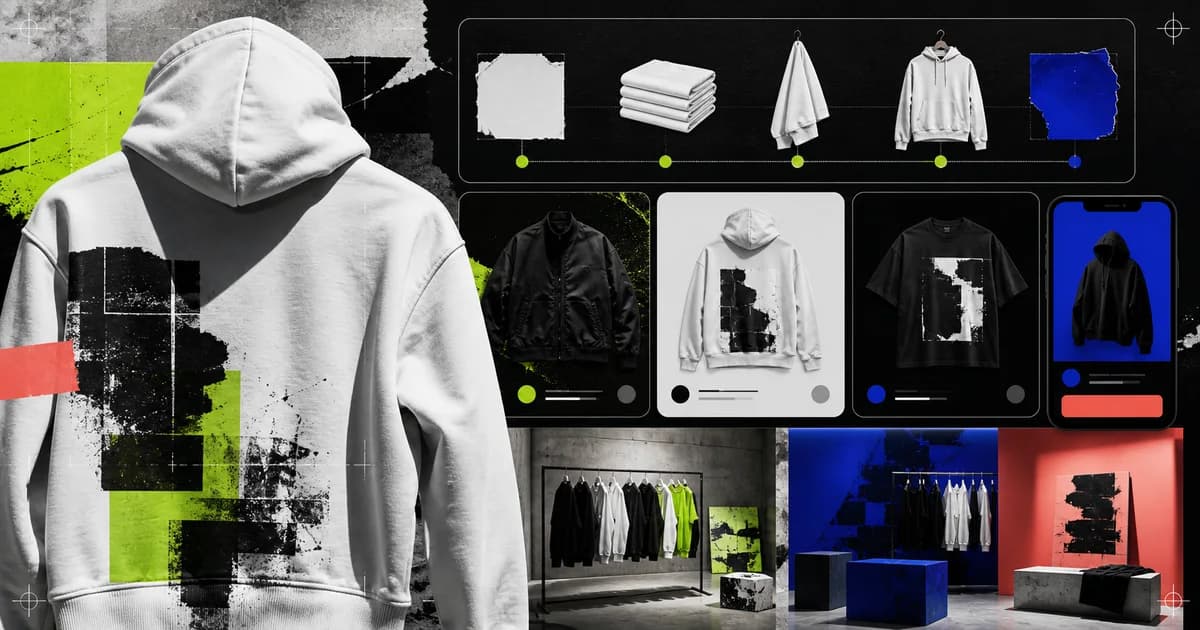
Streetwear balances strong campaign identity with exact release timing, product access, unisex or model-specific sizing, variant stock, authenticity of urgency, and fulfillment terms. This editorial ranking starts with the closest Polo structure and two named Theme Store controls. It is an evaluation order for drop-driven shoppers who still need durable product and fulfillment truth, not a promise of sales, speed, compliance, or specialist functionality.
Which themes belong on a streetwear shortlist?
Judge each theme before, during, and after a drop. Shopify’s Future publishing lets merchants schedule products and collections for later publication, making release-state behavior testable. Compare Wosa’s adjacent fashion structure, Impact’s high-energy merchandising, and Broadcast’s story depth. Use the fashion brand theme guide as baseline, then add access, scarcity, fit, and archival checks.
1. Wosa — closest Polo adjacent fit
Wosa is the closest Polo adjacent fit because Polo seeds it for clothing stores with clean typography, modern visual presentation, responsive layouts, and customizable branding. It does not manage drop scheduling, bot protection, queueing, inventory fairness, release rules, sizing data, production, returns, or fulfillment. In this streetwear comparison, rank 1 identifies the nearest Polo structure to preview; the merchant’s controlled catalog test can reverse the order.
2. Impact
Impact is the strongest bold-design control; its official page describes large headings and subtle animation and lists pre-order, quick buy, sticky cart, lookbooks, swatches, product options, size charts, filtering, and mega-menu navigation. Animation and urgency-adjacent tools must not obstruct products, imply false scarcity, or be confused with queueing, bot mitigation, reservation, or guaranteed inventory. In this streetwear comparison, rank 2 identifies the first independent control to preview; the merchant’s controlled catalog test can reverse the order.
3. Broadcast
Broadcast is the campaign-to-catalog alternative, with official listings for promotional sections, lookbooks, swatches, product options, size charts, filtering, quick buy, and back-in-stock alerts. Promotional density can make a drop page harder to use, and a back-in-stock or countdown component does not establish release policy, fairness, or truthful inventory messaging. In this streetwear comparison, rank 3 identifies the second independent control to preview; the merchant’s controlled catalog test can reverse the order.
What criteria matter most for a streetwear theme?
Direct product access, garment measurements, truthful release states, exact variant inventory, collaboration attribution, fulfillment terms, and a useful archive matter most. Shopify’s Managing inventory defines inventory as quantity available for sale and provides tracking and adjustment tools. Test reduced motion and peak states; reject countdowns implying reservation, campaign names replacing identity, or stale sold-out urgency.
- Direct product access. Campaign pages should route quickly to purchasable products and preserve navigation even when imagery, video, or animation is prominent.
- Release truth. Date, timezone, eligibility, purchase limits, pre-order status, cancellation, shipping timing, and stock language need approved and synchronized sources.
- Fit across presentation. Size measurements, model dimensions, worn size, cut, and product-family exceptions must remain clearer than “unisex” shorthand.
- High-load behavior. The staged stack should be tested for traffic assumptions, inventory contention, cart expiry, errors, and recovery; the theme alone cannot prove these systems.
- Catalog after the drop. Permanent product families, archives, sold states, and search should remain understandable after the campaign moment passes.
How should you test streetwear themes across a full drop?
Make one mixed drop include footwear, using the footwear store theme guide to sharpen fit checks. Shopify’s Publishing and unpublishing product variants supports controlling variant availability on sales channels, so exercise identical records through coming-soon, live, partial-sellout, full-sellout, and archive states. Capture market, size, colorway, limits, stock, cart behavior, fulfillment wording, and post-event navigation.
- Core Tee: a permanent product with two fits, several colors, and product-specific measurements that anchors navigation beyond a launch.
- Drop Hoodie: a date-bound item with approved timezone, purchase limit, fulfillment estimate, and sold-out recovery content.
- Numbered Jacket: constrained inventory and exact size-color combinations, testing cart contention without implying reservation before the platform confirms it.
- Pre-order Cap: clearly separated from in-stock products, with timing and cancellation terms attached to the selected item and cart line.
- Archive look: a campaign page after sellout that preserves editorial context while accurately routing to current products instead of dead ends.
How can a streetwear catalog survive beyond launch day?
Give every release stable identity, maintained size and material data, a direct route, accurate availability, and a post-event state independent of campaign modules. Shopify’s Future publishing schedules when products or collections become available; it does not create an enduring archive policy. Remove expired urgency while preserving approved collaboration details, buyer records, support access, and genuinely current alternatives.
Streetwear presentation may be campaign-led, but every release still needs durable product identity, sizing, availability, fulfillment terms, and post-drop navigation. Decide whether a release is a collection, a scheduled merchandising state, a limited variant, or simply a story around standard inventory. Wosa is an adjacent fashion base; it does not supply queueing, bot controls, raffles, launch scheduling, reservation logic, or guaranteed scarcity. Any such workflow must come from the merchant’s actual systems and be tested under the intended rules.
Release architecture should also account for discovery after the campaign link disappears. Preserve a stable product title, colorway, season or collection relationship, garment measurements, and imagery so customer support and existing buyers can identify the item later. Campaign nicknames can remain as editorial context, but they should not replace the identifiers used in cart, confirmation, fulfillment, exchanges, and archives.
Preview a drop before and after its peak
Use a graphic tee with unisex measurements, a numbered colorway only if the inventory basis is real, a matching accessory, and an older sold-out release. Test the coming-soon state, the purchasable state, partial size sellout, full sellout, and archival discovery. Campaign imagery should link to exact items, while direct product URLs should still explain the release without the homepage context. The archive should distinguish permanently unavailable products from items likely to return only when the merchant can support that language.
Streetwear failure modes
- Manufactured urgency: countdowns, low-stock labels, or “exclusive” wording are disconnected from actual release and inventory rules.
- Campaign gatekeeping: animation or a splash sequence blocks product facts, accessibility, or a fast mobile purchase path.
- Unisex without measurements: a broad label replaces garment dimensions, worn size context, and cut-specific guidance.
- Post-drop collapse: sold-out cards lead nowhere, vanish without an archive plan, or keep purchase controls active after inventory is gone.
Rehearse the complete release lifecycle
- Write state-specific content. Prepare accurate copy and actions for preview, live, low-stock, partial sellout, sold-out, restock, and archive states.
- Load-test the human workflow. Have editors rehearse product activation, navigation changes, error correction, and rollback without improvising code at launch time.
- Run mobile purchase scenarios. Enter from social links, select size, encounter an unavailable option, choose an alternative, and confirm the exact variant in cart.
- Review after the drop. Preserve useful product and sizing content, remove expired promises, and route visitors toward valid current products without rewriting history.
Streetwear failure modes
- Animation gate: motion, splash screens, or video delay or conceal navigation, product facts, focus, or purchase controls.
- Manufactured scarcity: countdowns, stock messages, or sold-fast language do not reflect a maintained inventory or release state.
- Unisex as measurement: a broad label replaces garment dimensions, model context, cut, and size-specific availability.
- Cart as reservation: messaging implies an item is secured merely because it entered a cart, contrary to the tested commerce behavior.
Which tests prove a streetwear drop remains truthful?
Schedule a release, change markets, exhaust one size, enforce a purchase limit, reduce motion, and revisit saved carts after sellout. Shopify’s Managing inventory supports stock tracking and records adjustment history for products and variants, so verify selected stock rather than collection-level scarcity. Pass only when access, size, price, fulfillment, and archive state remain accurate without invented restock knowledge.
- Freeze release facts. Assign sources and owners for time, timezone, eligibility, limits, preorder status, stock language, shipping estimate, cancellation, and support.
- Navigate without motion. Disable or reduce animation and confirm campaign, collection, product, size guide, cart, and support remain coherent by keyboard and touch.
- Run a timed rehearsal. Use a controlled test launch to observe publish timing, caches, product status, inventory changes, errors, and rollback without claiming production capacity.
- Contest the last unit. Exercise two sessions against constrained stock and verify the actual platform response, cart messaging, checkout failure, and recovery.
- Check every fit. Confirm garment measurements, model dimensions, worn size, cut notes, color-size stock, and cart identity across the drop range.
- Visit after sellout. Ensure archived editorial pages disclose state, avoid fake urgency, preserve useful context, and route to truthful current options.
How should access, collaboration, and post-drop states become catalog rules?
Represent each condition with maintained data and enforceable commerce behavior, not announcement copy. Shopify’s Publishing and unpublishing product variants separates variant availability across sales channels, which can support scoped access but does not establish collaboration rights or archival policy. Test market scope, approved attribution, and post-drop rules through direct links, search, cart, account, and returns.
A release can include public stock, early-access stock, region-limited products, and a collaboration item with different purchase limits. Those conditions need governed commerce rules, not only announcement copy. Preview Wosa as the closest Polo fashion structure, Impact as the high-energy campaign control, and Broadcast as the editorial storytelling control with the same test: one hoodie releases in all markets, one shoe releases later in a second market, and one numbered accessory has a per-customer limit. The pre-release page must not expose an active add action, the live page must show the selected market’s actual state, and the cart must enforce the rule without suggesting inventory is reserved before the platform truly reserves it. A countdown should describe a maintained event time and timezone, not manufacture scarcity.
A collaboration also complicates identity and ownership. State the actual brand or collaborator relationship using approved language, distinguish licensed artwork from product construction claims, and keep size, materials, care, quantity, and fulfillment terms attached to the purchasable item. After sellout, preserve a useful archive when that suits the merchant’s policy: mark the product unavailable, remove dead urgency, retain accurate campaign context, and offer current alternatives without relabeling them as the original drop. Rehearse direct links, search results, saved carts, customer accounts, and returns after the event ends. The strongest theme is not simply the one that looks best during the first minute; it is the one that remains truthful when traffic settles and every promotional state has expired.
Key Takeaways
- Wosa is the adjacent fashion base. Release scheduling, access control, purchase limits, queues, reservations, and bot mitigation are separate systems.
- Urgency must reflect maintained facts. Timers, stock messages, and sellout language should never imply reservation or scarcity they cannot verify.
- The product record should outlive the campaign. Preserve exact identity, measurements, materials, colorway, collaboration context, and fulfillment terms after launch.
- Test the entire release lifecycle. Coming-soon, live, partial stock, sellout, saved carts, regional timing, and archive states all need explicit acceptance evidence.
Final decision for a streetwear catalog
Wosa is Polo’s closest fashion-led adjacent fit, Impact is the boldest current control, and Broadcast is the richer campaign-merchandising control. The winner must remain usable when animation is reduced, traffic assumptions are challenged, the last item sells, and the drop becomes an archive. Brand intensity is valuable only when product, fit, release, inventory, and fulfillment truth stay intact.
Frequently asked questions
Does a streetwear theme manage product drops?
No. A theme presents release content. Scheduling, inventory, bot controls, queues, checkout contention, limits, and fulfillment require platform or service configuration and separate testing.
Are countdown timers appropriate?
Only when they reflect an approved, synchronized event and do not imply stock or reservation facts they cannot know. Also test timezone, expiry, and reduced-motion behavior.
What does unisex sizing need to explain?
Provide garment measurements, measuring method, cut, model dimensions and worn size, plus product-family exceptions. The label alone is not fit guidance.
Should sold-out drop pages be deleted?
Usually preserve useful editorial and product context with an accurate sold state and routes to current items, subject to the merchant’s SEO and archive policy.
How should regional release times be shown?
Show the time that actually governs access for the shopper’s selected market, include an unambiguous timezone or localized equivalent, and define what happens when the timer ends. Test daylight-saving boundaries, cached pages, and direct product links. If markets release independently, do not let one market’s live state unlock another market’s cart.