Guides · August 23, 2026 · 12 min read
How to Start a Footwear/Shoe Store
Start a footwear store by validating samples and size data, planning inventory by fit, and proving guidance, exchanges, condition checks, and support.
By Polo Themes
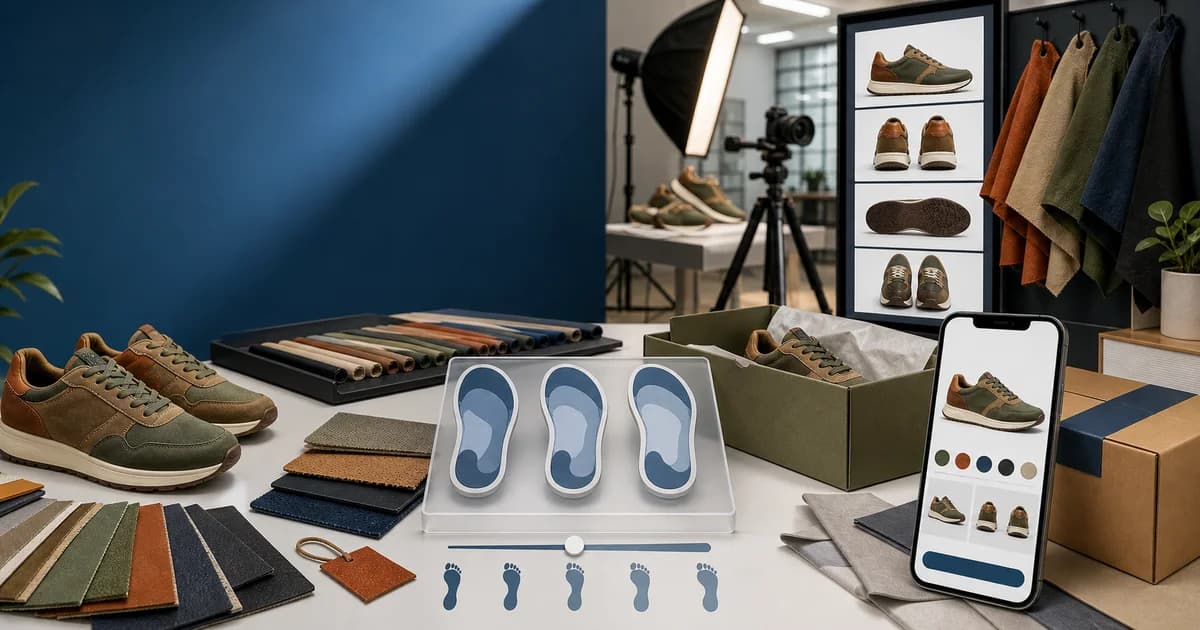
Start an online footwear store by choosing a category and use case, validating samples and size data, planning inventory by size and width, and proving fit guidance, exchanges, condition checks, packaging, and support.
Shoes concentrate inventory risk in size runs and customer uncertainty in fit. Style photography can bring a shopper to the page, but the decision depends on measurements, shape, width, materials, construction, intended use, and brand-specific variation. Shopify can model variants and inventory; it cannot determine whether a shoe fits, verify a performance claim, or make one conversion chart valid across manufacturers. Build the data and exchange operation around tested products.
Jurisdiction check: footwear duties can include product safety, material and origin claims, chemical restrictions, labeling, accessibility, advertising, and consumer remedies, with extra rules for protective, children’s, therapeutic, or electronic products. US sellers can start with CPSC and FTC resources, but every merchant must verify the rules and standards in each jurisdiction served. Fit guidance and testing do not certify a product or promise compliance.
Key Takeaways
- Launch one footwear category with verified construction, fit, use, and supplier evidence.
- Publish product measurements separately from foot guidance and explain the measurement method.
- Treat size, width, color, region, and revision as inventory identities that exchanges must preserve.
- Use return and wear evidence to narrow claims, improve fit guidance, and manage model revisions.
Which footwear category and use context should the store choose?
Choose one footwear type, customer, climate, activity, and fit problem the team can sample, measure, stock, exchange, and support. Footwear Business Guidance — CPSC (United States) distinguishes safety obligations for categories such as children’s footwear and certain textile constructions. Polo Themes — Wosa Shopify theme can present the range only as an adjacent fashion option, not verify performance or fit.
Define whether the assortment serves casual wear, formal use, work, sport, children, specialist widths, or another bounded job. Each context changes performance evidence, safety considerations, size guidance, wear testing, and return condition. Avoid mixing categories only because a supplier offers them. A focused assortment lets staff learn fit patterns and gives collection filters meaning. Obtain qualified review for protective, orthopedic, or regulated claims.
How should footwear supply and samples be qualified?
Verify supplier identity, authorization, construction, materials, last, size grading, tolerances, components, production changes, packing, warranty, and returns through representative samples. Footwear Business Guidance — CPSC (United States) identifies category-dependent requirements, including rules affecting children’s products and some textile footwear. Use the store cost guide to expose size-run investment without replacing fit, durability, or compliance evidence.
Verify manufacturer or supplier identity, model, regional sizing, materials, construction, color, width, production consistency, availability, packaging, warranty, and returns. Inspect and wear-test representative samples appropriate to the intended use. Compare production with approved samples. Do not publish supplier performance language or size conversions without evidence. Record model revisions because an upper, last, sole, or material change can alter fit while the marketing name remains.
What makes a footwear measurement standard useful?
Distinguish labeled size, internal product measurements, foot-measurement guidance, width, volume, observed fit, method, units, and tolerance for each model and last. Shopify Help — Products supports descriptions, variants, and metafields for model-specific facts. Publish verified measurements through the product setup guide, never a supplier chart copied across lasts or a claim that nominal sizes convert universally.
Explain the sizing system and how foot or shoe measurements were taken. Distinguish foot length guidance, internal dimensions, width designation, shape, volume, and observed fit notes. Keep units consistent. Do not collapse regional labels into a universal conversion when the actual models differ. Encourage comparison with a well-fitting shoe only as guidance. Train support to discuss evidence without guaranteeing fit.
How should footwear inventory be planned by meaningful variants?
Plan stock by exact model, revision, regional size, width, color, and location, preserving SKU, media, weight, and fit records for each combination. Shopify Help — Inventory management tracks quantities for products and variants and records adjustments. Use the store launch checklist to test sold-out sizes, concurrent exchanges, mismatched labels, and whether replacement capacity remains visible without overstating availability.
Map each color, size, and width combination to the exact SKU, inventory, image, weight, and fulfillment record. Do not create combinations a supplier cannot deliver. Decide launch depth from current cost, lead time, sample evidence, customer need, and ability to exchange; avoid invented universal size curves. Test sold-out sizes, color changes, cart edits, and restock updates. Keep one-of-a-kind returns out of sellable stock until inspected.
What should a footwear product page explain about fit and use?
Explain the exact model, revision, construction, materials, measurements, size method, width or volume, observed fit, intended use, care, included pieces, weight, delivery, exchanges, and returns. Shopify Help — Products provides descriptions, media, variants, and metafields for those facts. Use the beginner storefront walkthrough to place fit guidance beside selection, where it can prevent the wrong order.
Show upper, side, heel, toe, sole, closure, interior where useful, and scale. State materials, construction, intended use, size and width guidance, fit observations, care, included components, warranty, delivery, and return conditions. Separate aesthetic descriptions from verified performance facts. Place the guide near selection and repeat the exact configuration in the cart. Ensure the default image does not imply that an unavailable color is selected.
Can Wosa serve as an adjacent footwear storefront?
Polo Themes — Wosa Shopify theme is a fashion-led clothing presentation, so footwear remains an adjacent use. Test large size matrices, width guidance, outsole imagery, revision identity, and sold-out states before selecting it. Shopify Help — Products supplies catalog descriptions, media, variants, inventory, and metafields; neither source provides fit intelligence, performance testing, size conversion, exchange allocation, or wear assessment.
Polo does not seed a footwear-specific product. Wosa can be evaluated for its fashion-oriented hierarchy, clear type, and adaptable small-screen presentation, but that is an adjacent use. It does not supply shoe sizing, width logic, performance verification, exchange operations, or inventory planning. Label the adaptation and test Wosa with size-width variants, sole imagery, fit guidance, sold-out states, and returns content.
How should footwear exchanges move through inventory?
Treat an exchange as two controlled movements: reserve the exact replacement variant, then receive and inspect the original pair before assigning disposition. Shopify Help — Returns and exchanges describes returns, alternative items, and refunds as separate actions, and notes that exchange inventory is not reserved until processing. Do not make worn or uncertain footwear sellable because the financial step finished.
Define how a customer requests a different size, whether stock is reserved, how price or promotion differences are handled, when the replacement ships, and what happens if the preferred size is unavailable. Track the original and replacement clearly. Train support to capture fit reason rather than only “too small.” Use that evidence to improve data, buying, or product selection. Do not promise exchange timing the inventory process cannot support.
How should returned footwear be inspected before disposition?
Inspect identity, wear, outsole, upper, insole, odor, contamination, damage, packaging, accessories, and the reported issue before choosing resale, repair, quarantine, supplier claim, donation, recycling, or disposal. Shopify Help — Returns and exchanges allows refunds after returned items are inspected. Keep the customer remedy separate from physical disposition, and send fit evidence to the product owner.
Create product-appropriate condition rules for unworn, tried-on, used, damaged, or defective footwear under applicable obligations. Inspect identity, size, width, pair match, soles, uppers, packaging, accessories, and hygiene before restock or other disposition. Keep uncertain goods quarantined. A refund action in Shopify records the financial event; it does not perform the physical quality decision.
What should a worked footwear fit journey prove?
Rehearse a shopper comparing model-specific measurements and observed fit, choosing the correct regional size and width, receiving the exact pair, and completing a controlled exchange. Shopify Help — Products supports descriptions, media, variants, inventory, tags, and metafields across that path. Fail the journey when a generic chart, wrong image, stale revision, or unavailable replacement changes the decision.
A shopper seeking a wide work shoe reviews exact model, intended use, material, width and size guidance, sole and closure images, and return terms. They select an available width-size variant that appears unchanged in cart. The operator picks and checks the pair. If exchanged, support records the fit reason and stock movement. The journey fails if a generic conversion chart masks that this model runs differently.
How should footwear revisions preserve fit-history continuity?
Give a changed last, upper, cushioning, outsole, material, sizing, or construction a traceable revision and fresh fit review. Shopify Help — Inventory management tracks quantities by product and variant, so old and new stock must remain distinguishable there. Assess imagery, reviews, guidance, open orders, and exchanges before transition; never let a replacement inherit prior fit evidence silently.
When a supplier changes a last, upper, lining, insole, outsole, material, factory, or size labeling, compare the revised product with the approved reference. Decide whether it needs a new product record or clearly identified version. Do not carry old fit notes, reviews, images, or exchange patterns forward automatically. Customers returning to reorder should be told when a change can affect the decision they previously made.
Keep support able to identify which version a customer bought. Order records, SKU conventions, supplier documents, and warehouse labels should converge on the same model. If a returned pair reveals an unannounced production difference, quarantine related inventory and investigate rather than treating it as isolated preference. Variant inventory should not combine versions that require different guidance.
Use fit-history data to refine purchasing without turning it into a universal prediction. A pattern may be specific to a model, size range, customer task, or misleading description. Review it alongside verified measurements and samples. Change guidance only when the operation can support the wording, and retest the product page after an update. The aim is fewer wrong expectations, not a claim that online fit can be guaranteed.
Footwear care content should match verified materials and construction. Explain cleaning, drying, storage, waterproofing, replacement components, and use limits only where supported by the manufacturer or qualified product knowledge. Keep care products from appearing as universally compatible accessories. A treatment suited to one leather, textile, membrane, coating, or finish may damage another, so recommendations need the same controlled compatibility standard as insoles, laces, and other components.
When does performance footwear need a narrower promise?
Narrow the promise whenever terrain, load, weather, protection, support, durability, certification, or wearer condition exceeds evidence for the exact model and revision. Advertising and Marketing — FTC (United States) states that advertising claims must be truthful, non-deceptive, and evidence-based. Remove category labels, imagery, filters, or testimonials that imply safety or performance the approved record cannot support.
Separate fashion footwear from products sold for a defined work, sport, protective, orthopedic, or weather context. The latter may require verified construction, test evidence, warnings, professional input, or certification that a generic style description cannot replace. Create filters only from owned facts and exclude a use when the product has not been approved for it. Support can explain measurements and documented features, but must not diagnose gait, injury, or medical suitability.
A customer returns a boot after using it in conditions beyond its documented rating and requests the next model up. Staff inspect identity and condition, apply applicable rights and policy, and explain only verified differences. They do not promise that the replacement will prevent injury or meet a workplace requirement. If the intended use reveals ambiguous copy, merchandising removes the unsupported filter, routes the claim for review, and updates affected product pages before further sales.
Apply footwear rules to construction and claimed use
For United States sales, identify the CPSC, FTC, customs, workplace-safety, or other primary authority that owns the actual material, labeling, origin, protective, advertising, and consumer questions raised by the shoe. A general sneaker and a protective work boot do not share one evidence burden. For other markets, verify the competent product-safety, chemical, labeling, protective-equipment, customs, and consumer authorities. Enable a destination and use claim only after the exact model, revision, markings, documentation, and seller path have passed review.
Footwear launch acceptance tests
- Model fit: measurements, last or fit observations, size system, width, media, stock, and cart label agree for each variant.
- Use boundary: filters, comparison, recommendations, and support repeat only the approved activity or protection claims.
- Exchange custody: outgoing replacement, incoming pair, inventory reservation, refund balance, and inspection status remain reconciled.
- Revision control: a changed last, sole, material, or factory cannot inherit old fit guidance without sample review.
- Destination gate: labeling, materials, protective claims, documentation, and customer remedies are approved for each enabled market.
Failure modes to test
- Conversion overreach: one chart is applied across brands, lasts, widths, and regional models without verification.
- Pair mismatch: warehouse checks do not confirm both shoes, size, width, color, and model.
- Performance inflation: supplier marketing becomes an unsupported safety or sport claim.
- Exchange oversell: the replacement is promised before inventory is reserved or confirmed.
- Unsafe restock: worn or mismatched returns re-enter available inventory.
- Adjacent-theme overclaim: Wosa is presented as a footwear fit or exchange system.
Implementation sequence
Approve category, use, claims, and supply. Sample and wear-test representative models. Freeze measurement, fit, media, and variant standards. Plan inventory, fulfillment, exchanges, and return inspection. Build the hardest size-width product in Shopify. Stage Wosa only as an adjacent fit. Test sold-out size, wrong pair, exchange, defect, and restock decision before launch.
Frequently asked questions
Can one size chart cover every shoe?
Not safely without evidence. Brand, model, last, width, construction, and regional labels can differ. Publish verified model-appropriate guidance and its method.
Is Wosa a footwear theme?
No. It is a clothing presentation and only an adjacent visual option. Footwear fit, width, performance, exchange, and return needs require separate proof.
How should exchanges be tested?
Rehearse request, inventory reservation, original return, condition check, replacement shipment, financial handling, communication, and unavailable replacement.
What return data is useful?
Capture exact model, size, width, customer fit reason, condition, and resolution. Aggregate evidence can improve product guidance and inventory decisions without pretending every return has one cause.
Can performance claims be inferred from a shoe’s appearance?
No. Tread, height, material, or styling does not by itself prove slip resistance, protection, waterproofing, athletic suitability, or workplace compliance. Publish only the use and performance evidence approved for the exact model and revision. Remove filters and recommendations that imply more, and route medical, injury, or occupational suitability questions to the appropriate qualified source.
What should happen when a shoe last changes?
Quarantine the new revision, sample and remeasure its supported sizes, compare fit observations and construction, and decide whether it needs a distinct product record. Do not merge inventory or let old reviews and size guidance describe the new last automatically. Open orders, exchanges, media, recommendations, and support scripts must identify which revision the customer will receive.