Guides · August 23, 2026 · 13 min read
How to Start a Clothing Brand on Shopify
Start a clothing brand by defining a customer and design system, validating samples and fit, planning inventory, and rehearsing exchanges and support.
By Polo Themes
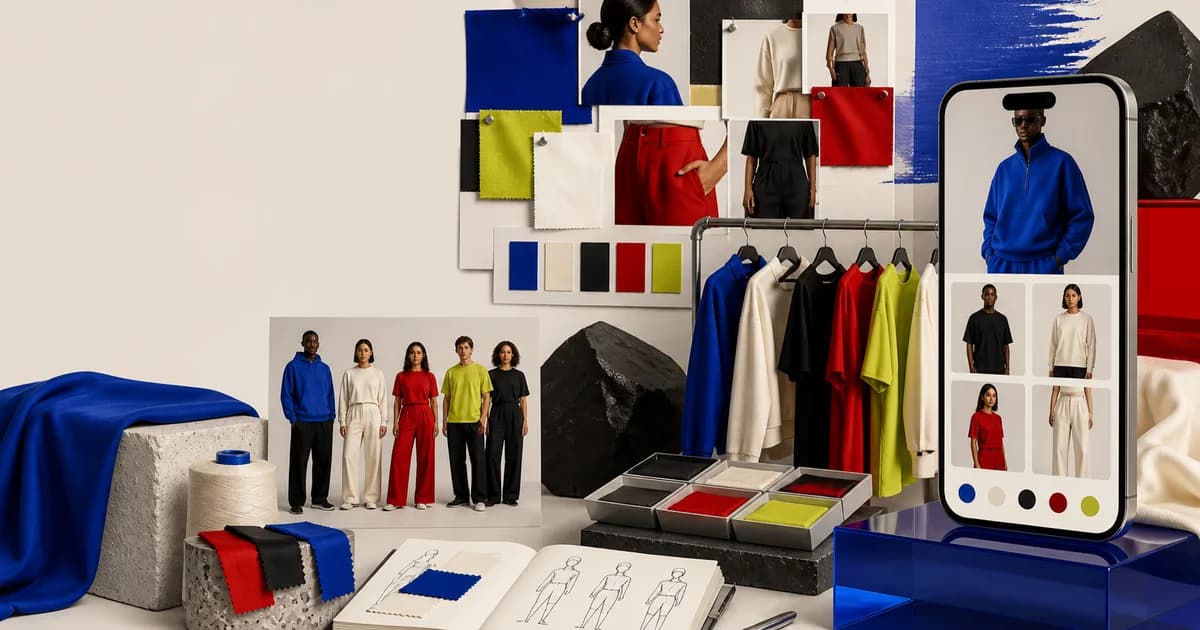
Start a clothing brand on Shopify by defining a recognizable design point of view, validating samples and fit, choosing a production and inventory model, and building product information that makes size, fabric, care, and delivery clear.
A clothing launch succeeds when the promise survives contact with bodies, materials, production, and returns. Brand imagery can create desire, but repeatable quality and understandable fit create trust. Decide whether the business owns inventory, produces on demand, buys wholesale, or uses a verified print or manufacturing partner. That choice shapes sampling, cash exposure, lead times, variant depth, quality control, fulfillment, and the language customers need before choosing a size.
Jurisdiction check: textile fiber, care, origin, product-safety, advertising, accessibility, and consumer-rights obligations vary by product and destination. US merchants can begin with FTC textile and care-labeling resources, then verify whether another federal or state authority applies. Every merchant must confirm the rules in each jurisdiction served; accurate product records and theme testing support that work but do not guarantee compliance.
Key Takeaways
- Build the first capsule around one wearer, wardrobe job, and recognizable point of view.
- Approve representative production samples before committing inventory or publishing fit claims.
- Connect every size and color to verified measurements, media, care, SKU, and stock.
- Use returns evidence to improve patterns, guidance, assortment depth, and release decisions.
Who is the garment for, and what wardrobe job should it perform?
Define one wearer, setting, fit preference, and wardrobe problem to guide silhouette, fabric, color, price, and styling. Threading Your Way Through the Labeling Requirements Under the Textile and Wool Acts — FTC (United States) says most textile labels disclose fiber content, origin, and responsible business identity. Let Wosa express the viewpoint without replacing those garment facts.
Describe the intended wearer through a real context: work, occasion, climate, activity, aesthetic, fit preference, or unmet wardrobe need. Use that context to set silhouettes, materials, color relationships, and price positioning from current cost inputs. Avoid trying to serve every style identity in the first collection. A coherent capsule lets customers combine items and lets the team learn which fit and fabrication decisions matter without carrying unrelated inventory.
Which production model fits the clothing brand?
Choose owned production, wholesale, made-to-order, or a partner model by sampling control, minimums, lead times, quality, fulfillment, and change ownership. Flammable Fabrics Act (FFA) — CPSC (United States) explains that clothing textiles have flammability standards regardless of business model. Use the store cost guide for current commitments, but keep product-safety evidence as a separate gate.
Compare owned production, contract manufacturing, wholesale, made-to-order, and print partners by sample quality, minimum commitments, lead time, communication, material evidence, change control, packaging, fulfillment, returns, and backup options. Place real sample orders through the intended path. Define who owns patterns or artwork, who approves production, and what happens when a component is substituted. Do not publish supplier mockups as proof of final color, drape, print placement, or construction.
How should clothing samples be approved before production?
Inspect representative sizes and colors for measurements, construction, fabric behavior, trim, labeling, care, packaging, and intended wear before approving production. Flammable Fabrics Act (FFA) — CPSC (United States) describes required flammability tests for covered clothing textiles and children’s sleepwear. Feed the product setup guide only repeatable production facts, not an attractive prototype’s unverified details.
Inspect representative sizes and colors for measurements, construction, material, trim, shade, shrinkage or care behavior as appropriate, comfort, labeling, and packaging. Record the approved reference and tolerances under qualified production guidance. Wear-test products in their intended context. Feed every approved measurement and observation into the product record. If production differs from the approved sample, stop or disclose according to the business decision rather than silently updating photographs after orders arrive.
What makes a clothing size system defensible?
Distinguish garment measurements from body guidance, explain each method, preserve units, and base fit notes on approved samples rather than familiar labels. Shopify Help — Adding variants uses size and color as option examples and requires variant-level settings for price, inventory, and shipping. Use the beginner storefront walkthrough to place the separate measurement guidance beside selection.
Distinguish body guidance from garment measurements and explain how measurements were taken. Do not assume that a familiar size label has the same dimensions across garments or suppliers. Keep units consistent and show fit notes based on observed samples. Train support to ask useful questions without promising perfect fit. Track return reasons by garment and size, then correct patterns, product data, or guidance when evidence reveals a recurring mismatch.
How should clothing variants and inventory depth be modeled?
Publish only genuine size-and-color combinations, each tied to the correct SKU, measurements, media, weight, price, stock, and fulfillment identity. Shopify Help — Adding variants says every option-value combination becomes a variant and variant settings need individual adjustment. Buy depth from evidence, expose sold-out states honestly, and put boundary cases in the store launch checklist.
Use color and size as options only for combinations that are truly available. Ensure each variant maps to the correct SKU, inventory, media, weight, and fulfillment record. Start with depth the business can reconcile rather than presenting every theoretical combination. Test sold-out sizes, low stock, color changes, and cart edits on mobile. If an item is made to order, explain the production trigger and valid cancellation or return conditions before payment.
What must a fashion product page prove?
Connect campaign aspiration to the purchasable garment through truthful color, construction, texture, fit, measurements, composition, care, included pieces, delivery, and returns. Threading Your Way Through the Labeling Requirements Under the Textile and Wool Acts — FTC (United States) says most covered textile labels identify fiber content, country of origin, and the responsible manufacturer or marketer.
Show the full garment, detail, fabric texture, closure, back, and useful scale or styling context. Describe material composition, construction, fit, measurements, care, included pieces, origin claims only when supported, delivery, and returns. Do not let campaign imagery imply a color or accessory that is not included. Product names should remain recognizable in the cart and support inbox. Keep the size guide near the selector rather than buried in a generic footer.
What does Wosa provide for a clothing storefront?
Wosa E-commerce Shopify Theme — Polo Themes describes a responsive fashion storefront with clean typography, customizable sections, size-chart support, and a mega menu. Those features present clothing; they do not create patterns, validate measurements, forecast inventory, approve photography, or manage returns. Test Wosa with real garments, dense variants, sold-out states, care information, and campaign links.
Wosa is Polo Themes’ direct clothing-store match, with clean typography, responsive layouts, and fashion-led product presentation. It does not claim sizing intelligence, production, inventory planning, photography, returns management, or fulfillment. Preview Wosa with long garment names, real size guidance, color and size variants, sold-out states, campaign imagery, and care content. Confirm that editorial presentation leads into clear purchasable configurations.
How should clothing collections and releases be planned?
Plan each release around one wardrobe purpose, approved garments, reconciled inventory, honest availability, verified campaign links, and staffed support. Shopify Help — Creating collections and adding products lets merchants group selected products or variants and control publication. Freeze decision content, rehearse mobile discovery through checkout, and avoid launching several unproven fits whose return signals cannot be isolated.
Organize around the wardrobe job, garment type, or coherent release rather than supplier batches. Every campaign link should resolve to available products and preserve the advertised context. Set a content freeze before a drop, reconcile variant inventory, test discount and delivery language, and confirm support coverage. Avoid launching many new silhouettes simultaneously when fit evidence is still weak; the resulting returns will be hard to diagnose.
How can clothing quality and fulfillment stay consistent?
Use approved references, incoming checks, variant-level picking, final inspection, protective packing, and traceable exceptions to keep garments consistent. Shopify Help — Order management and fulfillment describes preparing, picking, packing, and shipping as distinct fulfillment work. Put verified weights, packaging, destinations, and carriers in the shipping setup guide, then test damage, delay, wrong-item, split-order, and return cases.
Define receiving or production checks, folding, protective packaging, labels, order verification, tracking, and exception handling. Train staff to match garment, color, and size from the order. Keep returned goods separate until condition is assessed under the policy and applicable obligations. Cost exchanges and returns using current operating inputs, but do not invent an industry rate. A clear workflow is more useful than a headline benchmark.
What should a worked capsule journey test?
Rehearse a shopper understanding the capsule, comparing garments, choosing size and color from credible guidance, receiving the exact approved item, and completing an exchange or return. Shopify Help — Products identifies descriptions, media, inventory, variants, tags, and metafields as catalog resources. Reconcile those records with the selected garment, packing evidence, support view, and final remedy.
A shopper enters through a campaign image, reaches the named garment, reviews fabric and fit, compares their measurements with the garment guide, chooses an available color and size, and sees delivery and return conditions. The operator receives an exact variant, quality-checks it, and ships it. Support can find the same measurement record when asked. The journey fails if imagery and variant color disagree or the guide belongs to another supplier block.
How can returns guide clothing product development?
Capture specific return reasons against the garment, variant, approved sample, and customer explanation, then review them with support contacts and inspection results. Shopify Help — Returns and exchanges distinguishes refunds, received returns, and exchanges, including inspection before refund. Keep those states separate so teams can correct patterns, imagery, guidance, purchasing, or quality instead of reading refund totals alone.
Create return reasons that distinguish preference, expected-versus-observed fit, garment measurement, color representation, material feel, construction issue, damage, late delivery, and wrong item. Preserve the exact garment, production batch or supplier context where useful, size, color, and customer explanation. Do not force every answer into “did not fit.” The patterns support different decisions: a clearer guide, a changed pattern, better imagery, supplier correction, quality hold, or removal from the range.
Review evidence with design, production, merchandising, and support together. A garment returned as small may match its published measurements yet still conflict with the described silhouette; another may show production drift from the approved sample. Update customer guidance only when it reflects the actual product. If a pattern or supplier changes, remeasure and decide whether the new version needs a distinct record rather than allowing old reviews and fit notes to describe it.
Close the loop with inventory disposition. Returned pieces need condition and identity inspection before restock, repair, sample use, or other handling. Keep unavailable stock from reappearing during inspection. When the same defect recurs, quarantine related inventory and escalate through the supplier-quality process. The refund event, physical garment state, and product-learning record should remain connected even if they live in different systems.
Make release quantities a brand decision
Approve buys by garment, color, and size from current unit economics, supplier commitments, fit evidence, storage, launch capacity, and the consequence of unsold stock. Do not spread a fixed budget evenly across sizes or let a supplier minimum become the assortment strategy. Record which variants are core, experimental, made to order, or intentionally absent. Reorder only after checking whether demand reflects genuine fit success, temporary campaign attention, returns still in transit, or stock stranded in an unusable condition.
Consider a launch in which the campaign drives one color faster than expected while returns suggest its fabric photographs lighter than it appears. The team pauses the color-specific promotion, corrects media using the approved sample, separates unopened sellable returns from pending inspections, and reviews reorder timing. It does not rename the shade, borrow inventory from another SKU, or place a production order from gross sales alone. The decision protects both the visual promise and cash committed to the next run.
Apply apparel rules to each sellable version
For United States sales, use FTC textile and care-labeling guidance to review fiber naming, care instructions, manufacturer or dealer identity, and origin representation for the actual garment; bring in other relevant product-safety authorities for the category. Recheck when fabric, trim, factory, print method, or blank changes. For other destinations, identify the primary labeling and safety authority and local consumer rules before enabling that market. A compliant base garment does not automatically validate a merchant-added print, claim, bundle, or care instruction.
Clothing launch acceptance tests
- Sample fidelity: each live variant matches its approved garment record for construction, measurements, material, color identity, labeling, and care.
- Fit decision: a shopper can distinguish body guidance from garment measurements and support can trace the exact guide used for the ordered item.
- Release control: unavailable, unapproved, or inspection-held variants cannot be promoted, selected, or accidentally replenished.
- Exception recovery: wrong-item, shade discrepancy, exchange, and production-drift cases preserve variant identity through resolution.
- Market review: every enabled destination has an owner and evidence for the garment labels, claims, safety duties, and consumer terms used there.
Failure modes to test
- Chart mismatch: a shared size guide is applied to garments whose verified measurements differ.
- Mockup drift: storefront media represents a sample or color that production does not match.
- Variant oversell: theoretical color-size combinations appear despite unavailable inventory or production.
- Campaign dead end: editorial panels lead to empty collections, unavailable products, or inconsistent names.
- Return blindness: support records “wrong size” without tracing the garment, measurement, and reason.
- Theme overclaim: responsive fashion presentation is described as fit, manufacturing, or inventory capability.
Implementation sequence
Define the wearer, wardrobe job, design language, and production model. Approve samples and measurement standards. Select a coherent capsule and map variants. Build one complex garment in Shopify, then stage Wosa with real content. Configure inventory, shipping, policies, support, and collection routes. Rehearse selection, sold-out behavior, fulfillment, exchange, and production discrepancy before opening the launch collection.
Frequently asked questions
How large should the first clothing collection be?
Use the smallest coherent capsule that expresses the brand and can be sampled, documented, stocked or produced, fulfilled, and supported accurately. There is no universal item count.
Can a supplier size chart be published unchanged?
Only after it is verified against the actual approved garments and explained clearly. Different products or suppliers may require different measurements and fit guidance.
What does Wosa provide?
Its seeded description supports clean, responsive, fashion-led clothing presentation. Production, sizing accuracy, inventory, fulfillment, and returns remain separate merchant operations.
When should made-to-order status be shown?
Before purchase, wherever it affects production timing, cancellation, personalization, returns, or delivery. The storefront promise must match the rehearsed production workflow.
How should a brand decide which sizes to stock deeply?
Use the approved garment measurements, intended wearer, sample and fit evidence, current costs, supplier commitments, launch capacity, and observed demand and returns for that exact silhouette. Do not copy an industry ratio or distribute units evenly for neatness. Keep experimental depth explicit, reconcile returns still awaiting inspection, and revise buys only when evidence separates genuine demand from campaign effects, unclear guidance, or a production discrepancy.
What happens when production color differs from the sample?
Quarantine the affected units and stop the variant’s promotion. Compare production with the approved reference under the brand’s quality process, then choose rejection, corrected production, new photography and disclosure, customer reconfirmation, or cancellation. Preserve the version and batch context. Renaming the color or editing imagery to hide the difference leaves campaign content, customer expectations, inventory, and support describing different garments.
Should an exchange reserve replacement inventory immediately?
Only if the business has defined how long the reservation lasts, what condition the incoming garment must meet, how payment differences and unavailable stock are handled, and when the replacement may ship. Test the full movement rather than treating exchange as two unrelated orders. The original return, reserved variant, inspection result, refund or charge, and customer messages should reconcile without overselling another shopper’s stock.
When does a garment change need a new product record?
Use a new version when a changed pattern, measurement, fabric, trim, construction, factory, print method, labeling, care, or fit observation would make the old page, reviews, or support evidence misleading. Minor administrative corrections can remain controlled updates. The decision should be recorded before new inventory is merged so customers and staff can identify which physical garment was represented and ordered.
How should campaign samples be separated from sellable stock?
Give prototypes, fit samples, press loans, damaged references, retained production samples, and approved sellable units distinct custody states. Record which version appears in every campaign asset. A returned or handled sample must not become available through a routine count adjustment, and a prototype should never substantiate the quality or color of an uninspected production run.