Guides · August 23, 2026 · 13 min read
How to Start a Medical Supply Store Online
Start a medical supply store with a permitted product scope, qualified suppliers, traceable records, governed claims, fulfillment, and recall readiness.
By Polo Themes
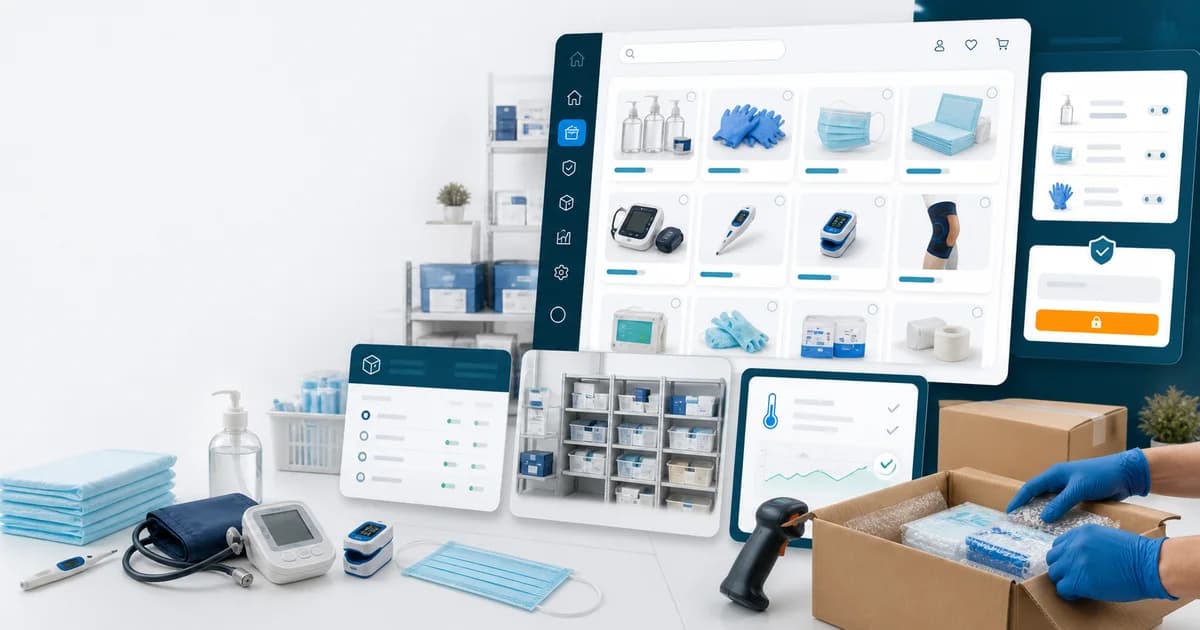
Start an online medical supply store by selecting a lawful buyer and product scope, controlling product evidence, qualifying suppliers, and proving storage, traceability, payment, fulfillment, support, and recall paths.
“Medical supplies” is not one operating category. A basic consumer aid, professional device, diagnostic product, sterile item, prescription-related product, and institutional purchase can carry very different seller, labeling, storage, record, shipping, and support duties. Shopify can present and transact eligible products, but it cannot classify them or authorize the merchant. Define the market and assortment with qualified local specialists before building a broad health catalog.
Jurisdiction check: US sellers should use FDA device classification, approvals, labeling, reporting, and recall resources according to the exact product, while recognizing that not every supply is regulated in the same way. Sellers elsewhere, or into multiple markets, must verify their own regulator, product class, registrations, professional restrictions, claims, records, and post-market duties with qualified advice. This process can reduce uncertainty but does not promise compliance.
Key Takeaways
- Classify each medical item, buyer, intended use, and destination before enabling purchase.
- Keep manufacturer evidence, exact identifiers, warnings, and revisions under document control.
- Prove custody, payment eligibility, fulfillment, complaints, quarantine, and recall tracing separately.
- Do not let a theme, supplier feed, or customer tag stand in for qualified approval.
Who should a medical-supply store serve, and where will products be used?
Choose a defined buyer, use setting, product scope, and destination before building the catalog. Classify Your Medical Device — FDA (United States) says classification depends on intended use, indications, and risk-based controls. Use that product-specific evidence to establish eligibility and professional boundaries; let the Medical theme present only the resulting approved offer.
Decide whether the store serves patients, caregivers, clinicians, procurement teams, or a bounded combination. Record what each buyer must know to identify the right item and whether professional confirmation is required. Avoid marketing a product for uses beyond approved or supplier-supported information. Institutional needs such as purchase orders, account approval, documentation, or quantity handling should be proven as workflows rather than implied by a business-to-business label.
How should a register classify each medical supply?
Record manufacturer, exact identifier, intended use, indications, market status, seller role, buyer restrictions, evidence, storage, traceability, and post-market duties for each item. Classify Your Medical Device — FDA (United States) explains that class affects the required premarket route. Keep uncertainty inactive, and use the product setup guide only after the evidence owner approves the record.
For every proposed item, record exact identifier, manufacturer, intended use, market status, seller authorization, labeling source, warnings, storage, shelf or expiry handling where relevant, batch or serial needs, complaint route, and recall contact. Link evidence to a controlled source and review date. Do not publish a certification icon or health outcome based on supplier marketing alone. When classification is uncertain, keep the product inactive until qualified review resolves it.
How can medical supply and custody be qualified?
Qualify the supplier and preserve exact identity through receiving, storage, picking, dispatch, return, quarantine, and disposal. Classify Your Medical Device — FDA (United States) says classification depends on intended use and indications, so a supplier family name cannot classify neighboring stock. Configure the shipping setup guide only after each product’s custody and transport path passes review.
Verify the supplier’s identity, authorization, chain of custody, authenticity controls, availability updates, packaging, storage, shipping method, warranty, returns, complaint cooperation, and recall response. Inspect representative goods and documents. Determine who owns stock and who can quarantine it. A dropship arrangement does not transfer the merchant’s customer obligations or remove the need to know what will be sent.
Which fields make medical product records precise?
Distinguish manufacturer, model, revision, intended use, specifications, contents, compatibility, warnings, storage, traceability, and approved market without collapsing similar items. Device Labeling — FDA (United States) defines labeling broadly enough to include written material accompanying a device, so connect instructions and documents to the exact version. Use the beginner storefront walkthrough only to present those controlled facts.
Build templates by product class with exact model or catalog identifiers, manufacturer, intended use, contents, dimensions, compatibility, materials, instructions, warnings, storage, documents, and customer eligibility information supported by the evidence. Keep units and terminology consistent. Separate variants only when the combinations are valid and distinguishable. Product media must show the actual version and packaging without obscuring labels or creating unsupported clinical implications.
How should medical documents and changes be controlled?
Control each manual, label, declaration, warning, image, claim, and specification by product version, approved source, reviewer, and effective date. Device Labeling — FDA (United States) says labeling includes written or graphic material accompanying a device, not only its container. Put that release discipline in the store launch checklist so edits cannot detach pages from shipped stock.
Assign an owner for manuals, safety information, declarations, and product revisions. When the supplier changes a label, component, identifier, or instruction, assess existing inventory and storefront content before replacing a file. Preserve the relationship between the ordered item and its supporting record. A generic PDF folder with overwritten filenames cannot support a complaint or recall investigation. Use approved storage and retention appropriate to the business and jurisdiction.
How should the storefront support exact medical-item identification?
Help qualified buyers distinguish exact products through stable identifiers, intended-use boundaries, specifications, compatible components, warnings, documents, and fulfillment conditions. Device Labeling — FDA (United States) notes that required information can appear on retail packaging and in accompanying materials. Keep those sources tied to the carted model; similar packaging or persuasive imagery must never obscure identity.
Organize collections by buyer task or verified product class, not by vague wellness promises. Product cards should help buyers distinguish models without compressing away consequential details. Product pages need a calm hierarchy for identity, intended use, compatibility, contents, specifications, warnings, documents, delivery, and support. Keep promotional badges from competing with safety information. Test long technical titles, unavailable configurations, document links, and mobile reading.
What does Medical provide for a medical-supply storefront?
Medical E-commerce Shopify Theme — Polo Themes describes a responsive, customizable storefront for health, baby, beauty, and medical products, with an advanced mega menu and flexible navigation. Those are merchandising features, not product classification, clinical guidance, storage monitoring, traceability, or recall control. Evaluate Medical with the hardest approved item record, warnings, documents, and eligibility state.
Medical is Polo Themes’ direct medical-supply presentation, designed for responsive health-oriented catalogs and clear customization. It is a storefront structure, not a clinical system, product registry, compliance service, prescription workflow, storage monitor, traceability system, or recall manager. Preview Medical with exact identifiers, supporting documents, warnings, and policy-heavy products. Reject any layout that makes a required fact hard to find.
How should payment and channel eligibility be verified?
Verify the merchant, exact product, buyer, destination, provider, channel, and transaction pattern before taking payment. Shopify Help — Shopify Payments eligibility says eligible merchants must be in supported countries and must not sell prohibited business types or products; its examples include regulated medical devices. Use the payment setup guide only after the applicable provider and channel approve the offer.
Disclose the exact product categories and business facts required by the payment provider and sales channel. Review current Shopify and provider rules using primary sources. Do not assume a provider visible in admin approves every medical product. Complete verification before launch, protect the account, and test authorized success, rejection, refund, and reconciliation behavior. Keep an escalation owner for reviews or payout holds.
How should medical storage and fulfillment be proven?
Prove storage and fulfillment with real products, locations, equipment, records, carriers, and exception drills. Shopify Help — Viewing inventory distinguishes Available, Unavailable, and On hand quantities across locations. Map inspection and quarantine states deliberately so only approved custody becomes sellable, while expiry, lot or serial capture, picking, packing, and delivery evidence remain connected outside the stock count.
Map receiving, inspection, quarantine, storage, inventory rotation, pick verification, packaging, carrier acceptance, tracking, delivery evidence, and returns by product class. Temperature, sterility, hazardous contents, batteries, or other constraints require appropriate specialist processes. Assign locations accurately in Shopify and create shipping rules only from the verified path. Test the most demanding eligible item and a mixed cart rather than only a simple package.
How should complaint and recall response work?
Capture the exact item, affected stock and orders, reported issue, urgency, manufacturer route, regulator duty, customer communication, and inventory action. Recalls, Corrections and Removals (Devices) — FDA (United States) distinguishes recalls from stock recoveries and explains reportable corrections or removals. Keep complaint triage, quarantine, customer safety communication, regulatory escalation, and any refund as connected but distinct decisions.
Support must capture exact product, lot or serial information where applicable, order, issue, and customer contact without offering unqualified medical advice. Define escalation to the manufacturer, professional owner, regulator, or emergency route as appropriate. Rehearse how affected stock is stopped, customers are identified, records are preserved, and messages are approved. A returns inbox is not a recall system.
What should a worked medical-product review test?
Trace one demanding item from approved evidence through storefront identification, eligible payment, controlled storage, accurate picking, delivery, complaint intake, and possible quarantine. Shopify Help — Order management and fulfillment describes fulfillment as configuring shipping, managing orders, then picking, packing, and shipping. The review must reconcile that commerce sequence with the item’s separate clinical and regulatory controls.
A caregiver compares two items with similar names. The collection shows manufacturer and exact model; each page states intended use, dimensions, compatibility, package contents, warnings, documents, and support. The buyer selects a verified configuration. The operator checks identifier and batch details, packs under the approved method, and records tracking. The review fails if a marketing name hides the exact model or if support cannot trace the shipped version.
Why must institutional and consumer buying paths stay separate?
Separate institutional and consumer paths where approval, documents, quantities, contracts, delivery, records, or support genuinely differ, while sharing controlled product truth. Classify Your Medical Device — FDA (United States) says intended use and indications affect classification, and class determines regulatory controls. An account label therefore cannot establish eligibility for every item or destination by itself.
If both audiences are served, map where their requirements genuinely diverge. A consumer may need plain-language identification, support, and ordinary checkout, while an institutional buyer may require account review, approved purchasers, documentation, internal identifiers, delivery instructions, or post-order records. Do not force both through one ambiguous product promise. Use separate content and workflow only when the business can maintain them and the underlying product eligibility supports both contexts.
Test an institutional inquiry from discovery through authorized purchase and receiving. Confirm who validates the account, how restricted information or terms are communicated, which staff can approve an order, and how the exact item and documents appear at delivery. Avoid implying that Shopify’s customer record or a theme creates procurement governance. Any purchase-order, contract, or approval integration is a separate system with permissions, exception handling, and reconciliation to prove.
Consumer support must likewise remain within competence. Provide product identification and merchant process help without diagnosing, prescribing, or replacing professional guidance. When the question concerns suitability, adverse effects, or urgent use, route it according to the approved escalation. Recording these boundaries in scripts and product pages protects customers more effectively than a broad disclaimer hidden below the catalog.
Make restricted-order decisions explicit
Create an order decision table for products that require a professional buyer, business account, prescription, authorization, destination restriction, or special carrier. State which evidence is checked, who may approve it, how long approval remains valid, and what happens when evidence is missing or expires after payment. Where preauthorization is operationally safer, prevent checkout until approval. Where payment can precede review, disclose the review and refund path and ensure inventory is not released before the gate passes.
A clinic order illustrates the boundary. The account is verified for the relevant buyer class, but one line is a model the distributor cannot supply into that destination. Staff place only that line on hold, preserve the rest of the order, obtain an approved alternative or customer cancellation, and update allocation and documents. Substituting a superficially similar device without a new compatibility and authorization review would fail the process even if the replacement costs less.
Apply primary guidance by product and market
For a United States launch, classify each candidate through the FDA device framework and use the agency records appropriate to that classification to verify listing, clearance or approval assertions, labeling, reporting, and recall responsibilities. Treat the result as product-specific; a decision for one model does not authorize a neighboring catalog. Add state, professional, facility, tax, privacy, and consumer review where the transaction requires it. For another market, replace that column with the responsible national or regional authority and keep the item inactive until its evidence owner signs the market decision.
Medical-supply launch acceptance tests
- Eligibility: consumer, professional, and institutional test accounts can buy only the products and quantities approved for their buyer class and destination.
- Identity: manufacturer, exact model, revision, labeling, documents, inventory, and shipped item agree for every sampled order.
- Hold behavior: missing authorization, quarantined stock, expired evidence, or a destination restriction blocks release without losing payment and customer context.
- Recall drill: a supplied lot, serial, or model can be traced to stock and affected orders, with approved communication and escalation owners identified.
- Advice boundary: support resolves commercial questions and routes clinical, adverse-event, and urgent matters without improvising medical guidance.
Failure modes to test
- Unsupported claim: product copy converts a supplier slogan into a health promise without controlled evidence.
- Version confusion: media, manual, and inventory refer to different revisions of a similar item.
- Eligibility gap: checkout accepts money before provider or seller approval for the category is resolved.
- Storage break: Shopify stock appears available while the physical item is quarantined or out of condition.
- Recall blindness: staff cannot identify affected orders from manufacturer, lot, serial, or supplier information.
- Theme implication: responsive medical presentation is described as regulatory or clinical functionality.
Implementation sequence
Approve market, buyer, classification, and seller boundaries. Qualify suppliers and evidence. Build the classification register and controlled product template. Pilot receiving, storage, fulfillment, complaint, and recall paths. Configure Shopify products, locations, payments, shipping, and policies. Stage Medical with real documents and warnings. Test exact-item selection, rejected payment, delivery exception, complaint, quarantine, and recall identification before activating the assortment.
Frequently asked questions
Does Shopify approval make a medical product legal to sell?
No. Merchant, product, claim, professional, storage, record, and market obligations require separate qualified review. Platform and payment availability are additional gates.
What belongs on a medical-supply product page?
Use controlled evidence to present exact identity, intended use, contents, specifications, compatibility, warnings, documents, delivery, and support appropriate to the product class.
Is Medical a compliance or inventory system?
No. Its seeded claim is responsive, customizable medical-supply presentation. Compliance, storage, traceability, and inventory processes remain merchant responsibilities and separate systems.
How should recalls affect Shopify operations?
The business needs a rehearsed process to stop affected stock, identify orders, preserve records, coordinate approved communication, and escalate through qualified manufacturer and regulatory routes.
When should a medical-supply order require buyer approval?
Require approval whenever the exact product, intended buyer, destination, professional restriction, contract, prescription, quantity, or supplier condition calls for it under qualified guidance. Define the evidence, reviewer, validity period, and renewal rule before checkout is opened. If approval expires or conflicts with an order, hold release and offer the documented correction or refund path; a customer tag or prior purchase is not permanent authorization.
May staff substitute a similar medical product during a stockout?
Not from name, appearance, or price alone. A replacement requires a fresh review of manufacturer, exact model, intended use, specifications, compatibility, accessories, labeling, warnings, buyer eligibility, storage, market status, warranty, and customer consent. If those gates cannot be completed, keep the line unavailable and resolve it under the approved cancellation or partial-order process. Silent substitution destroys traceability and may change the customer’s safe use decision.
How should institutional documents be controlled?
Tie quotations, manuals, declarations, purchase references, lot or serial data, delivery records, and contract-specific terms to the exact approved item and account. Name the authoritative system, access roles, retention rule, and change owner. When a manufacturer revises a document or product, assess open orders and stock before replacing it. A shared download with an overwritten filename cannot prove what the buyer reviewed or received.
What should happen when returned stock cannot be verified?
Place it in a non-sellable status until qualified staff can establish identity, condition, completeness, storage history, contamination risk, data state where relevant, and the appropriate manufacturer or disposal route. Refund handling and inventory disposition are separate decisions. Never restore availability merely because a refund was issued or packaging appears unopened; the product-class procedure and applicable rules determine whether it can return to stock.
Can one approval cover an entire manufacturer catalog?
Do not assume it can. Classification, intended use, model, revision, labeling, buyer restriction, storage, reporting, destination, and seller role may differ by product. Record approval at the narrowest level supported by the qualified evidence and trigger review when any controlling fact changes.