Shopify · August 23, 2026 · 10 min read
Premium vs Free Shopify Themes: Which to Buy
Compare Dawn and Trade with Impulse and Prestige using the same requirements, ownership costs, trial evidence, and upgrade triggers.
By Polo Themes
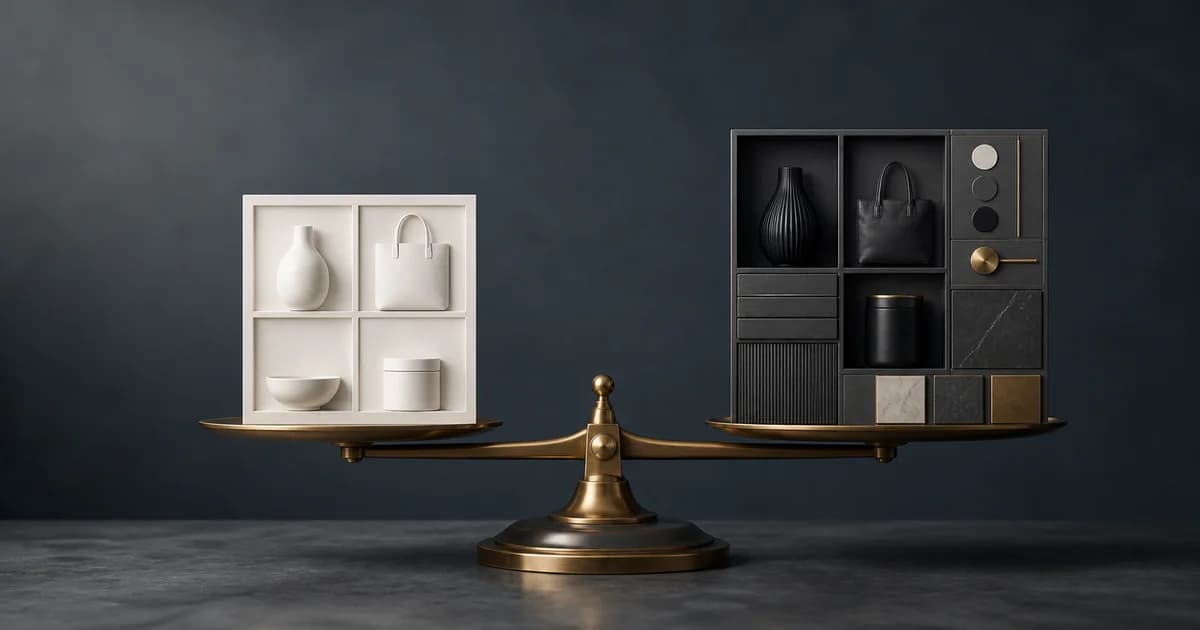
Premium versus free is not a contest between professional and amateur storefronts. Shopify develops its free themes, while third-party designers develop paid themes in the official Theme Store. This transparent comparison uses Dawn and Trade on the free side and Impulse and Prestige on the premium side. Dawn is the general free baseline, Trade is the wholesale-shaped free candidate, Impulse is the promotion-rich paid candidate, and Prestige is the luxury editorial paid candidate. The correct purchase is the smallest sustainable system that supports the store’s real buying and operating requirements.
Use the free-theme guide to establish the no-license-cost control, the every-niche comparison to test structural fit, browse paid candidates in the Shopify theme catalog, and apply the pricing page only after documenting which maintained capability a premium license would replace.
Which free and premium themes belong in the comparison?
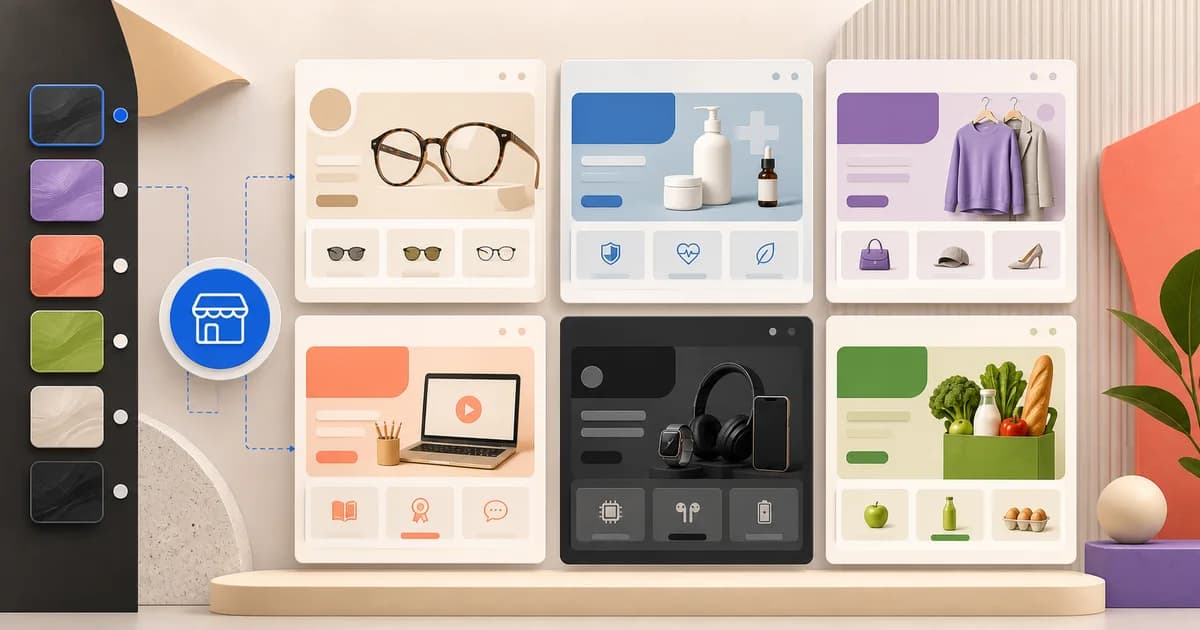
Use Dawn and Trade as free controls, then trial Impulse and Prestige for documented promotion or editorial needs. Shopify lists Dawn as free and minimalist in Dawn — Shopify Theme Store, giving the comparison a named neutral baseline. Compare all four systems with identical products and tasks; neither price tier is inherently more professional, faster, or profitable.
- Dawn, free — general product-first baseline. Shopify presents Dawn as minimalist and media-forward, with flexible customization plus search, filtering, navigation, recommendations, and common product-content features. It is the control against which paid capability should be justified.
- Trade, free — wholesale-oriented baseline. Shopify positions Trade specifically for wholesale and lists quick ordering, quick buy, search, filters, and a mega menu. Some B2B behavior depends on Shopify plan and configuration, so theme price is only one part of fit.
- Impulse, premium — campaign and merchandising breadth. Its official listing includes extensive promotions, cross-selling, recommendations, quick buy, stock messaging, lookbooks, tabs, media, search, filters, and navigation. Value comes from used capabilities that replace other work.
- Prestige, premium — luxury editorial control. Prestige is positioned for high-end brand appeal, with many configurable sections and performance and accessibility claims. It fits teams able to maintain premium imagery, copy, and art direction.
What does a free Shopify theme actually buy?
A free theme removes the license charge while still providing a configurable storefront foundation; content, integrations, testing, support, and maintenance remain merchant work. Shopify’s Theme support — Shopify Help Center explains that Shopify supports its own free themes while custom code has separate limits, making ownership part of the evaluation before paid specialization enters.
A free theme removes the theme license from the initial implementation, not the cost of building and operating the store. Products still need accurate data and media. Navigation, policies, shipping, taxes, payments, markets, domains, accessibility, analytics, and acceptance testing still require work. Apps and custom code can add recurring and maintenance costs. Count those honestly, but do not assume they are inevitable. Dawn can support a sophisticated direct-to-consumer store when its native structure matches the catalog, and Trade can provide a purposeful wholesale starting point when its interface matches buyer behavior.
Free themes also create a useful diagnostic baseline. Configure Dawn with the intended products, sections, and required integrations. Record every point where a customer task or editor workflow fails. If the gaps are cosmetic preferences, improve content and art direction before purchasing another system. If the gaps are persistent structural needs—perhaps a campaign pattern, richer native merchandising, or a distinct brand presentation—trial paid candidates against those exact criteria. The premium decision is stronger when it answers observed constraints rather than anxiety that a free theme looks less serious.
What can a premium Shopify theme buy?
Premium can buy a specialized design system, broader native modules, and a third-party developer support path, but only used capabilities create value. Shopify’s Theme support — Shopify Help Center explains that paid-theme support comes from the theme developer, making support ownership part of the purchase. Compare configured trials and update work rather than feature counts.
A paid Theme Store theme can provide more specialized layouts, broader native features, a distinct design system, third-party developer support, and updates under the Theme Store license. Shopify lets merchants try paid themes and customize their settings before purchase, although publication requires buying the theme. That trial is central to a responsible decision. Add Impulse and Prestige as drafts, configure them with real content, and exercise every must-have workflow. A feature on a listing is a reason to test, not evidence that it behaves exactly as the business expects.
Premium can reduce total complexity when native capability replaces multiple apps or custom sections. Impulse may consolidate promotion, quick-buy, recommendation, lookbook, and discovery needs. Prestige may supply the editorial range and premium visual system an art-directed brand would otherwise commission. The reverse is also possible: broad configuration can increase editorial burden, and unused scripts or sections can complicate performance and testing. Pay for the coherent system you will operate, not the maximum count of features included in the license.
When should you choose Dawn or Impulse?
Choose Dawn when its native product journey stays clear without fragile campaign extensions; choose Impulse when governed merchandising tools replace documented dependencies. The Impulse — Shopify Theme Store listing includes promotions, quick buy, filtering, and discovery features, giving that trial a concrete capability basis without implying that promotional breadth automatically creates sales.
Compare Dawn and Impulse for a conventional consumer catalog with real campaign needs. Build equivalent home, collection, product, search, cart, and policy experiences. In Dawn, note which promotions or merchandising patterns require apps or custom work. In Impulse, enable only those same patterns, then evaluate editor time, mobile density, accessibility, performance, and ongoing content ownership. If Impulse removes several justified dependencies and improves customer tasks, premium has a concrete case. If its additional devices remain disabled or create promotional clutter, Dawn remains the cleaner choice.
When does Trade beat Prestige, and vice versa?
Trade beats Prestige when efficient, configured wholesale ordering is the customer’s job; Prestige wins when maintained editorial presentation helps shoppers evaluate a high-consideration product. Shopify’s Trade — Shopify Theme Store identifies wholesale selling and quick ordering as core capabilities, grounding the first choice while workflow trials determine whether editorial specialization fits better.
Trade and Prestige illustrate why price tiers are not linear quality tiers. Trade is free but shaped for wholesale efficiency; Prestige is paid and shaped for luxury brand appeal. A business buyer reordering many SKUs may gain more from Trade’s quick-order orientation than from Prestige’s editorial sections. A high-consideration fashion or jewelry brand may gain more from Prestige’s art direction than from Trade’s utility. Compare the candidate to the customer’s job. Buying Prestige for wholesale because it costs more, or choosing Trade for luxury because it costs nothing, ignores the architecture each use case needs.
How should you calculate total change cost?
Count license, implementation, content, apps, custom development, analytics changes, training, support, performance impact, update testing, and migration risk, separating recurring from one-time work. Shopify’s Theme architecture versions and sources — Shopify Help Center explains how theme versions and update sources are tracked, making future update testing a real ownership cost that purchase price omits.
Create a decision ledger with theme license, implementation, content production, required apps, custom development, analytics changes, staff training, support path, performance impact, update testing, and future migration. Do not invent prices in an editorial comparison; inspect Polo Themes pricing, official listings, and actual provider quotes when deciding. Separate one-time and recurring costs. Estimate uncertainty explicitly. A paid theme can be less expensive over time if it removes maintained custom code, while a free theme can remain least costly when its native behavior already fits.
Include migration risk. Products and core Shopify records remain in the platform, but theme templates, settings, app blocks, custom Liquid, navigation presentation, and visual behavior need review when switching. Duplicate the current theme, preserve a rollback route, inventory customizations, and test integrations across representative states. Train editors before publication. A theme decision is not finished when the homepage looks correct; it is finished when the full buying path works, responsible owners can maintain it, and known exceptions have an accepted response.
Review the decision after a defined period using support questions, editor friction, performance reports, app incidents, and the actual feature set in use. A paid theme can lose its advantage if most differentiating modules remain disabled; a free theme can become expensive if custom patches multiply. Record changes rather than defending the original purchase. The free-theme ranking provides the current no-license shortlist to retest when the operating model becomes simpler or a migration creates an opportunity to remove accumulated complexity.
What makes an economic theme acceptance test credible?
A credible test configures each candidate against observed customer and editor constraints, records dependencies and uncertainty, and rejects prestige as a substitute for fit. Shopify’s Adding, previewing, and buying themes — Shopify Help Center documents trying and previewing themes before publication, enabling an evidence-bearing comparison of real content, required tasks, and operational dependencies.
Begin with Dawn as the counterfactual for a general consumer store. Build enough of the real launch to identify gaps, then classify each gap as missing content, configuration, app dependency, custom development, or an unsuitable customer journey. Only the last three can create a theme-specific economic case. Dawn passes when core tasks work and routine editor changes stay native and reversible. It fails the business case when repeated custom patches or app-built merchandising become the normal operating system. The analysis should name those observed burdens without assigning made-up monetary values.
Use Trade as a separate free counterfactual for wholesale because comparing it only with Dawn hides the value of specialization. Test a new buyer, an approved buyer, and a reorder with realistic quantities and availability. Trade passes when its ordering shape removes steps without implying commercial terms the configured plan does not provide. It fails when wholesale rules still live in email and spreadsheets or retail visitors encounter business-only language. A premium editorial theme should not replace Trade merely because it appears more polished; the relevant economic unit is completed, correct buyer work.
Impulse earns its premium case when native campaign and merchandising behavior replaces a documented collection of apps, custom sections, duplicated content, or release checks. Configure only that equivalent set and compare publishing, expiry, mobile density, performance, accessibility, and incident ownership. Accept the purchase when the new system lowers recurring coordination and keeps customer messages truthful. Reject it when most differentiating features remain unused or encourage promotional clutter. The license is one visible cost, while content governance and regression testing continue for as long as the theme is operated.
Prestige earns its premium case when editorial presentation contributes directly to understanding a high-consideration product and the organization already owns the required art direction. Rehearse an evergreen launch, a campaign change, and an ordinary product addition with the team that will perform them. Acceptance means the quality standard can be repeated without constant bespoke development and practical buying information remains prominent. Reject the purchase when the demo’s effect depends on assets the business cannot sustain, or when richer sections mostly mask weak positioning. Premium economics fail when ongoing production burden exceeds the value of the distinct presentation.
A transparent purchase rule
Stay with Dawn when it supports the general catalog without fragile workarounds. Choose Trade when wholesale ordering is central and its tested behavior matches the account and plan model. Buy Impulse when its campaign and merchandising system replaces real complexity and remains controlled on mobile. Buy Prestige when premium editorial presentation is part of the product’s value and the team can supply and govern the content. Recheck official pages and support terms at decision time because versions and features change.
Key Takeaways
- Dawn and Trade are meaningful free controls; Impulse and Prestige must justify their specialized paid capability.
- Theme license is only one part of implementation, content, integration, testing, support, and migration cost.
- Configure paid trials against observed constraints before purchase, using the same products and customer tasks.
- Choose the smallest sustainable system and revisit the decision when actual maintenance or feature use changes.
Decision
Free is better when it meets the complete operating model with acceptable maintenance. Premium is better when a configured trial removes a material customer or editor constraint at a lower total change cost than apps, custom code, or continuing friction. Neither status guarantees conversion, speed, accessibility, or support quality for a configured store. Compare named themes, the same content, the same tasks, and the same evidence. Buy a capability because the business can demonstrate why it needs it—not because the label “premium” sounds like progress. Start with the free-theme ranking when no paid capability has yet been justified.
Frequently asked questions
Are premium Shopify themes always better than free themes?
No. They may offer different design systems, native features, and developer support, but a free Shopify theme can be the better fit when it covers the customer journey with less complexity.
Can a paid theme be tested before purchase?
Yes. Shopify explains that paid Theme Store themes can be added as trials, previewed, and customized before purchase. Purchase is required before publication, and theme-trial editing has documented limits.