Shopify · August 23, 2026 · 10 min read
Best Shopify Themes for Sunglasses Stores
Rank Optics, Retina, and Prestige for sunglass fit measurements, lens evidence, variant-linked media, availability, and mobile selection.
By Polo Themes
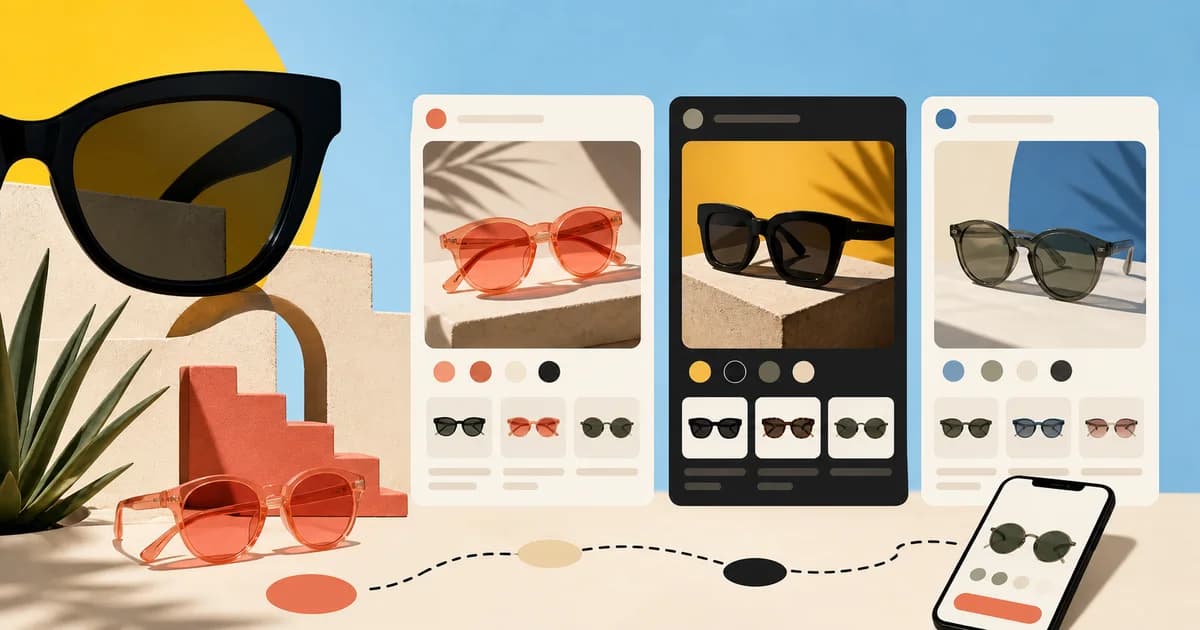
Sunglasses buyers reconcile silhouette, physical fit, lens appearance, documented lens properties, intended context, and variant availability. This editorial ranking starts with the closest Polo structure and two named Theme Store controls. It is an evaluation order for style-led and lens-conscious shoppers, not a promise of sales, speed, compliance, or specialist functionality.
Which themes belong on a sunglasses store shortlist?
The Shopify Theme Store’s Retina lists high-resolution images, image zoom, color swatches, product options, filtering, and sorting. Use that concrete visual capability as a control beside Optics and Prestige, testing all three on identical frame-and-lens records. Keep the broader eyewear theme guide and shared measurement foundation, but rank the clearest completed buying task.
1. Optics — closest Polo adjacent fit
Optics is the closest Polo adjacent fit because Polo seeds it for lenses and frames, giving a frame-led hierarchy to adapt for sunglasses. It does not establish UV protection, polarization, driving or sport suitability, virtual try-on, prescription handling, or any claim about a particular lens; keep every such statement tied to approved product evidence. In this sunglasses comparison, rank 1 identifies the nearest Polo structure to preview; the merchant’s controlled catalog test can reverse the order.
2. Retina
Retina is worth testing for a visual sunglasses catalog because its official page lists high-resolution images, image zoom, color swatches, product options, filtering, sorting, and swatch filters. Those presentation features do not encode bridge fit, temple length, lens construction, protection, or use constraints, so the merchant must model and verify them. In this sunglasses comparison, rank 2 identifies the first independent control to preview; the merchant’s controlled catalog test can reverse the order.
3. Prestige
Prestige is the editorial alternative to test when premium brand presentation matters; its official listing names lookbooks, galleries, zoom, swatches, product options, filtering, and enhanced search. A luxury presentation is not evidence of optical accuracy, and visually dominant sections must not push fit measurements or documented lens facts below the buying decision. In this sunglasses comparison, rank 3 identifies the second independent control to preview; the merchant’s controlled catalog test can reverse the order.
What should decide a sunglasses theme ranking?
Measurement visibility, evidence-backed lens language, variant-linked imagery, comparable filtering, and honest availability should decide the ranking. FDA’s Guidance Document For Nonprescription Sunglasses treats false or misleading labeling, including deceptive pictorial matter, as a risk. Pass only themes that distinguish fit, lens option, supplied accessories, and unavailable combinations without campaign inference.
- Frame and fit identity. Cards and pages should expose shape plus maintained bridge, lens, temple, and overall measurements without pretending a shape label predicts fit.
- Lens truth. Lens color, construction, and any protection or use statement must come from approved product evidence and follow the selected variant.
- Variant-linked media. Neutral front, side, worn-scale, and lens views must update with frame and lens choices rather than showing one generic gallery.
- Comparison under varied intent. Fashion, everyday, and technical collections should use factual filters that remain meaningful across the actual assortment.
- Included-item clarity. A case, cloth, spare part, or optional accessory must be distinguished before the cart so photography does not redefine the package.
How should you compare sunglasses themes with a real catalog?
Use a deliberately awkward catalog, not ideal hero products. Shopify’s Product media recognizes images, videos, and 3D models as product media, so verify that each chosen format stays tied to the right item. The fashion theme comparison remains a control; add similar fits, lens-color changes, sold-out combinations, optional cases, and cart-return checks.
- Harbor rectangular frame: black and tortoiseshell frames, each with gray and brown lens variants, complete measurements, and variant-specific neutral media.
- Mesa wrap frame: one technical-looking silhouette with only the supplier-supported use wording and no inferred sport or driving promise.
- Dawn fashion tint: a pale lens photographed in a consistent setup so tint appearance is not mistaken for a technical property.
- North narrow fit: visually similar to Harbor from the front but materially different in bridge and temple measurements, forcing factual comparison.
- Exception state: one sold-out lens color and one optional case, testing whether availability and included-versus-added items remain unambiguous.
How should style and lens-performance information stay separate?
Store style labels and technical lens statements in different governed fields. FDA’s Guidance Document For Nonprescription Sunglasses says optical properties should match the labeling, advertising, or promotional material. Silhouette and color may guide discovery, but protection, construction, and use language must stay attached to documented products or variants rather than photographs, titles, or decorative badges.
Sunglasses share frame measurements with optical catalogs, but the decisive lens questions are different. Build filters from facts the merchant can maintain: frame shape, frame material, lens color, visible-light category or other documented lens attribute, fit measurements, and intended use only when the supplier evidence supports it. Optics is the nearest Polo structure because it starts with frames, not because it certifies protection, polarization, driving suitability, or sport performance. Keep those statements tied to product records and documentation rather than turning collection names or decorative icons into blanket claims.
Prioritize the decision differently for fashion and technical assortments. A style-led range may lead with silhouette and worn scale, while a sport-led range may require stronger factual differentiation among fit, coverage, lens construction, and use limitations. If the catalog mixes both, preserve one shared frame schema but use collection copy and product fields to explain the distinct reasons for comparison.
Use examples that reveal tint and fit problems
Load a black frame offered with gray and brown lenses, a light-colored fashion tint, a wraparound shape, and two frames with similar front views but different bridge or temple measurements. Photograph each lens under a documented, consistent setup, then add a lifestyle image without letting it replace the neutral product view. A shopper comparing the gray and brown variants should see the correct lens name, image set, availability, and factual description change together. If a case or cleaning accessory is included, distinguish it from optional add-ons.
Sunglasses-specific failure modes
- Tint as proof: a dark photograph is treated as evidence of protection or a technical lens property that the product record does not substantiate.
- Shape-only fit: labels such as aviator or cat-eye replace bridge, lens, temple, and overall dimensions needed to judge scale.
- Use-case overreach: navigation promises driving, sport, or children’s suitability without product-level criteria and ownership.
- Variant mismatch: the selected lens color changes the swatch but not the gallery, identifier, or stock message.
Implement a daylight-to-cart test
- Create a lens vocabulary. Define the permitted color and attribute terms, their evidence source, and where qualifiers must appear.
- Pair media to variants. Check neutral front, side, worn-scale, and lens views for every offered combination rather than inheriting a hero image blindly.
- Run a comparison task. Ask testers to choose between two lens colors and two fit profiles, then explain the factual basis of their decision.
- Inspect the final basket. Confirm the cart retains frame color, lens option, exact variant identity, quantity, and any included-versus-optional distinction.
Sunglasses failure modes
- Tint becomes proof: a dark photograph or icon implies protection that the maintained product record does not support.
- Shape replaces measurement: “aviator” or “cat-eye” is the only fit guidance even though two frames of that shape have different dimensions.
- Gallery drift: the swatch changes while the hero image, identifier, availability, or lens description remains attached to another variant.
- Lifestyle overreach: campaign copy broadens a product-level use statement into a collection-wide promise for driving, sport, or children.
Which acceptance tests prove a sunglasses storefront works?
Test the full decision: filter similar frames, compare measurements, switch every frame-and-lens combination, encounter an unavailable choice, and inspect the cart. Shopify’s Variants explains that each combination of option values can be a distinct variant. Acceptance therefore requires selected identity, imagery, wording, price, stock, and included items to remain synchronized on mobile and keyboard paths.
- Normalize lens vocabulary. Approve allowed color and attribute terms, evidence source, qualifiers, and content owner before import.
- Compare two fits. Ask a mobile tester to choose between similar silhouettes using measurements and explain the basis without zooming packaging.
- Switch every combination. Verify image set, identifier, selected labels, price, stock, and add-to-cart state for all frame-lens variants.
- Challenge a claim. Trace every protection, polarization, activity, or material statement from the rendered page to an approved source record.
- Review the basket. Confirm exact frame, lens, quantity, included case, and optional accessory survive quick buy, full-page add, and cart edits.
- Test recovery. Select an unavailable lens, remove a variant, navigate back, and verify the interface neither restores stale data nor loses context.
How should mixed sunglasses assortments be modeled before theme selection?
Model fixed tints, configurable lens variants, and replacement lenses as different relationships before choosing a theme. Under Shopify’s Variants model, option-value combinations represent product variants; a separate replacement product is not the same relationship. Add regional wording and partial availability, then reject candidates that invent choices or leak stale lens statements into another market or cart.
A mixed catalog creates exceptions that a polished single-product demo can hide. Suppose Harbor is sold as a frame-and-lens combination, Dawn has one fixed fashion tint, and Mesa accepts a separately purchased replacement lens. Those are three different relationships, even if every card shows two circular color marks. Harbor needs a true purchasable lens option linked to price, media, identifier, and stock. Dawn needs descriptive lens color without a false choice. Mesa needs a compatible accessory relationship that cannot be confused with the lens supplied in the box. Preview Optics, Retina, and Prestige with all three patterns and reject any setup that requires staff to encode those distinctions only in free-form product copy.
Regional merchandising also needs a boundary between presentation and substantiation. A lens statement approved for one market should not silently appear in another market merely because both products share photography or a collection. Keep market-specific wording, required qualifiers, evidence ownership, and review dates in governed product data, then verify the selected market, search result, product page, quick buy, and cart agree. If the business cannot maintain a technical filter across every included product, omit that filter or narrow the collection instead of asking the theme to infer a value from tint, price, or product title. This is a stronger discriminator than animation: the best candidate makes an unsupported or unavailable attribute visibly absent without breaking comparison.
Key Takeaways
- Optics is the adjacent starting point, not proof of lens performance. Keep every protection, construction, and use statement tied to approved product evidence.
- Fit requires maintained measurements. Shape names and worn photography help with style, but they cannot replace bridge, lens, temple, and overall dimensions.
- Lens choices must behave like real variants. Selected names, media, price, stock, identifiers, and cart details should change together.
- Mixed assortments need separate relationships. Fixed tints, configurable lenses, included cases, and replacement lenses should never collapse into identical swatches.
Final decision for a sunglasses catalog
For a sunglasses-first catalog, begin with Optics because frames and lenses are its seeded domain, but call the adaptation adjacent. Use Retina as the strongest visual-product control and Prestige when editorial luxury is central. The winner is the preview that keeps measurements, variant-linked lens facts, and availability legible after the campaign imagery is removed.
Frequently asked questions
Is Optics a sunglasses-specific theme?
No. Polo seeds Optics for lenses and frames, which makes it the closest adjacent fit here. The merchant must add and validate sunglasses-specific lens facts, imagery, filters, and claim controls.
Does any shortlisted theme prove UV protection?
No. A theme presents merchant content. Protection and other technical statements require approved product-level evidence and must remain synchronized with the selected variant.
Should lens color be a filter or a variant?
That depends on the catalog relationship. Use a variant when it identifies a purchasable configuration; use a maintained filter for cross-product discovery, and verify both expose the same vocabulary.
What should a sunglasses mobile test include?
Compare two fits, change frame and lens colors, inspect the factual lens description, encounter an unavailable combination, and confirm the exact configuration in the cart.
How should replacement lenses appear?
Treat a replacement lens as a separate compatible product unless it is genuinely the option that defines the purchased sunglasses variant. State the compatible frame models, what the original package contains, the replacement lens identity, and current availability. Then test that a recommendation cannot make an incompatible lens look included or selected automatically.