Guides · August 23, 2026 · 13 min read
How to Start an Online Eyewear Store
Start an eyewear store by defining frame and lens scope, qualifying suppliers, standardizing measurements, and testing selection through returns.
By Polo Themes
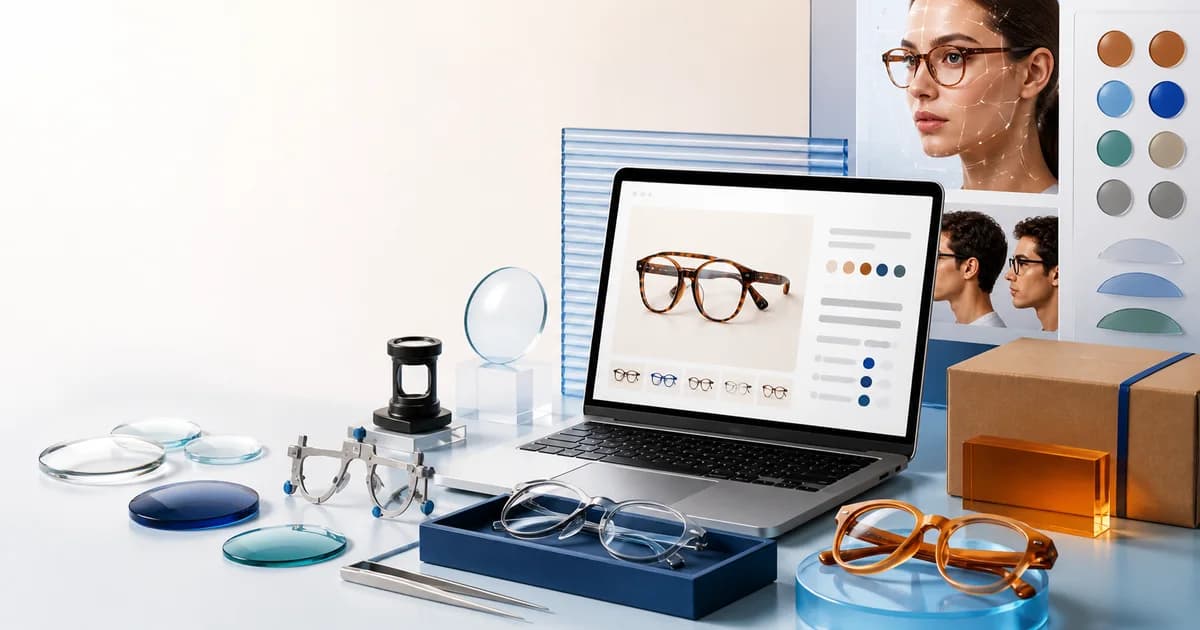
Start an online eyewear store by defining the frame and lens scope, verifying professional and supplier responsibilities, standardizing measurements, and testing the complete selection, prescription, fulfillment, and returns journey.
Eyewear combines fashion discovery with physical fit and, in some offers, professional or regulated processes. Shopify can hold products, present choices, accept approved payments, and coordinate orders, but the merchant must decide what it is qualified and permitted to sell. Begin by separating non-prescription frames, sunglasses, ready readers, prescription products, lenses, accessories, and professional services. Each scope changes product data, customer guidance, supplier handoffs, recordkeeping, returns, and support.
Jurisdiction check: in the United States, review the FTC Eyeglass Rule for prescription-release and related seller duties, and FDA requirements when the offer includes regulated lenses or devices. Those US sources are starting points, not a worldwide checklist. Before launch, verify the rules, professional roles, privacy duties, claims, records, and consumer remedies that apply in every jurisdiction served; no storefront configuration or article can promise compliance.
Key Takeaways
- Launch with a clearly bounded frame, lens, and professional-service scope.
- Treat verified measurements, model identity, and supported combinations as controlled product data.
- Stop ambiguous optical orders before production and route them to a qualified owner.
- Test fit guidance, protected prescription handoffs, packing, returns, and remakes as one journey.
What optical offer should an eyewear store launch first?
Launch the narrowest offer staff can identify, explain, fulfill, and support—perhaps frame-only retail or a bounded sunglasses range before prescription services. Sunglasses, Spectacle Frames, Spectacle Lens and Magnifying Spectacles — FDA (United States) identifies those products as medical devices subject to US requirements even when 510(k)-exempt. Use Preview Optics only after defining that operating boundary.
Name the primary buyer and decision: style-led frame discovery, replacement of a known frame, protective eyewear, sun protection, or another verified need. Define which products are sold directly and which require an external professional relationship. Avoid mixing ordinary retail and prescription promises in vague language. A narrow launch might validate frame merchandising and fit support before adding lens production. The boundary should be visible in product pages and staff procedures, not left for customers to discover after checkout.
How should suppliers and optical responsibilities be verified?
Verify supplier identity, frame model, lens service, and every handoff before publishing. Sunglasses, Spectacle Frames, Spectacle Lens and Magnifying Spectacles — FDA (United States) says US manufacturers and initial distributors must register, while manufacturers must list their devices. Record who owns validation, manufacture, inspection, and remedies, then place only approved facts in the product setup guide.
Document supplier identity, brand authorization, model identifiers, materials, dimensions, included components, quality checks, availability, packaging, warranty, and return process. For lenses or prescription-related services, obtain qualified local guidance on professional oversight, prescription validation, measurements, dispensing, records, claims, and remote-sale eligibility. Platform acceptance does not establish permission. Write a handoff map that shows who reviews customer information, who makes the product, who resolves ambiguity, and when an order must stop.
Which product data does an eyewear catalog need?
Build each eyewear record around stable model identity, verified dimensions, materials, color, lens context, included components, imagery, care, and fulfillment facts. Shopify Help — Products lists descriptions, media, inventory, variants, tags, and metafields among catalog resources. Define the source and method for each optical field, then use the beginner storefront walkthrough to place it clearly.
Use stable fields for brand, model, frame shape, material, color, relevant measurements, lens context, included case or accessories, and care. Keep terms and units consistent across products. Distinguish a color variant from a separate model when identifiers, measurements, or availability differ. Photograph front, angle, side, temple, hinge, bridge, and scale cues as appropriate to the item. Never infer dimensions from images or copy a measurement across a product family without verification.
How can fit guidance help without promising certainty?
Help shoppers compare verified dimensions with a frame they already wear, while explaining that comfort and appearance remain individual. Sunglasses, Spectacle Frames, Spectacle Lens and Magnifying Spectacles — FDA (United States) classifies frames and lenses as medical devices and requires impact-resistant lenses in the US; a storefront comparison is neither a professional measurement nor a fit guarantee.
Explain how each published measurement was taken and how shoppers can compare it with a frame they already wear. Describe fit observations as guidance supported by the product, not a guarantee that a face will feel or look a certain way. Provide a monitored route for questions. If virtual try-on or a compatibility tool is added, identify it as a separate tested service; do not imply that the theme supplies it or that an image overlay proves physical fit.
How should lens and prescription choices be modeled?
Model only combinations the optical operation can validate, price, produce, and remedy. Eyeglass Rule — FTC (United States) requires US prescribers to provide prescriptions after eye examinations; it does not turn a storefront option into professional approval. Use the Shopify app guide to assess any connector separately, and keep prescription review with the qualified owner.
Only expose a choice when the operation can validate, price, produce, and support it. Separate frame selection from lens type, coatings, prescription collection, pupillary or fitting measurements, and professional approval according to the verified workflow. Make incompatible combinations impossible or route them to review. Preserve customer information under appropriate privacy and record rules. A free-text box that sends uncertain data directly to production is not a safe substitute for a defined specialist system.
Which attributes make eyewear discovery useful?
Useful discovery narrows a real eyewear choice through verified use, shape, material, dimensions, color, lens context, and availability. Shopify Help — Products says tags can group products and metafields can hold specialized details. Build filters only from controlled values, and confirm that collection cards, product pages, selections, and cart lines preserve the same frame identity.
Collections may begin with use, frame shape, material, or other verified shopping cues. Avoid filters that repeat marketing labels without narrowing a decision. Product cards should identify the frame consistently and avoid implying that every color or lens combination is available. On the product page, place measurements, material, included items, delivery path, returns, and support near the selection. Test the journey on a phone with the longest model name and a sold-out color.
What does Optics provide for an eyewear storefront?
Optics E-Commerce Shopify Theme — Polo Themes describes a responsive eyewear theme with visual hierarchy, clean typography, easy customization, and an advanced mega menu. Those are presentation capabilities, not prescription capture, virtual try-on, laboratory routing, compliance, or fulfillment. Test Optics with real product records and every separately selected optical service.
Optics is Polo Themes’ direct storefront match for lenses and frames, with a clean responsive hierarchy and customizable Shopify Online Store sections. That description supports presenting an eyewear catalog; it does not claim prescription capture, professional review, lens production, virtual try-on, inventory, compliance, or fulfillment. Preview Optics with real measurement content, variants, policies, and any separately selected optical integration before choosing it.
How should fulfillment and returns protect eyewear?
Protect eyewear with model-level inspection, fitted packaging, traceable dispatch, and clear damage evidence. Shopify Help — Refunding orders says a refund can be full or partial and may restock items, but can also occur without a return. Define prescription, customized, and ordinary-frame remedies separately in the shipping setup guide, then rehearse damage, refusal, remake, and refund cases.
Test packaging with the actual frame, case, accessories, and shipping method. Define quality inspection before dispatch, tracking, damage evidence, lost-parcel response, and the condition in which returns can be accepted under applicable rules. Prescription or customized items may follow different obligations and business policies from ordinary frames; obtain advice and explain material conditions before payment. Train support to identify the exact model and configuration from the order.
What should a worked eyewear selection journey prove?
Rehearse one shopper identifying a frame, comparing explained measurements, choosing an available configuration, understanding terms, and receiving the exact inspected item. Shopify Help — Product media covers images, videos, and 3D models on product pages, but media alone cannot prove selection accuracy. Test image-to-variant agreement and stop every unsupported combination before checkout.
A shopper arrives seeking sunglasses similar in width to a current pair. They browse an appropriate collection, compare verified measurements, review material and lens information, select an available color, see delivery and return terms, and place a test order. The merchant receives an unambiguous model and variant, inspects it, packs it securely, and sends tracking. The rehearsal fails if measurements are unexplained, the chosen image and variant disagree, or support cannot identify what was ordered.
How should eyewear support bridge commerce and optical review?
Classify each support question, answer from approved product evidence, and route prescription decisions to the named optical owner. Shopify Help — Privacy says merchants must take their own steps to comply with applicable data-protection laws. Give prescription information purpose-bound access and transfer controls, document the handoffs in the store launch checklist, and never guess measurements.
Create question categories for frame identity, dimensions, fit guidance, lens availability, prescription status, order changes, damage, and returns. Give support the approved evidence and an escalation route for professional questions. Staff should never improvise clinical advice or alter production instructions from an informal message. When a customer supplies new prescription or measurement information, the specialist workflow should determine whether the order can proceed, requires confirmation, or must be canceled under the applicable terms.
Review support contacts against product and process records. Repeated bridge-measurement confusion may indicate an unclear diagram; repeated unavailable lens combinations may show that the storefront model exceeds supplier capability; repeated frame damage may point to quality control or packaging. Correct the owning source and retest. This feedback loop is more valuable than adding generic reassurance because it reduces the specific uncertainty that customers and operators actually encounter.
Protect sensitive customer information throughout the bridge. Collect only what the verified workflow needs, restrict staff and app access, use approved transfer and storage, and define retention and deletion under qualified privacy and professional guidance. Do not place prescription details in analytics labels, ordinary tags, or unsecured notes for convenience. Commerce, optical review, and production may be connected, but each system needs an explicit data purpose and owner.
Which optical exceptions should stop an order?
Stop an order when required information is incomplete, contradictory, changed after review, or unsupported by the selected frame, lens, laboratory, process, or destination. Eyeglass Rule — FTC (United States) governs US prescribers’ prescription-release duties, not ecommerce exception handling. A qualified optical owner must define and resolve the store’s validation gates without automation inventing missing values.
Write stop rules for expired or incomplete prescriptions, unreadable uploads, measurements outside the validated production range, requested combinations the laboratory does not support, conflicting customer instructions, and changes submitted after work begins. Assign each rule to a qualified reviewer and define the customer-safe resolution: request corrected information, offer a frame-only purchase, reprice with consent, cancel, or refer the customer to an appropriate professional. A service target must never pressure staff to bypass a clinical or production gate.
For example, a customer orders a frame with lenses and later messages a different pupillary measurement. Support records the new information without editing a production note informally. The optical owner checks whether manufacture has started, whether the new value can be validated, and whether price or timing changes. The customer receives the approved choice and must confirm any material change. The case is closed only when the commerce order, specialist record, and laboratory instruction agree.
Apply market rules to the actual optical path
Build a jurisdiction matrix by destination and offer rather than attaching one country disclaimer to every product. For a United States prescription path, have qualified counsel or optical leadership determine how the FTC prescription rules and applicable FDA device requirements affect prescription receipt, verification, seller conduct, records, and customer communication. For every other destination, identify the competent regulator and professional body before enabling checkout. If the business has not verified remote dispensing or import eligibility for a market, restrict that service while leaving only products that have passed review.
Eyewear launch acceptance tests
- Catalog identity: every sampled variant preserves the same verified model, measurements, color, media, price, and fulfillment identity from page to packing slip.
- Optical gate: incomplete, conflicting, unsupported, and changed prescription inputs stop before production and reach the named qualified owner.
- Market boundary: a destination receives only the frame, lens, and service options approved for that jurisdiction and operating path.
- Customer correction: a material lens or timing change requires clear customer confirmation and is reflected in every system of record.
- Recovery: support can reconstruct one completed, one canceled, and one remade order without relying on an unsecured message thread.
Failure modes to test
- Wrong model: similar supplier names or reused imagery cause staff or customers to confuse distinct frames.
- False fit confidence: vague “universal fit” language replaces measurements and a route to informed help.
- Broken specialist handoff: prescription or lens information reaches a supplier without validation or ownership.
- Unavailable combination: the storefront offers a color, lens, or service pairing the operation cannot supply.
- Return ambiguity: custom and ordinary products share policy wording that the team cannot execute consistently.
- Theme overclaim: presentation is described as though it provides professional optical functions.
Implementation sequence
Approve scope and professional boundaries first. Qualify suppliers and samples. Freeze the product-data and measurement standard. Build one simple frame and the hardest valid lens or service path in draft. Configure collections, fit guidance, support, shipping, and policies. Stage Optics or another candidate against those records. Integrate specialist services only with their own acceptance tests. Run successful, rejected, damaged, returned, and support-question scenarios before activating products.
Frequently asked questions
Can Shopify validate prescriptions?
Do not assume so. Shopify provides commerce infrastructure. Any prescription collection, validation, professional review, production, and record workflow must be separately selected, legally reviewed, integrated, and tested.
What information matters most for frame fit?
Publish verified measurements with a clear measurement method, model identity, material, shape, and human support. Present fit observations as guidance rather than a guarantee.
Does Optics include virtual try-on?
That is not part of the repo-seeded Optics description. If needed, evaluate a separate service in the unpublished theme and test accuracy, privacy, device behavior, and failure states.
Should prescription products share the ordinary return policy?
Not automatically. Obtain qualified advice, define the operational distinction, and communicate valid product-specific conditions before purchase.
When should a lens order be placed on hold?
Hold it whenever required information is missing, inconsistent, outside the validated service range, changed after approval, or not supported by the selected frame, lens, laboratory, professional process, or destination. The named optical owner should choose the approved correction, referral, frame-only alternative, remake, or cancellation path. Support must preserve the original submission and must not guess a value to protect an advertised dispatch time.
How should a frame-only order differ from a prescription order?
Give each a distinct product and fulfillment path. A frame-only order may proceed through ordinary identity, inspection, packing, delivery, and returns controls, while a prescription order may add protected data collection, qualified review, measurements, lens production, final inspection, records, and product-specific remedies. The page, cart, confirmation, staff view, and policy should make the selected path unambiguous without implying that frame retail includes dispensing services.
Can customer photos be used to guarantee fit?
No. A photo or virtual overlay may support style exploration when the separately evaluated service is accurate and privacy-safe, but it cannot establish bridge comfort, temple pressure, lens position, or professional measurements by itself. Explain the tool’s limits, retain verified frame dimensions, offer a human support route, and test failure states such as poor camera access, unusual scale, unsupported devices, and a shopper who declines image processing.
What records should support a remake decision?
Preserve the ordered frame and lens configuration, customer-approved information, reviewer decision, laboratory instruction, production status, inspection result, delivery evidence, reported problem, and authorized remedy under the applicable privacy and professional rules. The record should let the qualified owner distinguish merchant error, production error, transit damage, changed customer information, and fit preference without placing sensitive details in ordinary analytics or unsecured staff notes.
When should an eyewear destination be disabled?
Disable it when the merchant has not verified the exact frame, lens, prescription, professional, privacy, import, fulfillment, and remedy path for that market, or when a required provider stops supporting it. Keep the boundary at product and service level where appropriate. A carrier rate or accepted payment does not prove that remote optical sale and dispensing are permitted or operationally supported.