Blog · 61 articles
Practical guides on Shopify, e-commerce, and the craft of running an online store — written by the team behind Polo Themes.

Figma · August 23, 2026
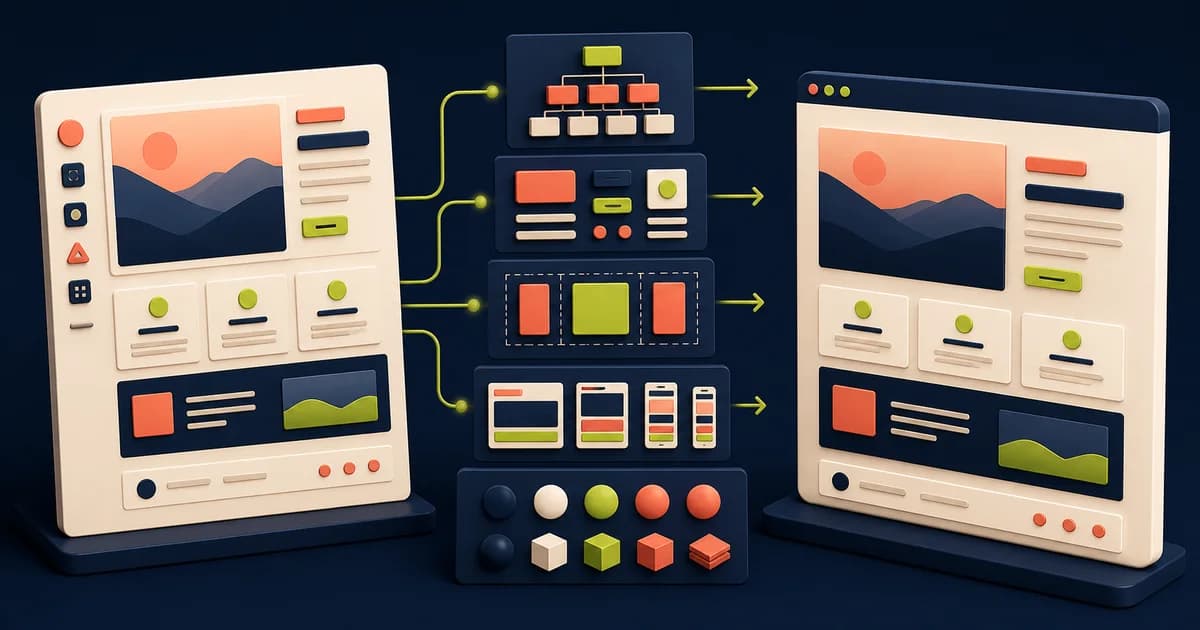
Convert Figma to maintainable code by extracting intent, mapping components and tokens, choosing semantic structure, and validating the implementation.
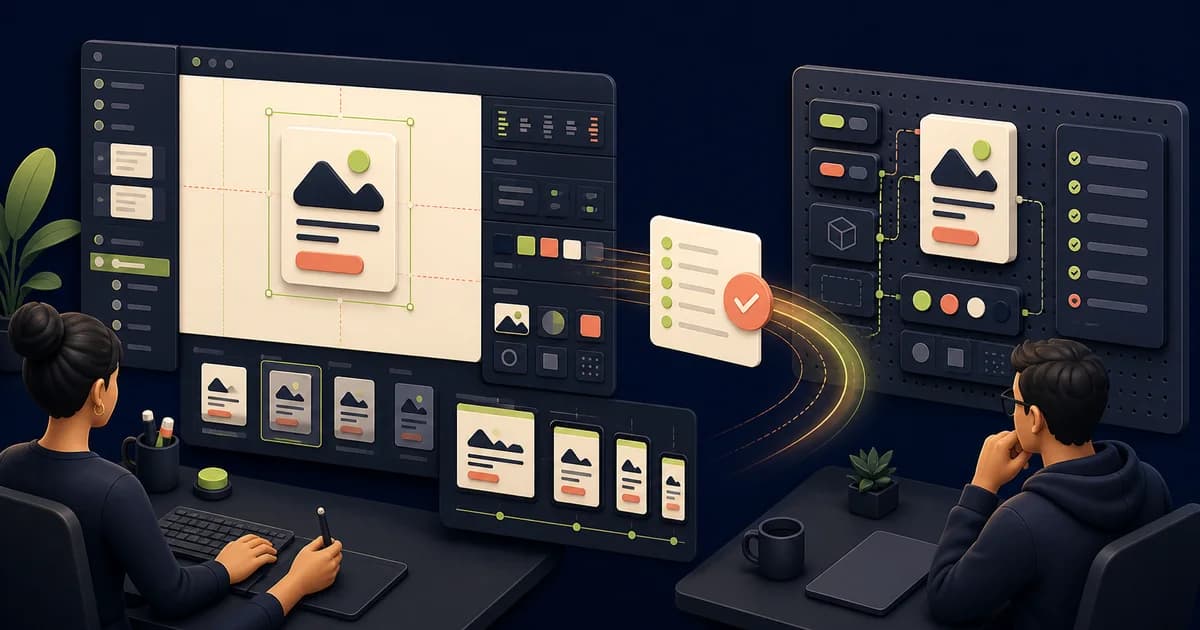
Use Figma Dev Mode to inspect ready designs, variables, component properties, assets, annotations, and versions within a documented handoff process.
Use Figma inspection to inform HTML and CSS, then rebuild the interface with semantic markup, project tokens, responsive rules, and real behavior.
Turn Figma into React by mapping product patterns to composable components, separating data and state, and validating accessible responsive behavior.
A reliable design-to-development handoff starts during discovery and ends only after the implemented experience is reviewed against shared acceptance evidence.
Export Figma assets by deciding purpose, format, size, naming, optimization, and accessibility before downloading files.
Wireframe an e-commerce site by mapping shopper decisions, content hierarchy, navigation, commerce states, and responsive behavior before visual styling.
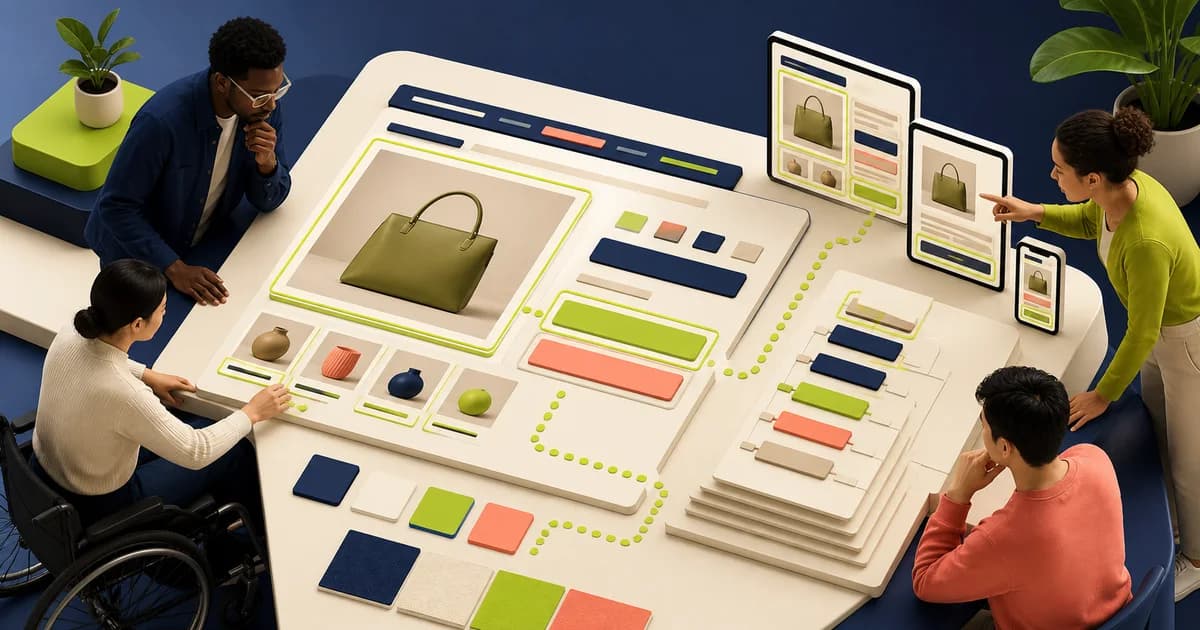
Design a product page in Figma around confident product evaluation, valid option selection, transparent purchase context, and resilient content states.
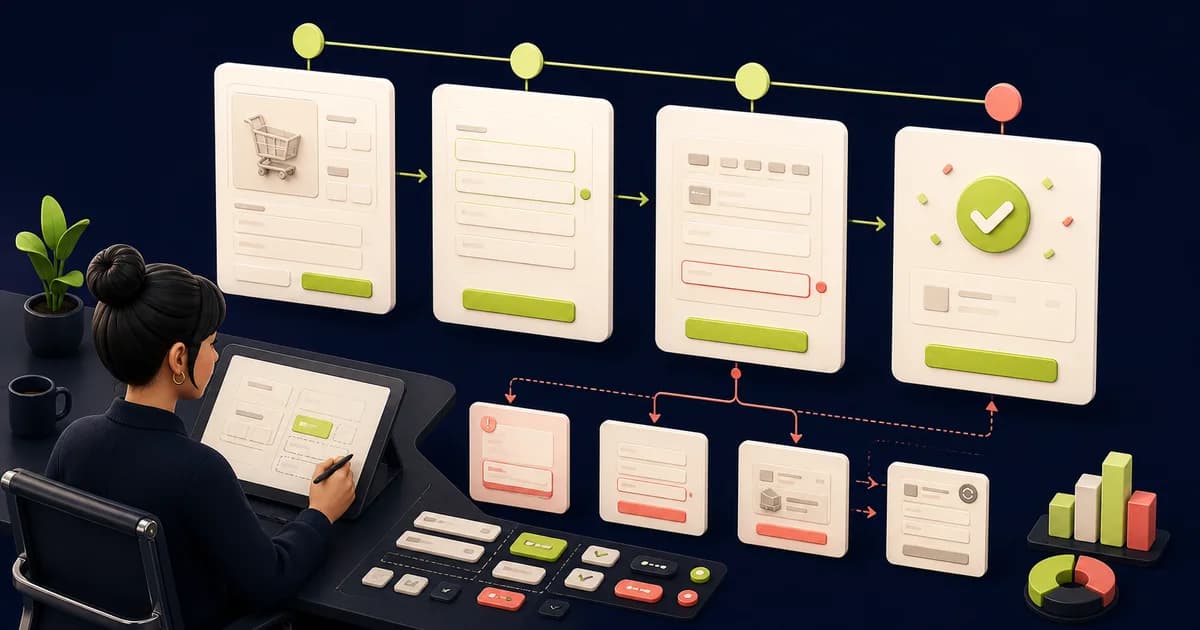
Design checkout in Figma as a short, transparent, recoverable form flow with clear costs, accessible validation, and platform-aware constraints.
Design mobile-first commerce in Figma by prioritizing tasks, making controls comfortable, reducing interruption, and progressively enhancing larger layouts.
Create e-commerce design tokens around semantic roles, commerce states, modes, and governed delivery across Figma and code.
Design accessible commerce in Figma by specifying structure, contrast, focus, targets, labels, alternatives, errors, and responsive behavior for implementation.
Page 4 of 6