Shopify · August 23, 2026 · 9 min read
Best Shopify Themes for Supplements & Vitamins
Rank Medical, Optimum, and Be Yours for supplement labels, servings, variants, bundles, recurring orders, evidence, and market-specific claims.
By Polo Themes
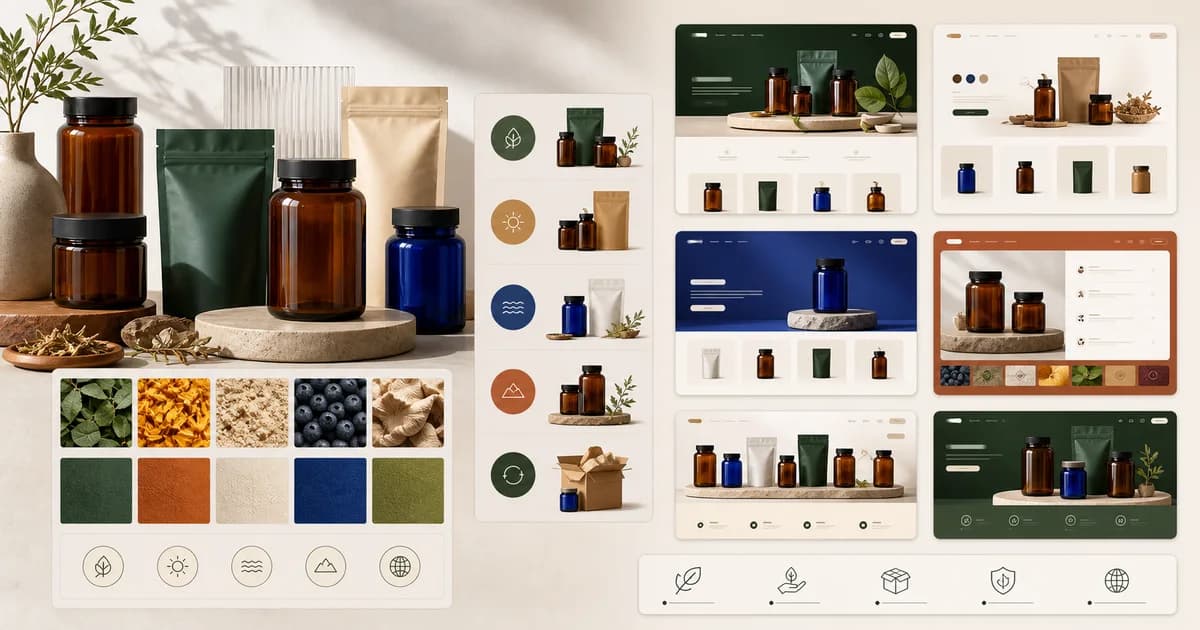
The ranked shortlist for supplements and vitamins is 1. Medical by Polo Themes, the closest Polo fit; 2. Optimum, a Sitar preset currently listed on the official Shopify Theme Store; and 3. Be Yours, another official Theme Store candidate. Medical leads because Polo seeds its medical-supply presentation for health-oriented catalogs. Optimum explicitly presents itself for fitness and supplement brands, making it the strongest niche-specific independent control. Be Yours offers ingredient and usage presentation tools worth testing. No theme evaluates ingredients, substantiates a claim, checks interactions, determines personal suitability, or creates compliance.
Use the all-niche theme guide for the broader comparison method, the supplement-store launch guide for formula and claim custody, the Shopify theme catalog for current alternatives, and the pricing page to expose recurring platform costs before judging Medical, Optimum, or Be Yours.
Which themes best support a supplement catalog?
Begin with Medical for an information-led Polo layout, challenge it with Optimum’s supplement positioning, and retain Be Yours as an editorial control. Polo Themes names health, beauty, and medical supplies in Medical E-commerce Shopify Theme | Polo Themes, supporting adjacency only; the theme does not substantiate ingredients, claims, or suitability.
1. Medical — controlled-information starting point
Medical ranks first when the catalog needs a restrained hierarchy for product identity, ingredient information, serving facts, warnings, and support. That ranking rests only on Polo’s medical-supply seed claim. It does not imply supplement expertise, regulatory review, subscriptions, dosage advice, contraindication checks, or health-outcome verification. The staged version should prove that the full product record is easy to reach and that promotional tiles cannot detach a benefit phrase from its approved qualifiers or exact variant.
2. Optimum by Sitar — niche-specific official control
Optimum is second because its current Theme Store page identifies fitness and supplement brands, ingredient-focused presentation, large inventories, flavors, and value packs. That positioning makes it important to test, particularly for powders and multi-format ranges. Still, a supplement-focused demo is not evidence that ingredient amounts, label statements, warnings, or claims are correct. Treat sticky carts, quick-buy behavior, bundles, and prominent benefit sections as surfaces requiring stronger governance, not as proof that the workflow is launch-ready.
3. Be Yours — editorial ingredient alternative
Be Yours takes third place because its official listing includes ingredients or nutritional information, usage information, product tabs, options, search, and filtering. It can test whether a visually expressive brand can keep routine and ingredient context understandable. Its beauty-oriented presentation may encourage ritual language or before-and-after storytelling that exceeds the evidence available for supplements. It should move up only if claims reviewers can control those surfaces and testers can identify amount basis, servings, warnings, and package contents before purchase.
What must a supplement theme keep accurate?
Preserve formula and pack identity, distinguish servings from count, constrain claims to approved scope, synchronize variants, and explain replenishment terms. Shopify notes that product details affect storefront display and organization in Product details, supporting a maintained source record rather than facts inferred from imagery or campaign copy.
- Label fidelity. Product form, net quantity, unit count, serving size, servings per container, amount basis, ingredients, directions, warnings, and storage must remain distinct.
- Claim governance. Every benefit phrase, collection name, badge, comparison, testimonial context, and image implication needs an approved source, qualifier, owner, and review date.
- Variant synchronization. Flavor, format, weight, count, and bundle changes must update imagery, identifier, facts, warnings, price, inventory, and cart together.
- Routine without diagnosis. Discovery can organize products using approved factual language, but it must not infer personal need, treatment, prevention, or guaranteed outcome.
- Replenishment transparency. A connected recurring-order service must expose frequency, contents, changes, skips, cancellations, and unavailable-item handling accurately.
Approve the claim-and-market combination, not just the page
A supplement release decision should bind the exact formula and pack to the exact claim, audience, channel, and jurisdiction. A phrase accepted for one product or market should not become a reusable collection heading for every flavor, size, bundle, or destination. Give reviewers a rendered claim inventory that includes headings, badges, search snippets, image text, testimonials, comparison rows, routine articles, cart messages, and recurring-order screens. Medical remains the better information-led choice only if reviewers can find and control those surfaces. Optimum may outrank it when its niche layout keeps qualifiers and complete facts together; Be Yours may move up when editorial modules remain equally governable.
Exercise a representative failure that crosses teams. Change a formula while a campaign, bundle, saved cart, and recurring order still reference the former record. Mark one market unavailable and leave a shopper session open from before the change. A passing release invalidates or clearly revalidates every dependent surface, stops silent fulfillment of a changed selection, and gives customer support the same current and historical identity. The test should also prove that withdrawing a claim removes its promotional uses without erasing the factual order history needed to answer an existing customer.
For each served jurisdiction, the accountable team should decide product category, required label content, permitted claims and qualifiers, language needs, selling channel, subscription terms, privacy treatment, and post-sale reporting route. Those decisions may differ even when the physical bottle is unchanged. Configure market availability only after that record is approved, then test direct links, search, bundles, and address changes for leakage. If the storefront cannot keep the market-specific claim and sales path aligned, exclude the affected product from that market until the implementation is corrected.
Make label fidelity and claim governance non-negotiable gates. Score the rest with a production-like catalog and named evidence. A candidate that beautifully displays a featured ingredient but obscures the complete formula should fail. So should a theme that calculates supply duration from bottle count without a documented product-specific basis. Separate what the source label says, what the merchant may say, and what an individual shopper should decide with an appropriate professional; the storefront must not blur those categories.
How should bottles, powders, liquids, and bundles be tested?
Load formats whose count, serving basis, flavor, weight, and bundle contents cannot be inferred from photography. Shopify explains that each option-value combination can be a variant in Variants. Ask testers to identify exactly what arrives, then change one formula and trace every affected claim, cart, subscription, and record.
Preview a capsule bottle where unit count differs from servings, a powder in two net weights and flavors, a liquid with a volume-based serving, and a bundle containing exact named products. Use approved label information and deliberately long warnings. Ask testers to explain what arrives, the amount basis shown, the number of servings stated, and how the selected variant changes those facts. The bundle must list exact products, formats, and sizes; a lifestyle photograph of several containers is not an inventory definition.
Add two traps. First, reuse a campaign tile after changing the formula or pack size. Second, offer a recurring order for a flavor that later becomes unavailable. A robust implementation identifies stale promotional content and gives the customer a controlled choice rather than silently substituting. Inspect the product page, quick view, cart drawer, subscription summary, order confirmation, fulfillment record, and customer self-service view. No surface should convert “count” into “servings,” drop a selected flavor, or broaden an approved claim.
Which supplement rules vary by jurisdiction?
For the United States, product category, label content, claims, testimonials, subscriptions, privacy, and adverse-event duties require product-specific review. The U.S. Food and Drug Administration explains its regulatory role in Dietary Supplements. Other jurisdictions can classify the same formula differently, so name their primary regulators before enabling claims or sales.
United States: dietary supplements fall within FDA-regulated areas, and advertising may also involve the Federal Trade Commission. The responsible business must determine which requirements apply to identity, labeling, manufacturing, adverse-event processes, claims, testimonials, subscriptions, privacy, and sales in each state and channel. FDA dietary-supplement resources and FTC health-products guidance are primary starting points, not approval of a product or page. Other markets use different categories, claims rules, authorities, and notification or authorization processes. Verify the exact market with qualified regulatory and legal professionals. Nothing here guarantees safety, efficacy, legality, or compliance.
Which supplement failures should staging expose?
Stage count-versus-serving confusion, claim expansion, stale formula content, mismatched label images, testimonial overreach, and recurring-order substitutions. Shopify identifies images, videos, and three-dimensional models as product media in Product media; regression testing should extend from those assets through campaigns, bundles, carts, packing records, and support history.
- Bottle arithmetic: count, serving size, servings, customer quantity, and expected duration are treated as interchangeable.
- Goal becomes guarantee: navigation around sleep, focus, immunity, recovery, or performance implies an unsupported result.
- Featured-ingredient tunnel: a highlighted ingredient displaces the complete formula, amount basis, warnings, or other ingredients.
- Formula drift: cards, landing pages, comparison charts, subscriptions, or bundles retain claims from a previous formulation.
- Variant residue: selecting another weight or flavor leaves the prior label image, facts, warning, or identifier visible.
- Testimonial overreach: customer stories or visual transformations communicate more than the approved product claim permits.
What evidence should approve a supplement storefront?
Approval needs separate factual fields, a rendered claim register, every-option walkthroughs, recurring-order exception tests, and post-change regression. In Subscriptions, Shopify distinguishes subscription contracts from subscription policies; merchant evidence must still prove exact frequency, contents, customer controls, unavailable-item handling, and historical order identity across the connected service.
- Model separate facts. Store net quantity, unit count, serving size, servings, amount per serving, customer quantity, and source label as distinct data.
- Create a claim register. Map each rendered claim and implication to exact products, evidence, approved wording, qualifiers, owner, and re-review trigger.
- Switch every option. Verify facts, gallery, identifier, availability, price, recurring-order summary, and cart line for all formats, weights, and flavors.
- Interpret the label. Ask testers to explain package contents and serving information without calculating or inventing a personalized routine.
- Exercise recurring orders. Change frequency and variant, skip, cancel, encounter unavailable inventory, and confirm records across customer and support views.
- Re-run after change. Update a formula or pack and prove stale promotional modules, comparisons, cached search, and bundle descriptions are detected.
Key Takeaways
- Medical is the closest Polo information-led candidate; Optimum and Be Yours remain necessary independent controls.
- Serving size, servings per container, unit count, net quantity, and customer quantity are separate facts.
- Claims must stay bound to the approved formula, pack, audience, channel, and jurisdiction.
- Formula changes should invalidate stale campaigns, bundles, saved carts, and recurring-order assumptions without erasing order history.
Conclusion
Medical is the closest Polo fit for supplements because its seeded medical-supply presentation supports an information-led starting point. Optimum is the most direct current official niche alternative, while Be Yours is the editorial ingredient control. Let the controlled label-to-cart test decide the final order. The winner must preserve exact facts and claims governance through variants, campaigns, bundles, and replenishment. A supplement-looking preset, an ingredient tab, or a polished routine story never substitutes for product evidence and market-specific review.
Frequently asked questions
Does Medical verify supplement claims?
No. It presents content supplied by the merchant. Evidence review, approved wording, labeling, and market-specific compliance remain separate responsibilities.
Why is Optimum not ranked first automatically?
Its official niche positioning makes it a strong control, but Polo Medical is the requested ecosystem’s closest confirmed fit. Real catalog testing may legitimately reverse the order.
Can a theme calculate days of supply?
A storefront can display a maintained value, but calculating it from count alone is unreliable. Any duration statement needs product-specific assumptions, approved wording, and change controls.
Are subscriptions native to these themes?
Do not assume so. Validate the actual recurring-order service, its theme integration, customer controls, inventory behavior, and cancellation path separately.
What happens when a supplement formula changes?
Treat it as a governed product change. Review label facts, claims, media, bundles, comparisons, saved carts, and recurring orders; preserve historical order identity; and require an explicit decision wherever the prior selection cannot continue unchanged.