Shopify · August 23, 2026 · 9 min read
Best Shopify Themes for Coffee & Tea Brands
Rank Groxery, Caffeine, and Local for coffee and tea formats, weights, brew guidance, origin records, subscriptions, pickup, and gifting.
By Polo Themes
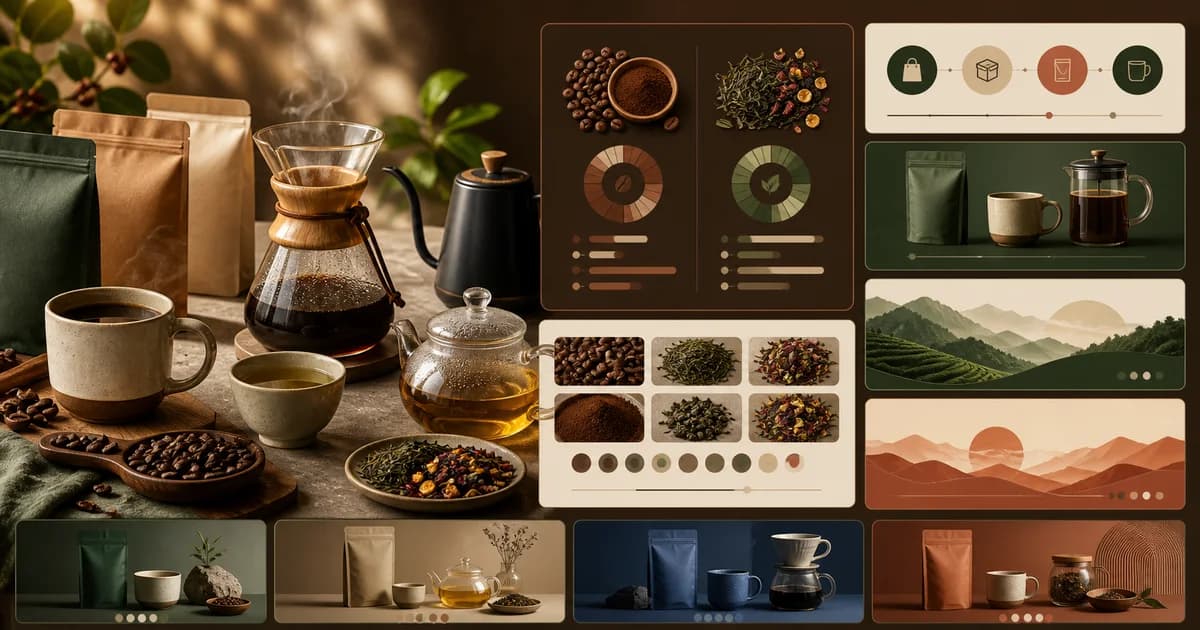
For coffee and tea brands, the ranked shortlist is 1. Groxery by Polo Themes, the closest Polo fit; 2. Caffeine, a Local preset on the official Shopify Theme Store; and 3. Combine, another current official Theme Store candidate. Groxery leads because Polo seeds its grocery-focused layouts for replenishment-led food catalogs. Caffeine is the most direct independent coffee-and-drinks control, while Combine provides a food-and-drink comparison for merchandising. None operates a roastery, verifies origin, controls freshness, understands grind compatibility, or supplies subscription and fulfillment logic.
Use the all-niche theme guide to compare candidates consistently, the coffee-store launch guide to define lot and format operations, the Shopify theme catalog to inspect current food-and-drink themes, and the pricing page to budget storefront costs separately from roasting or fulfillment infrastructure.
Which themes should coffee and tea brands compare?
Start with Groxery for repeat-purchase food structure, compare Caffeine for coffee-specific local commerce, and keep Combine as the bundle control. Polo Themes presents grocery-focused layouts in Groxery E-commerce Shopify Theme | Polo Themes, supporting the initial fit; grind, format, sampler, and recurring-order tasks should decide the final rank.
1. Groxery — closest Polo fit
Groxery is first because its confirmed grocery focus fits category-dense, repeat-purchase food assortments. Test it for roast or tea-style navigation, product cards that distinguish format and weight, and routine reordering. Keep the seed boundary visible: delivery slots, perishable inventory, subscription logic, roast operations, tea sourcing, and freshness policies remain outside the theme. A grocery-style grid can accelerate repeat buying only after a shopper can distinguish whole bean from ground, loose leaf from bags, net weight from customer quantity, and an individual item from a sampler.
2. Caffeine by Local — coffee-specific official alternative
Caffeine ranks second because its official listing identifies food, beverage, local retail, and coffee-and-drinks use, while listing search, filtering, pickup, pre-order, quick buy, cross-selling, and nutritional-information tools. That is unusually relevant to a coffee or tea preview. Still, those features do not know a brewing method, cutoff, store capacity, origin claim, roast date, or whether a subscription integration behaves correctly. Caffeine should win only after exact formats and local fulfillment constraints survive the actual staged journey.
3. Combine — food-and-drink merchandising control
Combine is the third candidate to test for bundles, complementary products, and editorial food presentation. Use its official Theme Store listing as the source for available theme capabilities, then load the same coffee and tea records used elsewhere. It must not combine option axes into attractive but cryptic labels or imply that photographed accessories are included. A pairing recommendation is merchandising, not a sensory guarantee. A bundle needs exact component identities, sizes, substitutions, and inventory behavior.
What must coffee and tea storefronts communicate clearly?
Keep roast or tea style, grind, format, weight, quantity, lot or origin scope, preparation, fulfillment, and replenishment distinct. Shopify says product details affect customer display and catalog organization in Product details, supporting a maintained factual record that precedes sensory storytelling and campaign language.
- Option-axis clarity. Roast or tea style, whole-bean or grind choice, leaf or bag format, flavor where real, weight, and customer quantity must remain separate.
- Product and lot truth. Origin, producer, processing, harvest or lot context, roast information, and tasting descriptions need maintained sources and scoped wording.
- Preparation usefulness. Brewing guidance should identify the relevant product and method, remain available after purchase, and avoid promising a universal sensory result.
- Freshness and fulfillment alignment. Roast, packing, cutoff, dispatch, pickup, and storage language must match operations for the selected product and destination.
- Replenishment control. Reorders and subscriptions must preserve exact format, grind, weight, frequency, customer changes, stock exceptions, and cancellation.
Make option clarity a rejection gate. A shopper must never discover after delivery that “medium” meant roast rather than grind or that a tea image showed loose leaf while the selected variant was bags. Weight fulfillment truth next, because a generic freshness banner can outlive a changed production schedule. Score storytelling lower than those basics. Origin and tasting context add value when they stay linked to the exact coffee or tea; they create risk when one evergreen story silently applies to changing lots.
How should grind, format, and gift options be tested?
Use whole bean, multiple grinds, loose leaf, bags, changing lots, and a sampler with smaller components. For grind and format choices, Shopify’s Variants explains option-value combinations. Ask testers and packers to identify every selection, then remove one grind or component and verify that no cart, subscription, or guide substitutes silently.
Load a coffee offered whole bean and in two grinds, a single-origin coffee, a loose-leaf tea also sold in bags, and a sampler with smaller component sizes. Give each identical approved source records across themes. Ask testers to select the stated brew method, distinguish format from weight, locate preparation guidance, and enumerate sampler contents. The sampler photo must not imply full retail bags. Tasting notes should be framed as maintained descriptions rather than guaranteed experience, since water, method, storage, and preference affect the cup.
Next change a lot description, remove one grind from stock, move a pickup cutoff, and make a subscription variant unavailable. Inspect search, product page, quick view, cart, recurring-order summary, confirmation, packing record, and post-purchase instructions. A safe system does not silently switch grind or tea format, and it gives an owned recovery for the recurring order. It also distinguishes roast or packing information from an unsupported promise that every order is produced at a particular moment.
Which food and market rules apply to coffee and tea?
For the United States, review each packaged product, prepared beverage, claim, channel, and destination separately. The U.S. Food and Drug Administration identifies labeling and nutrition topics in Nutrition, Food Labeling, and Critical Foods. State and local authorities may govern preparation, while other countries require named primary regulators.
United States: the FDA is a primary federal regulator for most foods and food labeling, while other federal, state, and local authorities may apply to agriculture, weights and measures, facilities, sales, advertising, subscriptions, delivery, and prepared beverages. The exact product, claims, business role, and destination determine obligations. Outside the US, use the corresponding national and local food authorities and rules for labeling, allergens, origin, imports, claims, and distance selling. Verify every served market with qualified professionals. Theme selection supplies no legal, food-safety, origin, freshness, or regulatory guarantee.
Which coffee and tea failures should staging force?
Stage a roast-grind collision, stale origin story, unsupported freshness promise, opaque sampler, unavailable recurring selection, and mismatched brew guide. Shopify’s Subscriptions separates recurring contracts from their policies; rehearsal must prove exact recovery across the product page, cart, recurring order, packing label, support view, and preparation instructions.
- Variant-axis collision: roast, grind, format, weight, and quantity collapse into a code the buyer and packer interpret differently.
- Origin drift: producer or place storytelling remains after the inventory source or lot changes.
- Freshness theater: the site promises roast-to-order, same-day packing, or delivery timing the operation cannot reproduce.
- Sampler opacity: photography, written contents, variant, inventory components, and packing record disagree.
- Subscription substitution: an unavailable selection is swapped without explicit customer control.
- Brew-guide mismatch: instructions describe another grind, format, product, or quantity.
What evidence supports a coffee or tea launch?
Launch evidence should normalize option axes, govern origin and sensory copy, reconcile sampler components, exercise recurring-order exceptions, and cross actual fulfillment cutoffs. Shopify describes location eligibility and pickup setup in Setting up pickup in store for online orders; acceptance must still prove that inventory, format, location, and customer promises remain aligned.
- Normalize the option model. Give roast or tea style, format, grind, weight, and quantity separate labels and order fields.
- Govern sensory and origin copy. Attach sources, scope, owner, review trigger, and qualifiers to producer, place, process, and tasting text.
- Run preparation tasks. Ask testers to choose a correct grind and tea format for stated routines using only the page evidence.
- Reconcile a sampler. Compare product copy, image, components, substitutions, inventory, cart, packing ticket, and delivered contents.
- Test replenishment exceptions. Change frequency, switch variants, skip, cancel, and handle an unavailable grind without silent replacement.
- Verify operations. Cross a cutoff, choose pickup and shipping, change a lot, and confirm storefront language updates wherever repeated.
Key Takeaways
- Groxery is the closest Polo baseline; Caffeine and Combine test local-commerce and bundle-heavy alternatives.
- Roast, grind, tea format, weight, customer quantity, and sampler contents must never collapse into shorthand.
- Origin, lot, freshness, and tasting language need maintained scope and operationally accurate wording.
- Recurring orders and pickup flows must recover from unavailable variants without silent product substitution.
Resolve channel and market differences before launch
Document the winner for each operating channel rather than treating the homepage as the whole decision. Groxery should remain first when shipped replenishment and clear format selection dominate. Caffeine may move ahead for a merchant whose verified pickup and preorder journey is central. Combine may lead a gifting lane when exact sampler contents and component inventory are stronger than in the other previews. Record the deciding task, content owner, connected service, and failure observed in the losing candidates so a later redesign does not revive a known grind, pickup, or bundle defect.
Market review should cover the exact coffee, tea, prepared drink, flavoring, accessory, and gift product rather than one beverage category. The responsible team decides which label, ingredient, allergen, origin, quantity, claims, deposit, tax, import, subscription, and distance-selling rules apply to each destination and channel. The theme only renders those approved decisions. Test changing from shipping to pickup and changing destination after a product is selected; the correct availability, cutoff, product information, and fulfillment promise must replace the previous state without silently changing grind, format, or pack.
Stage a fulfillment incident in which a grind becomes unavailable after subscription processing, a sampler component is withdrawn, and a pickup order misses its operational cutoff. The customer, packer, and support agent should all see the exact affected selection and the permitted choices. Unaffected items must remain intact, and no replacement should occur merely because it shares a roast name or price. Acceptance also requires the post-purchase brew guide to match the fulfilled format. This drill distinguishes attractive exception copy from a system that can actually recover without corrupting product identity.
Include direct links, browser history, saved carts, and a returning subscriber in that rehearsal. Each route must revalidate current lot text, available grinds, pickup eligibility, and sampler contents. If an old state cannot be fulfilled, explain the exact conflict and ask for a new choice instead of redirecting to the nearest-looking product. Check packing labels and customer instructions together: a corrected cart still fails acceptance when the roastery receives an ambiguous grind code or the tea buyer receives preparation guidance for another format.
Conclusion
Groxery is the closest Polo fit because coffee and tea are food catalogs with repeat-purchase behavior. Caffeine is the sharpest official niche alternative, and Combine is a useful bundle-and-merchandising control. Let the real option matrix and fulfillment process choose among them. The winner keeps format, grind, weight, origin scope, preparation, and recurring-order state understandable from collection to packing. No amount of café styling can repair a bag packed in the wrong grind. Retain screenshots and packing evidence for the chosen setup, then repeat the grind-and-format task whenever option data, subscription behavior, or fulfillment tooling changes.
Frequently asked questions
Does Groxery include subscriptions?
Do not claim that. Its seed supports grocery presentation. Select and test the recurring-order service separately, including changes, skipped deliveries, unavailable variants, and cancellation.
Why is Caffeine second?
It is a current official coffee-and-drinks candidate and may win the live comparison. Groxery remains first only as the closest confirmed Polo ecosystem fit.
Should tasting notes be filters?
Only when the vocabulary, source, scope, and maintenance process are consistent enough to make those filters useful without implying a guaranteed experience.
How should grind choices appear in the cart?
Show the exact product, roast or style where relevant, grind or format, weight, and quantity as separate comprehensible values that fulfillment receives unchanged.