Shopify · August 23, 2026 · 10 min read
Best Shopify Themes for Pet Supply Stores
Rank Groxery, Enterprise, and Broadcast for pet species, sizes, food identity, model compatibility, replenishment, and safe recommendations.
By Polo Themes
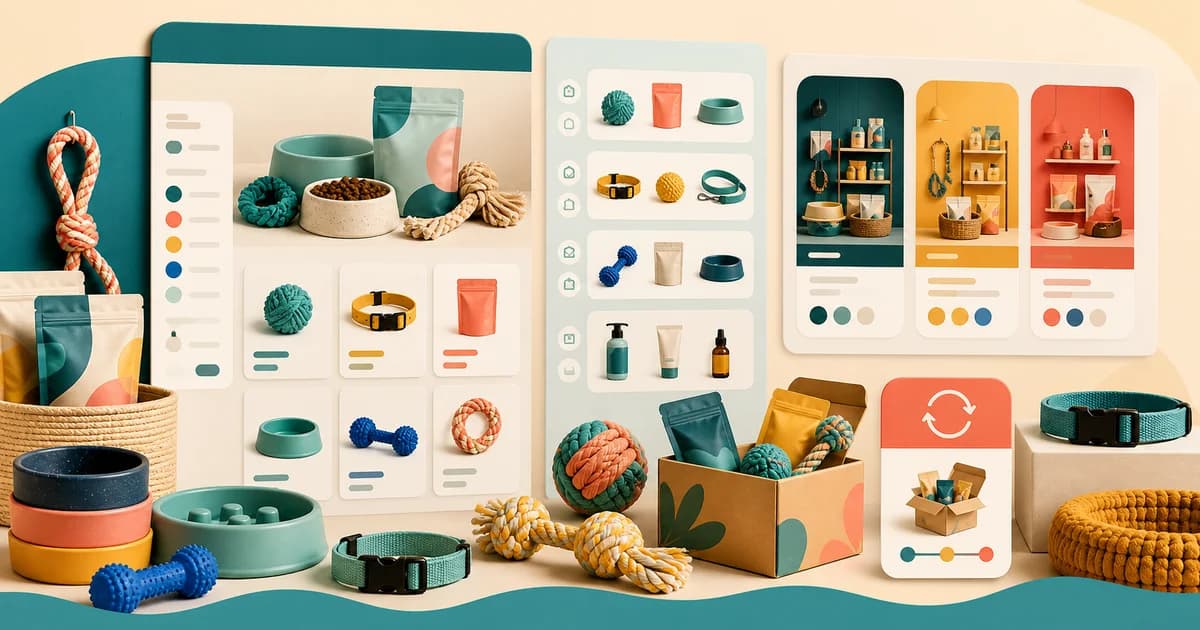
For pet-supply stores, rank the starting candidates 1. Groxery by Polo Themes, the closest Polo fit; 2. Enterprise on the official Shopify Theme Store; and 3. Be Yours on the official Theme Store. Groxery leads because its grocery-focused structure fits repeat-purchase food and care assortments. Enterprise is the large-catalog control for species and product-family navigation, while Be Yours is the visual and ingredient-information alternative. None decides animal suitability, validates feeding guidance, proves health benefits, predicts durability, or establishes equipment compatibility.
Use the all-niche theme guide for consistent scoring, the pet-supply launch guide for species and compatibility controls, the Shopify theme catalog to inspect current catalog candidates, and the pricing page to budget recurring-commerce or support tooling without treating it as theme functionality.
Which themes should a pet-supply store compare?
Start with Groxery when food and replenishment dominate, use Enterprise to challenge species and model discovery, and test Be Yours for visual or fit-sensitive goods. Polo Themes presents grocery-focused layouts in Groxery E-commerce Shopify Theme | Polo Themes, supporting adjacency only; rank separately for food, wearables, habitats, toys, and replacements.
1. Groxery — closest Polo fit for replenishment
Groxery earns the first slot when food, treats, litter, grooming, and household care drive repeat purchasing. Its seeded grocery collection and product layouts provide the nearest Polo structure. It is not pet-specific, and its seed does not claim subscriptions, delivery slots, perishable logic, animal profiles, quizzes, feeding advice, or health assessment. Pet food, fitted wearables, habitat equipment, toys, grooming products, and replacement parts need separate data models. A species menu is merely orientation; the exact product record must carry the real decision.
2. Enterprise — large assortment control
Enterprise ranks second because its official listing emphasizes high-volume selling, search, mega-menu navigation, filtering, options, and usage information. That can suit catalogs spanning dogs, cats, birds, fish, reptiles, and small animals. Test that broad navigation never creates species leakage through generic benefit tags. An enhanced search still needs governed synonyms and exact model relationships. Enterprise should outrank Groxery if real testers find the correct family and configuration more reliably without turning quick ordering into an unsafe shortcut.
3. Be Yours — visual and ingredient alternative
Be Yours is third because its official features include ingredient or nutritional information, usage information, size charts, options, search, and filtering. It can test a warmer editorial presentation for food, grooming, wearables, beds, and toys. Its beauty-oriented ritual language and before-and-after surfaces require caution in a pet context; do not allow them to imply behavioral or health outcomes. A size chart is useful for a harness only when it carries exact measurements and method, not generic small-medium-large labels.
What must pet-supply storefronts keep distinct?
Keep species and life stage, exact food formula, wearable measurements, habitat dimensions, material facts, replacement compatibility, and reorder identity distinct. Shopify says product details affect customer display and catalog organization in Product details, supporting maintained family records while a pet profile remains a discovery aid, not suitability advice.
- Species and family boundaries. Navigation must distinguish animal, life stage where supported, and product type without turning a shared marketing term into compatibility.
- Product-specific facts. Food needs approved ingredient and feeding information; wearables need fit measurements; habitat goods need dimensions; replacement parts need supported models.
- Claim discipline. Health, calming, dental, training, durability, safety, or behavioral wording requires a product-level source and appropriate scope.
- Reorder accuracy. Repeat purchase must display the prior exact product, format, size, variant, and quantity for confirmation rather than relying on a pet profile.
- Mixed-cart operations. Heavy bags, fragile habitat items, fitted goods, consumables, and restricted destinations need correct shipping, return, and support treatment.
Weight species boundaries, measured fit, and compatibility as gates for the relevant families. Do not assign one overall score that lets strong food replenishment hide a broken harness selector. Test without a pet profile first; the base catalog must remain understandable to a new visitor. If profiles, quizzes, recommendations, or subscriptions are added, score their data correction, household separation, and exception behavior independently. A remembered dog size must never silently filter cat products or become suitability advice.
How should a cross-species catalog be tested?
Use food in multiple sizes, a measured wearable, a dimensioned habitat item, a toy, and a model-specific replacement across two animals. The option model Shopify documents in Variants creates distinct combinations. Require search, recommendations, cart, fulfillment, and support to preserve species, measurements, exact selections, and supported-model relationships.
Preview dog food in two bag sizes, a harness with neck and chest measurements, a cat bed with internal and external dimensions, a toy with material and size information, and a replacement filter tied to specific fountain models. Seed a second household animal to test context switching. Ask a shopper to reorder the exact food size, choose a harness from measurements, determine whether the bed fits a stated space and animal measurement, and select the supported filter. Every answer must remain visible in the cart.
Create near misses: a cat product sharing a “calming” campaign tag with a dog item, a medium harness with different measurements in another range, a visually similar unsupported filter, and a food variant that becomes unavailable during reorder. Search and recommendations should not cross species or models merely because words match. The reorder flow must request an explicit alternative rather than silently changing bag size or formula. Inspect fulfillment and support records for exact variants, dimensions, model relationship, quantity, and approved usage information.
Which pet-product rules depend on category and market?
For the United States, animal food, veterinary products, pesticides, accessories, connected devices, and services can fall under different authorities. The U.S. Food and Drug Administration describes its animal-food oversight in Animal Foods & Feeds. State controls and every foreign market still need named regulators for the exact product, claim, and destination.
United States: the FDA is a primary federal regulator for animal food and drugs, while other federal agencies, states, and local authorities can regulate labeling, feed registration, veterinary products, pesticides, advertising, sales, and professional practice. Different product families can fall under different regimes. Outside the United States, identify the corresponding national and regional veterinary, feed, food, product-safety, and advertising regulators. Verify obligations in every served market with qualified specialists and accountable operators. Nothing in a theme or this comparison guarantees animal suitability, health benefit, safety, legality, or compliance.
Which pet-store failures should staging expose?
Force species leakage, size-label substitution, benefit inflation, guessed replacement compatibility, reorder drift, and household-context contamination. Customer controls described by Shopify in Subscriptions inform the recurring-order test; evidence must show unavailable food never silently changes formula, size, flavor, or quantity and another animal’s selections remain untouched.
- Species leakage: search, tags, profiles, or recommendations move a product across animals without approved product evidence.
- Size-label substitution: small, medium, and large replace actual measurements for harnesses, coats, collars, beds, or crates.
- Benefit inflation: an ingredient, material, shape, or customer story becomes a behavioral or health promise.
- Compatibility guessing: filters, cartridges, attachments, or liners are cross-sold by appearance or brand family.
- Reorder drift: an unavailable food is silently changed in size, formula, flavor, or quantity.
- Household contamination: one animal’s remembered profile alters another animal’s browse or cart without a clear context switch.
What proves a pet storefront is ready to release?
Require separate family schemas, governed animal terms, measurement tasks, two-way compatibility checks, replenishment exceptions, and household-context switching. The U.S. Food and Drug Administration states that animal food should be labeled appropriately and truthfully in Animal Food Regulations; release evidence must remain product-specific and avoid presenting filters as professional review.
- Build family schemas. Define owned fields separately for food, fitted wearables, habitat equipment, toys, grooming, and replacement parts.
- Govern animal terms. Trace species, life stage, ingredient, usage, warning, and benefit language to approved product sources.
- Run measurement tasks. Choose a harness and bed from stated measurements and explain the remaining uncertainty without relying on size names.
- Test compatibility. Start from a fountain to find a filter and from a filter to confirm the same supported model; include a known wrong model.
- Exercise replenishment. Reorder, change quantity, encounter unavailable stock, cancel a recurring order if used, and verify no silent substitution.
- Switch household context. Move between two animals, clear the profile, use anonymous browsing, and inspect cart and recommendation boundaries.
Key Takeaways
- Groxery is the replenishment baseline, Enterprise tests catalog discovery, and Be Yours tests visual fit-sensitive presentation.
- Food, fitted wearables, habitats, toys, grooming goods, and replacement parts require separate schemas and checks.
- Species, life stage, measurements, formula, and model compatibility must remain explicit through cart and support.
- Profiles can guide browsing but must stay optional, correctable, and subordinate to authoritative product records.
Approve animal, product family, and market together
Maintain separate ranking evidence for food, fitted wearables, habitat goods, grooming, toys, and replacement parts. Groxery should remain first only for families where replenishment and exact variant confirmation dominate. Enterprise should move ahead when species and model navigation prevents more near misses in a broad catalog. Be Yours should lead a visual or fit-sensitive family only if measurements, ingredients, and qualifiers remain more prominent than lifestyle imagery. A theme can therefore win one family and lose another; document that boundary instead of turning the overall ranking into permission to reuse one template everywhere.
Jurisdiction decisions should identify the animal, exact product category, claim, ingredient or material record, destination, and merchant role. Food, veterinary products, pest-control products, general accessories, connected devices, and professional services may involve different authorities and sales boundaries. The accountable team decides the approved label, warnings, claims, registration or market status where relevant, fulfillment, and escalation route. Test market changes from direct links and saved carts so an old species filter, health statement, recurring order, or purchase action cannot survive outside its approved scope.
Stage a household failure scenario with two animals. Reorder food for one, select a measured wearable for the other, then make the food variant unavailable and withdraw the chosen fountain filter. A passing store keeps animal context explicit, requires informed replacement choices, preserves unaffected selections, and sends fulfillment exact variants rather than profile labels. Support must see which animal context guided discovery without treating that profile as a professional suitability determination. Clear the profile and repeat the cart task to prove the underlying catalog remains accurate.
Include a claim withdrawal in the same rehearsal. Remove an approved behavioral or health phrase and verify search tags, collection copy, product cards, recommendations, saved pages, and support macros no longer repeat it. Historical order identity may remain, but promotional language should not. This separates evidence-controlled merchandising from harmless-looking pet vocabulary that can drift across species and products. Also inspect email and reorder surfaces generated outside the page template; otherwise withdrawn language can return when the customer follows an old replenishment prompt.
Conclusion
Groxery is the closest Polo fit for a replenishment-led pet catalog, Enterprise is the large-assortment alternative, and Be Yours is the visual ingredient-and-fit control. The real winner may vary by product family. Choose only after species boundaries, measurements, ingredients, exact reorders, and replacement-part relationships pass. Pet-friendly styling contributes little if a cat item appears in a dog flow or a near-identical filter reaches the wrong fountain. Preserve separate acceptance records for food, fitted goods, habitat equipment, and replacement parts because each family can regress independently.
Frequently asked questions
Is Groxery a pet-specific theme?
No. It is a grocery-focused theme and therefore an adjacent structure for repeat-purchase goods. Pet-specific data and workflows must be built and tested separately.
Should a pet profile control the catalog?
Use profiles only as optional, correctable context. The product record remains authoritative, and shoppers must be able to browse accurately without supplying a profile.
Can related products establish replacement-part compatibility?
No. Display relationships from an authoritative model source and test both directions, including a deliberate near miss.
How should unavailable pet food be handled?
Explain the unavailable exact item and let the customer make an informed permitted choice. Do not silently substitute formula, size, flavor, or quantity.