Shopify · August 23, 2026 · 9 min read
Best Shopify Themes for Gourmet & Specialty Food
Rank Groxery, Local, and Caffeine for specialty-food provenance, ingredients, allergens, gift contents, constrained shipping, and substitutions.
By Polo Themes
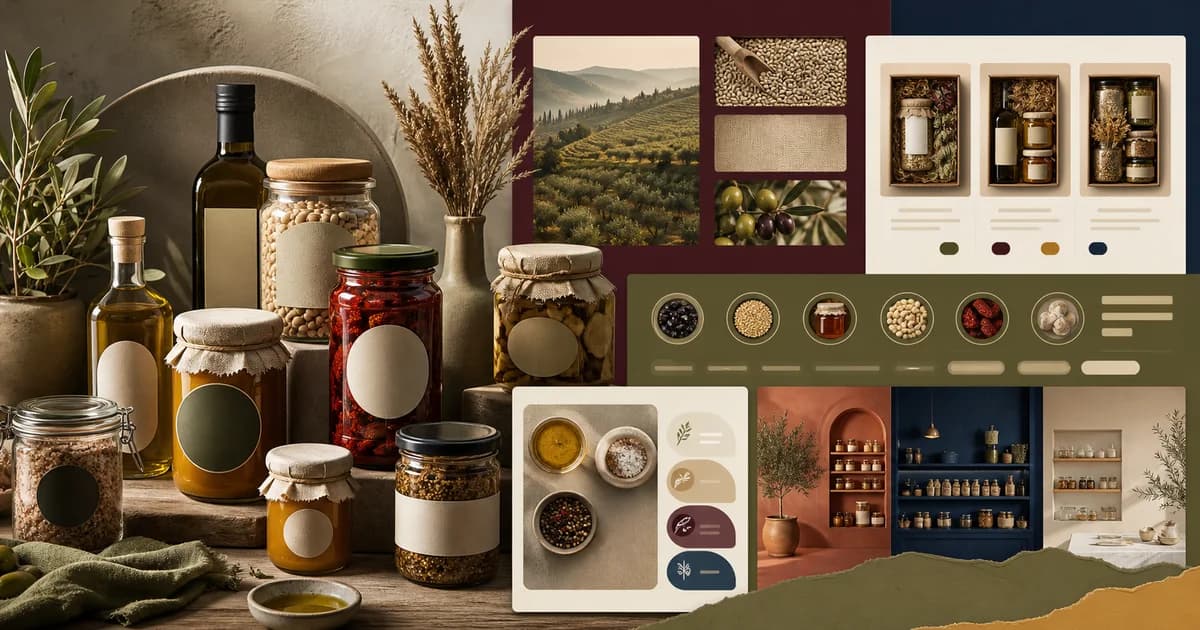
For gourmet and specialty food, the ranked shortlist is 1. Groxery by Polo Themes, the closest Polo fit; 2. Local on the official Shopify Theme Store; and 3. Combine on the official Theme Store. Groxery leads because Polo directly seeds it for grocery-focused, replenishment-led food catalogs. Local is the strongest place-and-producer storytelling alternative, while Combine is the gift assortment and cross-merchandising control. None verifies provenance, dietary status, certification, temperature handling, producer claims, origin statements, or gift contents. Those facts require accountable records and operational controls.
Apply the all-niche theme guide before weighting visual storytelling, use the grocery-store launch guide to model food custody and fulfillment, review the Shopify theme catalog for current specialty-food candidates, and use the pricing page to distinguish platform spend from certification or cold-chain work.
Which themes suit gourmet and specialty-food stores?
Use Groxery as the package-and-replenishment baseline, Local to test producer and place storytelling, and Combine to test gifts and pairings. Polo Themes presents grocery-focused layouts in Groxery E-commerce Shopify Theme | Polo Themes, supporting the first comparison slot; provenance, dietary, destination, and component tasks should determine each family’s winner.
1. Groxery — closest Polo assortment fit
Groxery takes the first evaluation slot because specialty foods still need a grocery-grade collection and product structure: exact identity, package size, ingredients, storage, dietary information, availability, and repeat ordering. Its food adjacency is direct, but its limit is explicit. The seed does not provide delivery slots, cold-chain rules, or perishable inventory systems. It also cannot establish what “artisan,” “local,” “single origin,” or a regional name means for a particular jar, cheese, confection, oil, or spice. Keep those assertions linked to maintained sources.
2. Local — producer and place control
Local is second because its official listing is built around food, beverage, and local retail, with pickup, pre-order, product discovery, delivery information, and nutritional-information presentation. That makes it useful for merchants whose makers, shops, and locations matter. The theme does not know whether producer location equals ingredient origin, whether a geographic term has a protected meaning, or whether an item may ship to the selected destination. Story sections should enrich exact pack facts, not postpone them until after the purchasing controls.
3. Combine — gift and pairing control
Combine is third because gourmet stores frequently sell gift boxes, pantry sets, pairings, and add-ons. Preview it with real component inventory rather than demo bundles. A recommendation may reflect merchant merchandising, but it must not imply dietary compatibility, safe use, or a guaranteed sensory result. A gift product needs an exact list of components and sizes, a substitution policy only where operations supports one, and a packing record that reflects the selection. Move Combine higher only if it handles these composite products cleanly.
What should specialty-food commerce make unambiguous?
Make package facts, provenance scope, dietary evidence, gift composition, storage, handling, and destination restrictions explicit before storytelling. Shopify says product details affect storefront presentation and organization in Product details, supporting maintained factual fields; a maker profile cannot supply missing quantity or extend certification beyond documented scope.
- Pack facts before romance. Exact name, net quantity, count, format, ingredients, storage, dietary information, and destination constraints should not be buried under producer narrative.
- Provenance scope. Distinguish maker location, production location, ingredient origin, recipe tradition, and any protected or certified designation rather than compressing them.
- Dietary evidence. Filters and badges must use a defined source and scope, update after recipe or supplier changes, and avoid promising more than the approved record.
- Gift composition. Product page, image, variant, component inventory, substitutions, cart, packing record, and delivered box must agree.
- Handling and destination. Fragile, perishable, temperature-sensitive, age-restricted where applicable, and import-dependent items need accurate fulfillment boundaries.
Set package identity, dietary communication, and fulfillment eligibility as gates. Score story flexibility only after those pass. A beautiful producer profile cannot compensate for an omitted net quantity or a delivery promise that excludes the product in practice. Use the same source records, long titles, and component sets in every candidate. Record whether each fact comes from product data, a dynamic source, editorial copy, an app, or custom code; that ownership map determines whether the experience stays trustworthy after seasonal assortment changes.
How should pantry, chilled, and gift products be tested?
Load an imported pantry item, locally produced product, genuinely constrained chilled item, and componentized gift. Variants, from Shopify, explains that option combinations create distinct versions. Change supplier, recipe, destination, and component stock, requiring every filter, story, cart, packing view, and support record to respond consistently.
Load an imported preserve, a locally produced condiment, a temperature-sensitive item only if genuinely sold, and a gift box containing smaller products. For the preserve, distinguish producer location from ingredient origin where they differ. For the condiment, show net quantity, ingredients, and storage. For the temperature-sensitive item, expose real destination and delivery limits before cart. For the gift, enumerate exact names and sizes and explain permitted substitutions. Ask testers to identify what arrives, where each origin statement applies, and whether the destination is eligible.
Now change a supplier, update one recipe, make a component unavailable, and enter a destination outside the handling area. Search, collection filters, product page, editorial maker story, bundle content, cart, and packing view should update together or fail visibly. The gift image must not continue to show a removed product, and the dietary filter must not survive a recipe change without review. Combine a pantry item and a constrained item in one cart to prove that a broad shipping banner cannot override the narrower product rule.
Which specialty-food rules vary across markets?
For the United States, ingredient, allergen, origin, certification, import, quantity, storage, and claims duties depend on the exact product. The U.S. Department of Agriculture Agricultural Marketing Service defines organic label categories in Labeling Organic Products. Other claims and jurisdictions require their corresponding primary regulators before publication.
United States: the FDA is a primary federal regulator for most foods and labeling, while USDA, Customs and Border Protection, the Federal Trade Commission, state agencies, local health authorities, and weights-and-measures bodies may apply depending on product, import status, claims, facility, and channel. The applicable authority cannot be inferred from the theme. Other jurisdictions have different food, allergen, origin, certification, import, advertising, and distance-selling requirements. Verify each product and served market with qualified specialists and responsible operators. This comparison gives no legal, food-safety, dietary, provenance, certification, or compliance guarantee.
Which gourmet-retail failures should staging expose?
Expose compressed provenance, stale dietary badges, story-to-pack contradictions, opaque gift contents, conflicting shipping promises, and surprise substitutions. The U.S. Food and Drug Administration identifies major allergen and labeling topics in Food Allergies; staging must prove that recipe or supplier changes reach discovery, editorial, fulfillment, and support surfaces.
- Provenance compression: “local,” “single origin,” “artisan,” or geographic language lacks a maintained definition for the exact product.
- Dietary badge drift: an icon survives a changed recipe, supplier, facility statement, or certification status.
- Story-pack contradiction: editorial copy describes a producer, process, or source different from the current inventory.
- Gift-box opacity: styled photography, written contents, selected option, component stock, and packed result disagree.
- Shipping contradiction: a general delivery promise overrides a fragile, perishable, temperature, or destination restriction.
- Substitution surprise: an unavailable component is replaced without the accurately described customer or operator decision.
What evidence should release a specialty-food storefront?
Release evidence needs a scoped provenance register, normalized package facts, dietary-filter regression, exact gift reconciliation, mixed-destination tests, and editorial change checks. U.S. Customs and Border Protection outlines federal border considerations in Importing Food Products; each importer and merchant still needs product-specific documentation, handling, market, and record decisions.
- Build a provenance register. Attach source, exact scope, owner, review trigger, and approved wording to maker, place, process, origin, and certification claims.
- Normalize package facts. Separate net quantity, unit count, component size, customer quantity, gift composition, and optional add-ons.
- Audit dietary discovery. Trace each filter and badge to product evidence, then change a recipe and prove every dependent surface receives review.
- Reconcile gift boxes. Compare source components, page, image, substitution rule, cart, inventory, packing ticket, and final packed set.
- Test mixed destinations. Combine pantry, fragile, temperature-sensitive, and gift goods across eligible and ineligible destinations.
- Check editorial drift. Change a producer or lot and inspect maker pages, collections, search cards, comparisons, recommendations, and saved carts.
Key Takeaways
- Groxery anchors package facts, Local tests producer context, and Combine tests componentized gifts and pairings.
- Maker location, production location, ingredient origin, tradition, and certification describe different scopes.
- Dietary badges and editorial stories must be re-reviewed after recipe, supplier, lot, or certification changes.
- Destination and handling constraints must outrank broad shipping promises and silent gift substitutions.
Make provenance and destination part of release acceptance
Rank the candidates with separate evidence for pantry staples, temperature-sensitive goods, imported products, and composite gifts. Groxery should retain first place where package facts and replenishment remain clearest. Local should move ahead only when producer and pickup context stays attached to the exact current product. Combine should lead the gift lane only when component inventory and substitutions are operationally reliable. Record the decisive product task for each family, because a strong maker story is not proof that a chilled shipment or multi-item gift can be fulfilled as presented.
For every served jurisdiction, decide how the exact product is categorized and which origin, ingredient, allergen, certification, import, quantity, storage, claims, tax, and distance-selling requirements apply. The same producer narrative may require different supporting information or may not be usable in every market. Store the approved market scope with the claim instead of copying prose between regional pages. Test direct links and destination changes so a shopper cannot retain a badge, delivery promise, or purchase action that the current market decision does not permit.
Rehearse a supplier change that alters ingredient information and provenance while an editorial maker page, a dietary filter, a saved cart, and a gift box still reference the old record. Withdraw a constrained component after a destination has been entered. Acceptance requires dependent surfaces to update or stop clearly, historical orders to retain what was actually sold, and support and packing views to identify the approved replacement decision. A silent substitution is a failure even when the replacement appears equivalent in category, value, or presentation.
Keep this drill product-specific. Ask an unfamiliar tester to state who made the item, what origin statement covers, what the package contains, which dietary information is asserted, and whether the chosen destination is eligible. If any answer comes only from a general brand story or filter label, the release evidence is incomplete. Repeat with a gift recipient who never saw the collection page; the enclosed or post-purchase information should still identify the products, storage needs, and accountable support route without extending a dietary or provenance claim.
Conclusion
Groxery is the honest closest Polo fit because its seed directly addresses food assortment and replenishment. Local is the place-and-pickup alternative, and Combine is the composite-gift control. Choose with the hardest current products, not an evergreen brand story. The winning theme preserves concrete pack facts, provenance scope, dietary evidence, destination boundaries, and exact gift contents while still giving makers room to be memorable. If storytelling and inventory diverge, product truth wins.
Frequently asked questions
Can Groxery verify origin or certification?
No. It can present maintained information. The merchant must establish authoritative sources, scope, review, and market-specific use for every origin or certification statement.
When should Local outrank Groxery?
When controlled testing shows that producer, place, pickup, and destination tasks are materially clearer without weakening package identity or fulfillment controls.
How should gift substitutions work?
State whether substitution can occur, who chooses, what constraints apply, and how the customer is informed. The operational and packing records must match that policy.
Are dietary filters enough for an allergy decision?
No. They are discovery aids based on defined merchant data. Provide approved product-level information and contact routes, and avoid unsupported guarantees.