Guides · August 23, 2026 · 12 min read
How to Start an Online Pet Store
Start a pet store with a species-bounded assortment, verified safety and compatibility data, and tested storage, replenishment, complaints, and recalls.
By Polo Themes
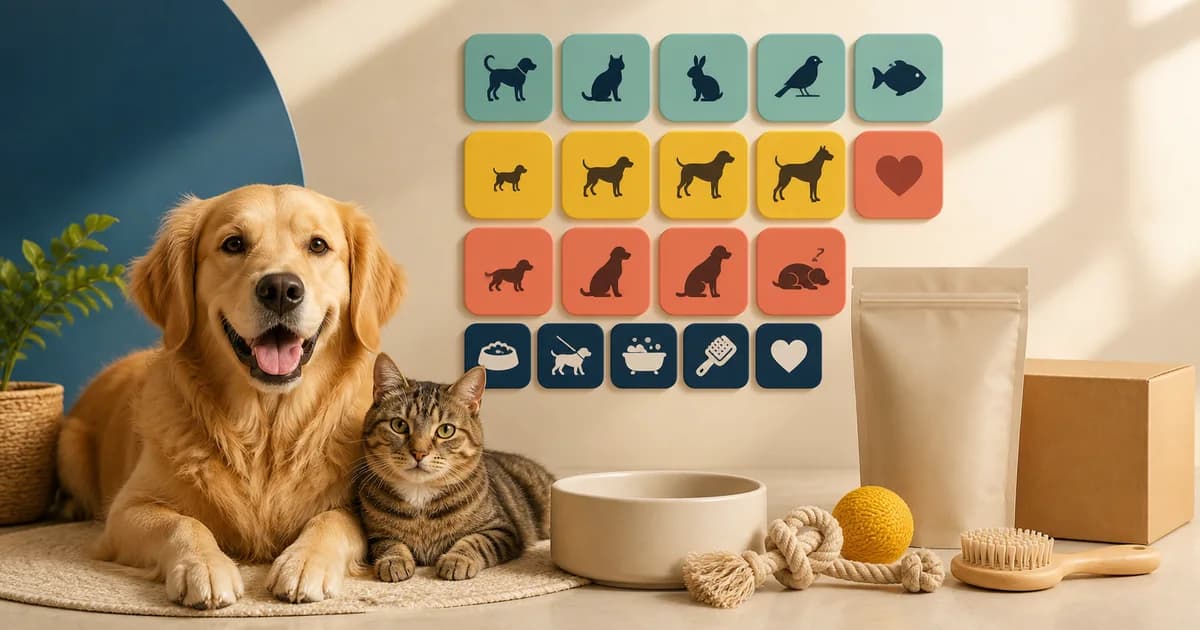
Start an online pet store by choosing a species and bounded product scope, verifying safety, ingredient, size, and compatibility data, and proving storage, replenishment, packaging, returns, complaints, and recall operations.
Pet catalogs can combine food, treats, toys, grooming, habitat, walking, training, and health-adjacent products, each with different risks. Organize the business by the animal and use context before building lifestyle collections. Shopify can present and sell eligible goods; it cannot determine whether food is appropriate, a toy is safe for unsupervised use, a harness fits, or a health claim is lawful. Use qualified veterinary, regulatory, safety, and product expertise where required.
Jurisdiction check: in the United States, FDA regulates animal food, while state feed authorities and other agencies may add labeling, registration, ingredient, claim, or veterinary-product duties. Toys, medicines, pesticides, and devices can follow different regimes. Verify the exact category and every jurisdiction served with qualified guidance; species-first navigation and batch records are useful controls, not a promise of compliance or suitability for an individual animal.
Key Takeaways
- Bound the assortment by species, life stage, product class, and supported use.
- Keep ingredients, warnings, dimensions, compatibility, batch, and destination evidence product-specific.
- Separate ordinary preference, fit failure, ingestion risk, injury, complaint, and recall workflows.
- Recheck eligibility before repeat orders when the animal, product, formula, or market changes.
Which species, life stage, and categories should the pet store serve?
Choose a bounded species, life stage, household context, and category whose safety, sizing, ingredients, use, fulfillment, and support the team understands. Shopify Help — Products supplies descriptions, media, variants, and metafields for catalog facts, but cannot decide animal suitability. Polo Themes — Groxery Shopify theme can present the assortment only as an adjacent grocery-style option after those boundaries are approved.
Define which animals, sizes, stages, and owner jobs the store supports. Avoid a universal pet assortment whose staff cannot understand. Food, supplements, flea or health products, electrical habitat equipment, and live products can trigger specialist obligations and provider restrictions. Keep them outside scope until verified. A focused dog-walking or small-animal habitat collection can build reliable data and support before expansion.
How should pet suppliers and product evidence be qualified?
Verify manufacturer and supplier identity, authorization, exact product, ingredients or materials, intended species, age or size limits, testing, labels, warnings, storage, change control, complaints, and recalls. Business Guidance Library — CPSC (United States) organizes category-specific safety resources, so classify accessories before choosing applicable guidance. Publish only approved evidence through the product setup guide, never generic supplier copy.
Verify supplier identity, authorization, exact product, ingredients or materials, dimensions, intended species and use, warnings, testing or certification claims, batch or lot needs, storage, shelf life, packaging, warranty, complaint cooperation, and recall route. Inspect samples under appropriate conditions. Do not infer safety from popularity or copy manufacturer statements across similar sizes. Record product revisions and discontinue stale content deliberately.
What belongs in species-first pet product data?
Record eligible species, life stage, relevant weight or dimensions, intended use, ingredients or materials, quantity, instructions, warnings, exclusions, compatibility, care, storage, and support. Shopify Help — Metafields gives recommended age and potential hazards as product-field examples. Use the beginner storefront walkthrough to expose verified facts consistently, while qualified evidence—not the field itself—sets their meaning.
Use structured fields for species, stage, size or weight guidance when supported, ingredients or materials, dimensions, compatibility, supervised-use instructions, warnings, storage, and included items. Separate a size variant from a different product when construction or suitability changes materially. Put the consequential information near selection. Avoid filters such as “healthy” or “safe” unless the term has a controlled, defensible definition.
How should pet food and ingestible products be handled?
Control exact formula, ingredients, nutrient information, label, batch, date, storage, feeding directions, warnings, complaints, and recalls for every ingestible. Pet Food — FDA (United States) requires animal food to be safe, produced under sanitary conditions, free of harmful substances, and truthfully labeled. Test damaged seals, expired stock, formula changes, and recurring orders through the store launch checklist.
Maintain exact label, ingredient, allergen or sensitivity, feeding, storage, batch, and expiry data required for the product and market. Do not provide veterinary diagnosis or turn general education into a treatment claim. Define receiving, rotation, quarantine, complaint, and recall processes. If subscriptions are offered, make product change, stockout, cancellation, and pet-specific suitability visible. Never substitute food automatically based only on category.
How should pet size and compatibility guidance work?
Explain product dimensions, measurement method, adjustment range, supported weight context, intended use, supervision, and exclusions; never promise fit from breed name alone. Shopify Help — Products supports descriptions, media, variants, and metafields for model-specific facts. Use representative testing to approve the guidance, while the store cost guide exposes return pressure without deciding whether a product is compatible.
For harnesses, apparel, beds, carriers, habitat parts, or accessories, explain measurement method and valid range from verified product evidence. Identify model-specific compatibility for filters, cartridges, bulbs, or enclosures. Describe supervision and wear checks where appropriate. A recommendation quiz is a separate system whose logic and failure states need testing. Provide human support and avoid guaranteed fit.
Can Groxery serve as an adjacent pet-supply storefront?
Polo Themes — Groxery Shopify theme is designed for grocery categories and repeat shopping, making pet supplies an adjacent use. Test warnings, ingredient panels, size guides, recurring orders, and unavailable products before selection. Shopify Help — Products supplies catalog fields and variants; neither source provides species eligibility, feeding logic, compatibility checks, batch traceability, veterinary review, complaint escalation, or recalls.
Polo does not seed a pet-specific product. Groxery is adjacent because its seeded description supports responsive grocery categories, collections, and product presentation, which can suit replenishment-led catalogs. It does not provide species logic, food compliance, veterinary guidance, subscriptions, sizing, or recall control. Label the use as adjacent and test Groxery with species-first navigation, ingredients, sizes, warnings, and repeat orders.
How should pet supplies be packaged and fulfilled?
Design packing around weight, fragility, contamination risk, temperature, leakage, and puncture exposure, separating food from incompatible goods where required. Shopify Help — Shipping profiles configures rules by product, origin, destination, and rate; it does not validate the package. Use the shipping setup guide only after representative mixed orders preserve identity and condition through delivery, damage, return, and disposal.
Test leaks, odor, crushing, puncture, temperature, animal-access risk, heavy bags, and mixed food and non-food baskets as relevant. Configure Shopify locations, profiles, zones, and rates from actual packed goods. Keep incompatible or hazardous combinations separate under qualified carrier guidance. Train pickers to identify exact species, flavor, size, and count. A wrong pet product may be more consequential than an ordinary preference return.
How should pet-product complaints and recalls be handled?
Identify the animal, exact product, lot or model, use, timing, condition, problem, and contact details without diagnosing. How to Report a Pet Food Complaint — FDA (United States) requests product name, packaging, lot, storage, purchase details, animal species, symptoms, and timing. Route urgent veterinary help, supplier escalation, reporting, quarantine, recall assessment, and commercial remedy through distinct owners.
Support should capture exact product, batch where relevant, animal species and size only as needed, use, issue, order, and contact details under an approved process. Escalate potential harm or adverse events to qualified owners rather than offering diagnosis. Rehearse quarantine, affected-order identification, supplier contact, approved customer communication, and record preservation. Refunds do not close the safety workflow.
What should a worked pet-product compatibility journey prove?
Rehearse a shopper identifying species and relevant measurements, reading warnings, choosing a supported variant, receiving the exact item, and reaching the correct help path. Shopify Help — Products provides descriptions, media, variants, and metafields used in that journey. Fail it for breed-only assumptions, wrong-size imagery, unsafe substitution, damaged food seals, missing lots, or support that drifts into diagnosis.
An owner needs a replacement filter for a specific habitat model. They navigate by species and equipment, confirm exact compatibility and dimensions, review replacement guidance, select the correct pack, and place a test order. The operator picks the matching identifier. The journey fails if a recommendation block suggests a visually similar but unverified part, or if the product appears under an unsuitable species collection.
Which safeguards should pet repeat orders include?
Before renewal, recheck product identity, formula or revision, animal eligibility, quantity, frequency, price, market status, stock, payment, customer consent, and unresolved safety complaints. Shopify Help — Subscriptions requires a subscription app and a visible cancellation policy. Provide notice and choice for meaningful changes; convenience must not repeat an unsuitable size, discontinued formula, or unapproved substitute silently.
A reorder link should retrieve the exact prior product while checking current availability, formulation, size, warnings, and suitability information. Suppliers can change recipes, materials, pack sizes, or identifiers under familiar branding. If a consequential change occurred, interrupt automatic repetition and show the customer what differs. Do not substitute a discontinued food, treatment-adjacent product, or habitat component merely because it occupies the same collection.
For subscriptions, map frequency, animal-specific selection, address, failed payment, stockout, skip, cancellation, product change, complaint, and recall. Test the renewal order and customer controls. Keep an obvious support path for a pet whose needs change. Recurrence is a billing and fulfillment mechanism, not evidence that continued use remains appropriate. Qualified guidance and clear product information still govern the offer.
Analyze repeat-order failures by root cause. A canceled food order may reflect changed diet, pack accumulation, ingredient concern, delivery damage, or price; a missed filter reorder may reveal confusing compatibility. Route potential harm to safety review. Use the commercial evidence to improve assortment and reminders without pressuring continued purchase or inventing health benefits from retention patterns.
Separate pet education from individualized advice. Care guides can explain how to read verified product information, measure for a harness, inspect wear, store food, or identify the exact replacement part. They should not diagnose symptoms or recommend a product as a substitute for veterinary care. Put escalation language where the risky question arises, train support to use it, and review educational pages whenever the related product, label, warning, or professional guidance changes. Keep the date and qualified owner of each review visible to editors.
How should the store decide whether a pet product belongs?
Include a product only when the team can verify species, use, supplier, evidence, warnings, fulfillment, support, complaints, and remedies for each destination. Business Guidance Library — CPSC (United States) separates safety guidance by product category, making classification the first step for accessories. Exclude products that invite self-diagnosis, unsupported compatibility, or obligations the team cannot competently operate.
Use an assortment gate for species, life stage, size, intended use, supervision, ingestion risk, durability evidence, cleaning, storage, and support competence. Reject products whose safe use cannot be explained from controlled evidence or whose variants invite dangerous cross-species selection. Novelty alone is not a merchandising reason. For food, treats, supplements, medicines, restraints, heated items, and electronically controlled products, add the specialist classification and operating review that the exact offer requires.
In a worked exception, a supplier changes a chew’s size and ingredient source under the same listing. Receiving holds the shipment, food-safety ownership reviews the label and market status, merchandising removes automated replenishment, and support identifies open orders. The item is not treated as a cosmetic packaging update because pet size, ingredients, feeding guidance, and batch traceability may have changed. Customers receive a verified choice rather than an unapproved substitute.
Apply animal-product rules by category and destination
For United States sales, route animal food and feed questions through applicable FDA and state primary guidance, and route veterinary drugs, pesticides, wildlife products, transport, or other specialized categories to their competent authorities. Verify labeling, claims, ingredients, facility, records, complaints, and recalls for the merchant’s actual role. For other markets, identify the veterinary, feed, medicines, environmental, customs, and consumer authorities before enabling sale. Never assume that a product marketed for pets in one jurisdiction retains the same classification elsewhere.
Pet-supply launch acceptance tests
- Species gate: product identity, species, life stage, size, use, warnings, ingredients, and compatibility stay aligned through recommendation and order.
- Repeat safety: reorder and subscription paths recheck formula, size, current warnings, availability, and customer approval.
- Supplier change: label, ingredient, dimension, material, or model changes stop inventory and content until reviewed.
- Escalation: ordinary fit questions, quality complaints, possible harm, and urgent veterinary concerns reach distinct approved paths.
- Recall drill: affected batch, lot, or model can be stopped and traced to stock and customer orders.
Failure modes to test
- Species leakage: broad collections recommend products outside the verified animal or life-stage use.
- Veterinary claim: content implies treatment or prevention without lawful evidence and review.
- Food substitution: stockout automation replaces ingredients or formulation without informed customer choice.
- Fit overconfidence: vague size labels replace verified measurements and guidance.
- Complaint loss: a potential safety signal is closed as a routine refund without batch or product escalation.
- Adjacent-theme overclaim: Groxery presentation is described as pet-safety or species intelligence.
Implementation sequence
Approve species, category, market, and claim boundaries. Qualify suppliers and samples. Build species, ingredient, material, size, compatibility, and warning standards. Pilot storage, fulfillment, return, complaint, and recall. Create a replenishment and compatibility-dependent product in Shopify. Stage Groxery only as adjacent. Test wrong species, stockout, damaged food, failed compatibility, complaint, and recall identification before launch.
Frequently asked questions
Is Groxery a pet-store theme?
No. It is a grocery presentation and only an adjacent structural fit for replenishment-led pet catalogs. Pet-specific data and operations remain separate.
Can Shopify determine whether a pet product is suitable?
No. Use verified manufacturer evidence and qualified professional review, then present species, stage, size, ingredients, compatibility, use, and warnings clearly.
Should pet food substitutions be automatic?
Do not substitute solely by category. Ingredients, formulation, sensitivities, feeding plans, and customer consent can make a similar product unsuitable.
What should a pet complaint workflow preserve?
Keep exact product and batch where relevant, order, use context, issue, communication, escalation, inventory action, and qualified safety or supplier response.
When should a pet product be excluded from automatic reorder?
Exclude it after a formula, ingredient, size, life-stage, species, warning, dosage or feeding, supplier, or market-status change; during a complaint or recall review; or whenever the prior selection may no longer fit the animal’s current need. Reorder may restore convenience only after current product facts and customer approval are rechecked through the verified workflow.
How should support respond to a possible pet injury?
Use the urgent escalation script, encourage appropriate veterinary or emergency help according to qualified guidance, and collect only the facts required by the complaint process. Do not diagnose or recommend another catalog item. Preserve exact product, batch or model, order, use context, and communication; assess related inventory promptly and follow manufacturer and regulatory reporting routes where applicable. Keep commercial resolution separate from the safety investigation so a refund cannot close the escalation prematurely.