Guides · August 23, 2026 · 12 min read
How to Start a Coffee Brand Online
Start a coffee brand by choosing a sourcing and roasting model, setting truthful product standards, and proving freshness, grind, shipping, and support.
By Polo Themes
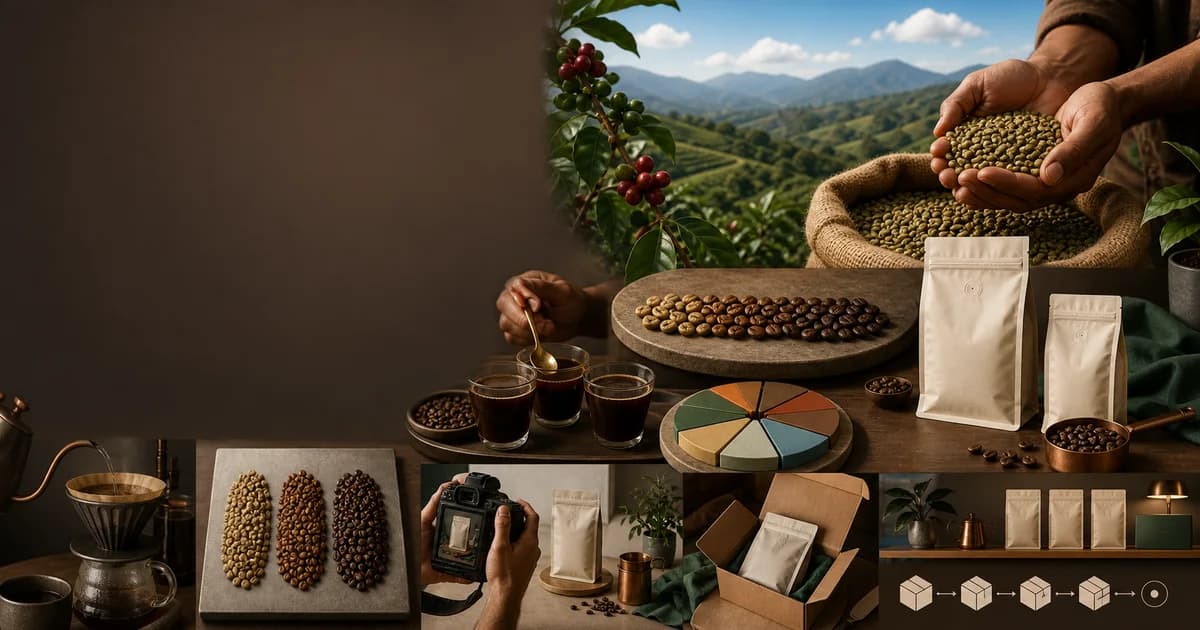
Start an online coffee brand by choosing a sourcing and roasting model, creating truthful origin and flavor standards, validating packaging and freshness operations, and proving grind, inventory, subscription, shipping, and support workflows.
Coffee customers compare origin, process, roast, freshness, flavor, brew method, grind, and pack format, but those words are useful only when the supply chain can support them. Decide whether the business roasts, contracts roasting, curates other roasters, or sells equipment alongside beans. Shopify can present products and coordinate recurring or ordinary orders through configured services; it cannot roast, track green coffee, preserve freshness, or verify an origin story.
Jurisdiction check: US coffee sellers should assess applicable FDA food facility, safety, labeling, allergen, import, and recall requirements, plus USDA or state and local rules where relevant to the product and operation. Claims, additives, ready-to-drink products, and international sales can change the analysis. Verify every jurisdiction served; traceability and accurate storefront content support the work but do not guarantee compliance or safety.
Key Takeaways
- Choose a roasting, sourcing, format, and fulfillment model that can protect freshness.
- Tie origin, process, roast, grind, pack, lot, date, and claims to controlled evidence.
- Treat subscriptions as a distinct promise with change, skip, cancellation, and recovery rules.
- Use brew guidance to support selection while owning consistency, packaging, and lot transitions.
Which coffee model and customer should the store serve?
Choose rotating lots, evergreen blends, subscriptions, equipment, or a bounded mix only when sourcing, roasting, grind, freshness, fulfillment, and support can remain accurate. Guidance & Regulation (Food and Dietary Supplements) — FDA (United States) gathers federal food-safety and labeling resources for covered foods. Polo Themes — Groxery Shopify theme can present the catalog only as an adjacent option.
Define whether the launch serves exploratory specialty buyers, dependable everyday drinkers, a brew-method community, gifts, offices, or another bounded need. Choose roasted whole bean, ground formats, pods, concentrates, tea, equipment, or a coherent subset. Mixed categories create different storage, compatibility, margin, shipping, and support questions. Start where the team can taste, document, pack, and fulfill consistently.
How should coffee sourcing language remain traceable?
Tie origin, producer, variety, process, certification, relationship, price, and impact wording to evidence for the exact lot or blend. Labeling Organic Products — USDA AMS (United States) says organic labels must meet defined categories and be reviewed by an accredited certifier. Use the store cost guide for margins without converting incomplete supply-chain information into a verified sourcing claim.
Record importer, producer or cooperative, origin, lot, variety, process, certifications or relationships only when supported, purchase and roasting records, and the limits of what is known. Tell the story at the level evidence supports. Avoid romantic narratives that imply direct relationships or producer benefits without proof. If the lot changes, review the product page rather than carrying a familiar origin name forward automatically.
How should roasting and coffee quality standards be defined?
Define approved inputs, roast profile, sensory checks, date handling, tolerances, packaging, release, hold, and complaint criteria for every coffee. Guidance & Regulation (Food and Dietary Supplements) — FDA (United States) routes food businesses to FSMA, manufacturing, and labeling resources, so quality release cannot rely on tasting alone. Send only verified roast and lot facts into the product setup guide.
Document who roasts, the approved profile, sample evaluation, production release, roast-date handling, batch identity, and response to inconsistency. Use sensory descriptors as calibrated guidance rather than guaranteed flavors in every cup. Explain roast language in the brand’s own consistent vocabulary. Pilot storage and brewing across the intended customer methods. A contract roaster reduces equipment ownership but not the need for quality and change control.
How should format, grind, and pack choices be modeled?
Offer whole bean, grind, pack size, quantity, and preparation format only when every combination has an accurate SKU, price, weight, stock, packing, freshness, and lead time. Shopify Help — Products supports descriptions, variants, inventory, and metafields for those sellable choices. Keep unsupported grinds unavailable, and configure the shipping setup guide only after representative packs pass route tests.
Create options only for configurations the operation can produce and keep fresh. Whole bean, grind settings, pack formats, and equipment compatibility must map to exact inventory or production instructions. Explain grind guidance and its limits; customer grinders and brewers vary. Repeat selected grind in the cart and pick ticket. Prevent unavailable lot-format combinations rather than substituting silently. Use verified net quantity and packaging information.
What should a coffee product page explain for selection?
Explain origin or blend, process, roast approach, tasting guidance, freshness model, formats, grind suitability, net quantity, storage, brew starting points, delivery, and returns. Shopify Help — Products provides descriptions, media, variants, tags, and metafields for presenting those facts. Use the store launch checklist to test difficult variants and subscriptions until customers can identify what will arrive and when.
Present coffee identity, origin evidence, process, roast approach, supported tasting guidance, roast or freshness model, format, quantity, brew suggestions, storage, allergens or ingredients for flavored products, and delivery. Avoid a score or “best” badge without methodology and evidence. Media should show actual packaging and distinguish changing lots. Equipment pages need exact compatibility and warranty rather than borrowing the bean template.
Can Groxery serve as an adjacent coffee storefront?
Polo Themes — Groxery Shopify theme is designed for responsive grocery categories and products, making coffee an adjacent use. Test origin stories, grind variants, subscription terms, equipment relationships, and sold-out lots before choosing it. Shopify Help — Products supplies catalog fields and media, but neither source manages roast dates, traceable lots, freshness, brew compatibility, subscriptions, or sensory evidence.
Polo does not seed a coffee-specific product. Groxery is adjacent because its seeded description supports responsive grocery category, collection, and product presentation. It does not provide roasting, traceability, grind logic, subscriptions, freshness management, or fulfillment. Label the use as adjacent and test Groxery with origins, formats, changing lots, quantity choices, and repeat-purchase routes.
How should coffee freshness and inventory be planned?
Plan stock around roast cadence, release windows, packing capacity, demand, lot size, storage, grind, and the published freshness promise. Distinguish green, roasted, packed, quarantined, and sellable states. Shopify Help — Inventory management tracks quantities for products and variants; it does not encode sensory freshness. Prevent aggregate availability from promising coffee that cannot be roasted, ground, packed, and dispatched on time.
Choose a roast and dispatch cadence the operation can maintain. Define order cutoff, production planning, released stock, aging or disposition, packaging, and inventory updates. Do not promise “fresh” without explaining the controlled process. Made-after-order and stocked approaches have different customer expectations and capacity risks. Track lots so support can connect an order to the coffee actually shipped.
Why should coffee subscriptions be treated as a separate system?
Subscriptions repeat promises about coffee, rotation, quantity, grind, frequency, billing, notice, skips, cancellation, substitutions, and failures. Shopify Help — Subscriptions requires a subscription app and customer-facing cancellation information. Define authority across Shopify and that app, then test renewal, stockout, payment failure, lot change, and cancellation; a successful first order proves none of those later states.
Validate ordinary one-time purchase first. Then define frequency, product selection, substitutions, price changes, skips, pauses, cancellations, failed payments, address changes, stockouts, and customer support. Review a subscription app’s current listing, permissions, data, charges, and removal path. Test lifecycle events, not only initial checkout. A recurring-order widget does not create reliable roast planning or customer-friendly cancellation operations.
What packaging and shipping evidence does coffee need?
Test representative coffee packs for barrier performance, valve or closure behavior, label durability, grind leakage, crushing, moisture, odor transfer, temperature exposure, weight, and route time. Shopify Help — Fulfillment covers configured fulfillment and shipping operations, while physical trials establish whether the pack protects the coffee. Include mixed orders and returns; attractive bags and calculated rates are not transit evidence.
Test barrier packaging, seal, label, packed weight, parcel protection, destination, and carrier path with actual products. Separate coffee from fragile equipment when fulfillment differs. Configure Shopify locations, profiles, and rates from current costs. Rehearse delayed dispatch, damaged packaging, wrong grind, and lost parcel. Do not publish an arrival or freshness guarantee that depends on untested carrier behavior.
What should a worked changing-lot journey prove?
Rehearse a lot change across sourcing evidence, tasting language, roast record, imagery, stock, subscriptions, package labels, orders, and customer messages. Recalls, Outbreaks & Emergencies — FDA (United States) publishes food recall and safety-alert pathways, making retained lot identity essential when a product must be located. Fail the journey if old provenance or tasting notes remain attached to new coffee.
A customer selects a single-origin coffee, reads the current lot story and tasting guidance, chooses whole bean, and completes a test order. The operator roasts or selects the released batch, picks the exact format, labels it, and records the lot. When the lot changes, the merchant updates origin and sensory content before new inventory goes live. The journey fails if old media and notes remain under a new source.
How should the store support brew questions without blaming customers?
Ask about the coffee, roast, grind, dose, water, brewer, contact time, storage, and observed result before suggesting one bounded adjustment. Pour-over coffee — National Coffee Association explains that grind should change with water-contact time. Treat possible staleness, package failure, wrong grind, or roast inconsistency as product issues rather than blaming taste preferences or promising a guaranteed cup.
Create a troubleshooting framework for product identity, roast date or batch, grind selected, water, ratio, temperature, time, brewer, storage, and the sensory issue, using the brand’s tested guidance. Support should ask before prescribing a single fix. A coffee that tastes different may reflect preparation, lot variation, production drift, storage, or a wrong grind. Preserve enough context to identify the likely owner rather than answering every complaint with a generic recipe.
When several contacts point to the same roast or packaging batch, pause affected inventory and send evidence to the quality owner. Compare retained samples or approved records under the business process. If the coffee is within standard but guidance is unclear, improve the product page or insert. If it is outside standard, use the defined customer remedy and supplier or roasting corrective action. Do not edit tasting notes to conceal a production problem.
Equipment questions require a separate path. Verify brewer, grinder, filter, power, replacement part, and warranty compatibility from controlled sources. Groxery’s adjacent presentation does not add technical support. If equipment becomes a material portion of the catalog, evaluate whether the data and navigation structure still fits or whether a different direct product presentation and operating team are needed.
Decide how lots graduate into evergreen products
Choose whether the brand sells traceable rotating lots, stable blends, seasonal releases, or a bounded combination. A rotating lot needs its own origin evidence, roast profile, tasting record, availability, and sold history; a stable blend needs component-change rules that protect the promised cup. Do not preserve reviews, tasting notes, or subscription labels across a materially different coffee merely to keep a familiar product handle. Archive the lot while retaining a useful route to its current successor.
Suppose a named origin becomes unavailable midway through a subscription cycle. The roaster can offer a coffee with a similar roast intent but different provenance and cup character. Operations holds the affected renewals, prepares truthful product and brew information, and gives subscribers the applicable accept, skip, change, or cancel path. It never ships the alternative under the former origin name. Once approved, inventory, packing labels, subscription mapping, and customer messages must all point to the new lot.
Apply coffee rules to the finished pack and claim
For United States sales, use FDA and other competent federal, state, or local primary guidance for food facility, safety, labeling, net quantity, allergen, traceability, and recall duties that attach to the roasting and fulfillment model; review organic, origin, environmental, and decaffeination claims with their responsible authorities. For other destinations, identify the food, customs, labeling, and consumer authorities before shipping. Verify the finished retail pack and merchant claims, not only green-coffee paperwork or a supplier story.
Coffee launch acceptance tests
- Lot identity: origin, process, roast, format, grind, pack, roast record, label, media, and inventory agree.
- Freshness: roast scheduling, stock rotation, cutoff, dispatch, failed delivery, and return decisions preserve the published freshness model.
- Subscription change: stockout, lot transition, grind change, failed payment, skip, and cancellation follow the customer-approved state.
- Brew support: staff distinguish product defect, expected lot character, stale handling, and equipment mismatch without blaming the customer.
- Claim gate: origin, producer, certification, decaffeination, environmental, and tasting statements retain their evidence and market owner.
Failure modes to test
- Origin inflation: marketing implies a relationship, certification, or producer outcome absent from sourcing evidence.
- Grind loss: the selected format disappears between product, cart, order, and production.
- Freshness fiction: dispatch cadence cannot support the language on product and campaign pages.
- Lot drift: a new coffee ships under the old lot’s story, process, or tasting notes.
- Subscription break: stockout or failed payment produces silent skips or unwanted substitutions.
- Adjacent-theme overclaim: Groxery presentation is described as coffee production or subscription capability.
Implementation sequence
Define customer, sourcing, roasting, and format scope. Qualify supply and approve coffee and packaging. Build origin, lot, grind, and quality standards. Pilot roast-to-dispatch and support. Create representative bean and equipment products if both are in scope. Stage an adjacent Groxery fit. Test wrong grind, changing lot, delayed dispatch, damaged pack, and subscription lifecycle before expansion.
Frequently asked questions
Is Groxery a coffee theme?
No. It is a grocery presentation and only an adjacent fit for coffee. Roasting, origin data, grind, freshness, subscriptions, and fulfillment need separate operations.
Should every coffee have tasting notes?
Use calibrated, supported guidance where the team has a quality process. Do not turn subjective notes into guaranteed customer experience or reuse them across changing lots.
When should subscriptions launch?
After one-time ordering, roasting or supply, inventory, shipping, support, and refund behavior are stable, and the full recurring lifecycle has been tested.
How should a changing lot be handled?
Connect inventory to the actual source and batch, review the product story and sensory guidance, update media and records deliberately, and preserve prior order traceability.
Should a new coffee lot inherit old reviews?
Only when the review remains clearly attributable and materially relevant to the product now sold. A changed origin, producer, process, variety, harvest context, roast approach, or cup character can make prior feedback misleading. Preserve the earlier lot’s sold record and route customers to the successor with an honest comparison instead of rewriting the old identity around new inventory.
What happens when a subscriber’s grind is unavailable?
Do not send whole bean or another grind by assumption. Hold the renewal line, verify whether the issue is temporary or a product change, and offer the approved wait, alternate format, skip, change, refund, or cancellation choice. Update fulfillment only after customer confirmation, and ensure the package label and subscription record both preserve the selected coffee and grind.