Guides · August 23, 2026 · 7 min read
How to Sell Glasses & Eyewear Online
A practical operating guide to selling frames online with honest product data, clear selection paths, and supportable service.
By Polo Themes
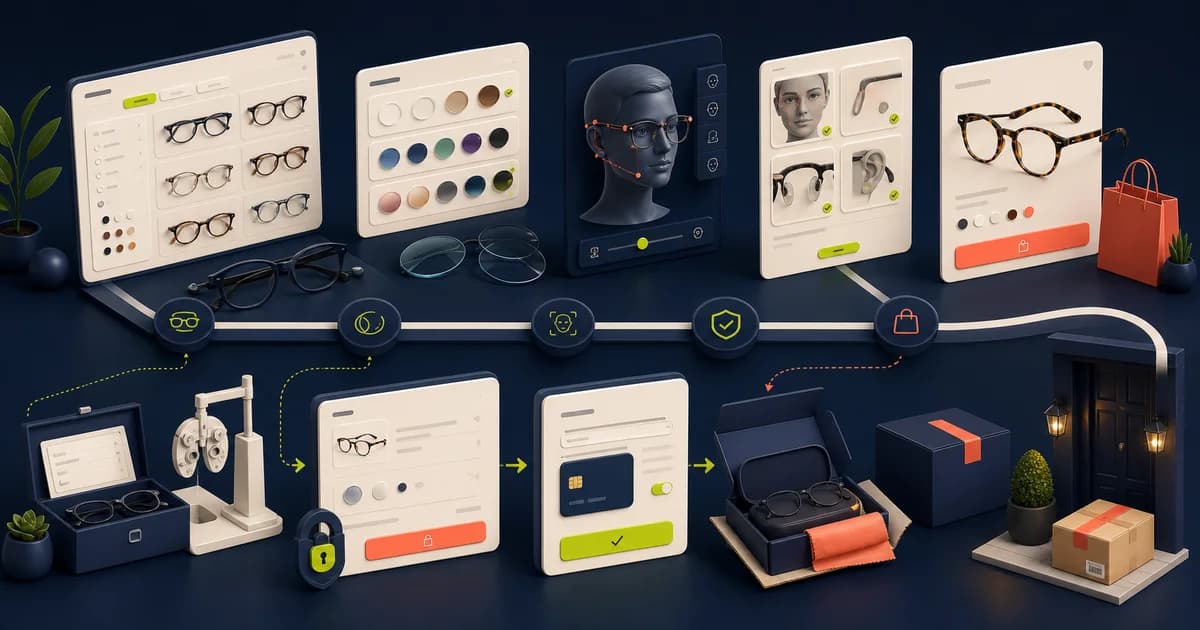
The short answer: sell eyewear online by making the hard parts explicit before you scale traffic. A frame store needs a dependable product record, consistent images and dimensions, a selection path that does not overpromise fit, and policies that match the service you can actually provide. The storefront is important, but it cannot repair unknown frame data, ambiguous lens handling, or an aftercare promise without an owner.
Choose the offer before designing the store
“Eyewear” can mean ready-to-wear frames, sunglasses, non-prescription lenses, prescription fulfillment, accessories, repairs, appointments, or a referral path to another provider. These are different operating models. Write down exactly what a customer may order online, which markets you serve, who handles questions, and what happens when an order is incomplete or unsuitable. Do not let a beautiful catalog imply a service that has not been designed.
- Define the product categories and variants you will sell at launch.
- Name the owner for sourcing, product facts, fulfillment, customer support, and policy updates.
- Document any information a shopper must provide and how exceptions are handled.
- State what the store does not offer in clear, calm language.
- Test the path from product selection to confirmation before announcing a launch.
Build a frame record people can compare
Every sellable frame should have a stable identity and a record that is checked against the physical item or supplier source. At a minimum, capture the product name, selected color or variant, stated dimensions, material where known, shape or category labels, images, availability behavior, and the information needed to fulfill it. Keep source records and review dates internally. If a field is unknown, publish an honest absence rather than a polished guess.
Consistency matters as much as completeness. If dimensions appear on one product but use a different naming convention on the next, customers cannot compare them. Establish a shared attribute vocabulary before importing a large catalog. The same structured fields should power collection filters, internal search, product cards, support replies, and any comparison experience. One product truth is easier to maintain than several independently edited descriptions.
Make product imagery a selection tool
Eyewear photographs must do more than create atmosphere. Use a repeatable shot list that shows the front, three-quarter view, side, bridge, hinge or temple detail, and any view necessary to communicate the selected variant. Keep lighting, crop, and ordering consistent enough for a shopper to compare frames across a collection. Add a worn or scale view when it helps, but do not let a lifestyle image become the only evidence of shape or finish.
Reflective lenses and shiny hardware make capture difficult. Solve that with controlled lighting and review, not aggressive retouching that changes the product. Check final files beside the physical item and the product record. Descriptive alt text should name the visible frame, angle, color, and salient detail; it should not promise how a frame will fit or perform for every person.
Design discovery around partial knowledge
Most shoppers arrive knowing only part of what they need. Offer ordinary browsing and search first, then useful ways to narrow a large catalog: shape, color, material, intended use, or other attributes that your record can support. A frame finder can be helpful when it explains why it suggests an item and permits a customer to change the answer. It should never disguise an unverified recommendation as professional or optical advice.
Collections should make their organizing principle visible. A visitor should not have to infer whether “everyday” means a style edit, a material grouping, or a service promise. Keep filters understandable, preserve selected filters as the person browses, and show an empty state with a useful recovery route. The goal is not to make every frame visible at once; it is to help a customer create a credible shortlist.
Handle lenses and prescriptions with boundaries
If the store offers a lens or prescription path, map the steps and ownership before publishing a control. Explain what information is needed, when it is checked, what formats are accepted, what happens when information is missing, and how the shopper reaches qualified help. Keep the product page, cart, confirmation, and support scripts consistent. Avoid claims that a frame or lens is suitable for a particular person unless the business has the appropriate evidence and process to make that statement.
A lean launch can deliberately exclude complicated paths. It is more credible to sell the products and services you can support clearly than to accept every possible configuration and resolve uncertainty afterward. Record the questions that customers ask; they will show where education, data, or operations need to improve before the offer expands.
Publish service terms where they affect choice
Delivery, adjustments, remakes, returns, and support should be readable before checkout. Explain the actual process, timing dependencies, exclusions, and contact route in language customers can act on. Do not borrow policy copy from a competitor or use generic reassurance that no one can fulfill. Every promise should have a named operational owner and a way to identify when it changes.
Use the Optics foundation deliberately
The Optics E-Commerce Shopify Theme is the direct Polo Themes catalog fit for an eyewear storefront. Its verified product record describes a modern, minimal design for eyewear, visual hierarchy, clean typography, readable color contrast, and customization and extension aligned with Shopify best practices. The associated Optics Figma UI kit lists screens for product listing and detail, search, cart, orders, prescription, and a frame-finder quiz. Use those surfaces to organize a proven journey; do not treat them as a substitute for product, lens, or policy decisions.
- Place test orders for each supported product and variant path.
- Try incomplete information, an unavailable option, a changed address, and a support request.
- Review the confirmation and internal handoff for missing context.
- Test product selection on a narrow phone viewport and by keyboard.
- Compare support questions and return reasons with the published information after launch.
A rehearsal is not a one-time checkbox. Treat every recurring exception as a signal. If people repeatedly ask where a dimension is measured, clarify the product record. If they choose an unavailable variant, repair the state management. If support has to explain a policy, move the relevant explanation nearer to the decision. This is how an online eyewear shop becomes more reliable without inventing certainty.
Plan the order as a chain of accountable handoffs
Map what happens after the shopper presses the purchase button. The selected frame and color must reach the order record accurately; any supported lens route must retain the information its operator actually needs; fulfillment must pick the same item; and the confirmation must describe what happens next without overpromising. Name the owner at each handoff and decide what stops an order when information is incomplete or contradictory.
Use one realistic scenario to test the chain: a shopper selects a frame color, changes the size or variant, enters the supported lens route, then notices an error after confirmation. Follow what the storefront shows, what staff receive, what can be corrected, and what requires cancellation or escalation. Do not conceal an operational limit behind a smooth interface. State the boundary before payment whenever it can affect the decision.
Create a launch catalog audit
- Match every storefront variant to the internal item identifier and current image set.
- Check that recorded frame, bridge, and temple dimensions use consistent labels and measurement conventions.
- Verify which products can enter each supported lens, service, or consultation route.
- Compare displayed availability and dispatch language with the fulfillment process.
- Open policies from the product, cart, and confirmation contexts where customers need them.
- Give support the exact product record, escalation owner, and correction process used by the storefront.
After launch, review exceptions by cause rather than treating them as isolated tickets. Group questions about dimensions, color, lens steps, delivery, adjustments, and returns. A cluster can point to a missing catalog field, unclear interaction, or service boundary. Correct the source record and every dependent surface together. That is safer than adding a one-off note to the page while advertisements, confirmation messages, and support scripts continue to disagree.
Stage discovery for shoppers with different starting points
Not every shopper knows a frame shape, measurement, or product name. Provide several honest entrances: browse by supported use or collection, filter by maintained frame attributes, search by product name or identifier, and compare recorded dimensions. A quiz can organize preferences, but it should explain its inputs and let the shopper continue without completing it. Do not convert a style preference into a claim about physical fit or suitability.
For a returning customer, make prior product identity useful without assuming the same item or configuration remains available. A previous frame can provide a reference for recorded dimensions and style, while the current product page must still show current variants, terms, and service routes. For a first-time customer, define measurement labels and show where they are taken rather than assuming optical vocabulary.
- Let shoppers clear filters and recover from a zero-result combination.
- Keep comparison attributes named and measured consistently across the catalog.
- Show which image and facts belong to the currently selected color or size.
- Preserve the selection when moving between product, lens, cart, and support steps.
- Offer a human help route with a stated boundary for questions the store cannot resolve.
Conclusion
Selling glasses online is an exercise in preserving product truth across discovery, selection, fulfillment, and support. Start with a narrow, supportable offer; create a consistent frame record; make images and dimensions useful; and state the service boundaries early. A direct-fit theme such as Optics can give the work a coherent starting structure, while your data and operating discipline determine whether shoppers can buy with confidence.
Frequently asked questions
What information belongs on an eyewear product page?
Include the selected product and variant, consistent imagery, recorded attributes and dimensions, availability, the relevant lens or service route, and the policy or support facts that affect that choice. Leave unknown facts unknown until they are verified.
Should a new store offer every lens or prescription option?
No. Begin with the options your team can process, explain, and support reliably. Add complexity only after the exception handling, quality checks, and customer questions are understood.
Can a theme decide which frame fits a customer?
No. A theme can organize data and a finder flow. It cannot establish a universal fit outcome or replace the product facts, qualified guidance, and accessible alternatives your store needs.