Design · August 23, 2026 · 7 min read
Fashion Brand Identity and Storytelling
Build a fashion identity from a real point of view, product evidence, and repeatable editorial choices rather than surface decoration.
By Polo Themes
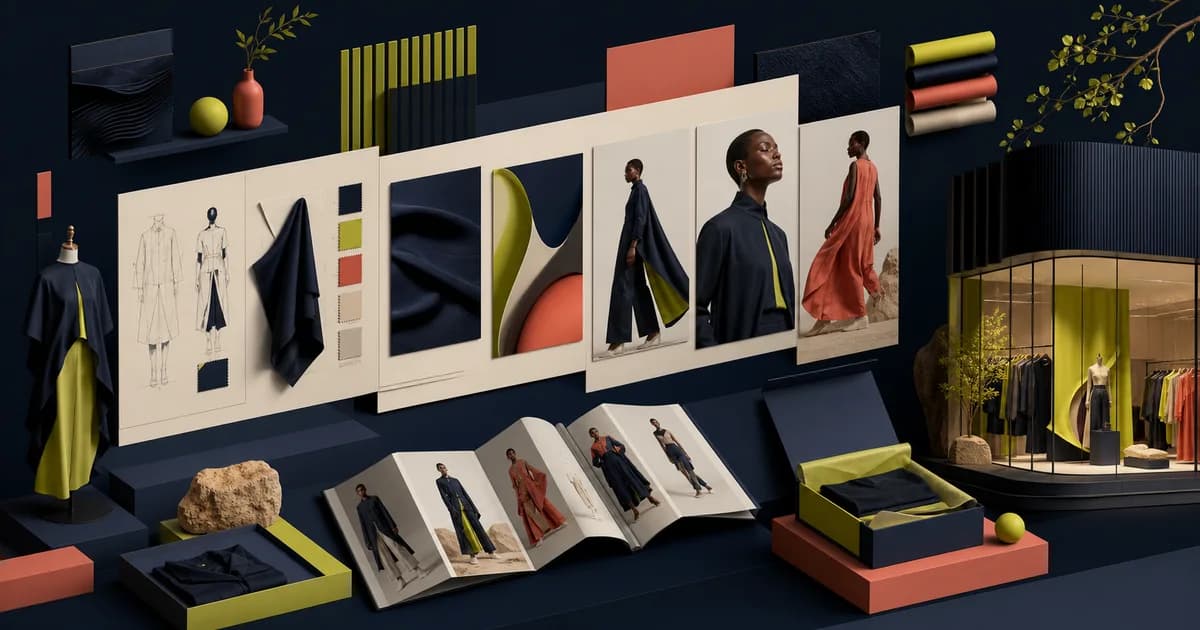
The short answer: a fashion identity becomes valuable when it makes a truthful product promise easier to recognise across discovery, consideration, purchase, and ownership. It is not a logo applied to generic campaign language. Define the point of view, the customer context, the product evidence, and the visual rules that help people distinguish editorial aspiration from a fact about the garment.
Begin with a belief that changes the product
“We believe in quality” is not a usable brand belief because it does not tell a customer or team what to expect. A useful belief changes selection and execution: perhaps the line prioritises a particular way of dressing, a repairable material choice, a considered occasion, a consistent silhouette, or a disciplined approach to colour. It has a boundary. It lets the team say no to a product, image, partnership, or promotion that does not serve the customer promise.
Write the belief in plain language, then test its consequences. What will a visitor see in the first collection? What facts must the product page provide? What will customer service be able to explain? How will a seasonal campaign differ from a permanent category? If no practical decision changes, the statement is a slogan, not a strategy.
Separate story from substantiation
Fashion storytelling can convey a mood, place, reference, process, or wearer’s occasion. It should never make a material, labour, environmental, performance, or availability claim that the business cannot support. Put verifiable product facts where shoppers need them: composition, care, construction details, fit notes, price, selected variant, delivery, and returns. Keep the story generous, but do not ask it to carry evidence it does not possess.
This distinction also protects customers when a campaign is stylised. A photo may show a complete look, a location, or a seasonal fantasy. Label or structure the page so a shopper can identify the exact garments, colours, and accessories available to buy. If a prop, styling alteration, or image treatment materially changes how a product appears, ensure the product record remains clear rather than using atmosphere to create ambiguity.
Build an identity system that survives the homepage
The most visible page is rarely the entire customer journey. A resilient identity assigns jobs to its elements: typography for hierarchy and readable detail; colour for emphasis and state; photography for product truth and editorial expression; language for navigation, product facts, support, and campaigns; and motion for moments where movement communicates something useful. Those choices must work on collection cards, long product names, small screens, order messages, policy pages, and returns support—not only in a launch presentation.
- Define voice examples for a category title, product name, fit note, service message, error state, and campaign headline.
- Create distinct visual roles for editorial image, product documentation, promotional callout, selected state, warning, and policy information.
- Document image crops and shot sequences so comparable garments remain comparable.
- Set type sizes and contrast rules that preserve readability on a phone and for zoomed text.
- Name the owner and review route for claims, product data, visual assets, and campaign copy.
Give products a narrative role without making them fictional
Products often need a reason to belong together. A collection story can connect a material development, a utilitarian need, a cultural reference handled with appropriate care, or a seasonal setting. Start from what the garments genuinely share. Then show the relationship through styling, editorial text, category order, and outfit modules. The aim is to make selection more coherent, not to attach invented mythology to a shirt or use borrowed cultural language without understanding or permission.
Use a simple content map for each product: the one-sentence role; the customer situation; the material and construction facts; the fit explanation; the images that prove visual details; the related pieces; and the ownership information. That map keeps copywriters, photographers, merchandisers, and support teams from describing the same product in conflicting ways.
Make provenance and maker stories precise
If the brand tells a sourcing, maker, or process story, scope it carefully. Identify what the business knows, who reviewed it, when it was current, and what is deliberately not being claimed. Do not imply that an attractive studio image proves a whole supply chain. Avoid broad ethical or environmental shorthand unless qualified evidence and applicable legal review support the specific language. Honest specificity is both more useful and more durable than an ambitious universal claim.
A reader can respect a partial answer. For example, a page can explain the visible material, a design decision, or a production step without promising a full lifecycle conclusion. Link evidence or provide a responsible contact route where the business has one. When facts change, update the page or remove it; an old story that remains indexed becomes a liability.
Use the storefront as an expression system
Polo Themes catalogues Wosa for fashion and clothing storefronts, describing a responsive, customizable theme with a clean, modern presentation and product-display focus. Use a theme like Wosa to implement a stable visual grammar: navigation, collection structure, product hierarchy, and responsive sections. Do not turn its demo aesthetics into an identity. Replace generic imagery and placeholder claims with the product record and the editorial system that your team can keep accurate.
Consistency is not sameness. A campaign can have its own visual tempo while still preserving a readable logo, clear product names, recognisable buttons, accessible text, and an unambiguous cart path. Let the brand stretch at the editorial layer while its decision-critical controls remain stable. A customer should not have to relearn how to select a size because a new season has launched.
Find out whether the story is helping
Use qualitative and operational evidence together. In short research sessions, ask visitors what they think the line is for, which garment they would choose, and what they still need to know. In analytics and support review, look at collection-to-product progression, size-guide use, selected-variant completion, search exits, questions, cancellations, and fit-related returns. Segment results by product and device; an elegant desktop campaign may conceal a confused mobile purchase path.
Avoid treating social attention as proof of clarity. Attention can be valuable, but a memorable image does not demonstrate that customers understand material, fit, availability, or care. A story succeeds when it attracts the right audience and makes their next decision easier without adding avoidable surprise after checkout.
A working identity workshop
- Collect product records, customer questions, support transcripts, campaign assets, and policy facts in one reviewable place.
- Write the customer situation, brand belief, product proof, and boundaries in language a new team member can understand.
- Design one collection and one product page using those rules; include an unavailable variant and a long product name.
- Ask representative shoppers what they believe, what they can verify, and what would stop them from buying.
- Revise the visual and copy rules, then document ownership and a review date before rolling the system across the catalog.
Edit one product story for proof and usefulness
Choose a garment and separate its draft story into four columns: verified product fact, interpretation, customer guidance, and unsupported implication. A material and construction record belongs in the first column. The mood or cultural association belongs in interpretation and should be presented as the brand’s perspective, not objective truth. Fit, styling, and care guidance should remain tied to what the garment and approved record can support.
Now follow the story across campaign image, collection copy, product page, care message, and support response. The tone may change with context, but the facts must not. If a campaign calls a piece “everyday” while its care or construction makes that promise questionable for the intended customer, refine the claim or the product. Storytelling is valuable precisely because it forces the team to reconcile aspiration with the object being sold.
- Name the source and owner for every material, maker, place, process, or impact statement.
- Label collaboration and quoted voices accurately and keep the relevant permissions.
- Place fit, contents, availability, and care facts where narrative imagery cannot obscure them.
- Write an unavailable or revised-product state in the same recognizable voice.
- Archive superseded wording so later campaigns do not revive an unsupported version of the story.
Test whether the story survives an ordinary service moment. Draft a response about a delayed item, fit question, care mistake, or return using the identity rules. It should sound recognizable while stating the fact, boundary, and next step plainly. If brand voice makes the answer evasive, revise the voice rules. Service is where customers learn whether the story describes an actual way of operating.
Keep a small story ledger for recurring themes, their product proof, approved examples, exclusions, and review owners. This helps a growing team create new work without turning a metaphor into a factual claim or repeating a provenance detail after the underlying product changes.
Conclusion
A distinctive fashion brand does not need to be louder than its competitors. It needs to be recognisable because its product choices, images, language, and customer experience all tell the same defensible story. Build the system around the actual garment and the person deciding whether to wear it. The visual identity will become more credible as it becomes easier to use.
Frequently asked questions
Should the story come before the product photography?
Develop them together. The story should guide the editorial frame, while the photography must still document the garment accurately enough for product selection.
Can a small brand have a strong identity without a large campaign budget?
Yes. Clarity, repeatable image standards, accurate product information, and a coherent point of view are more valuable than sporadic expensive production that cannot be maintained.
What is a warning sign that storytelling has gone too far?
If a visitor can describe the mood but cannot identify the garment, its fit, material, price, availability, or return route, the story has displaced the purchase information it should support.